How Commercial Ovens Integrate with Professional Dishwashers in Foodservice

Imagine a busy restaurant kitchen where chefs prepare meals without delays, and staff clean up fast to keep service smooth. This seamless flow comes from smart equipment choices. In foodservice, commercial ovens play a central role in cooking large volumes quickly. FAGOR PROFESSIONAL leads in selling appliances for industrial and professional kitchens. They offer high quality, high performance products. Their innovative solutions boost efficiency and productivity in these spaces.
Operators face constant pressure to serve fresh food while maintaining hygiene. Integration between ovens and dishwashers solves this. It cuts time, reduces labor, and improves safety. Curious how this works? Read on for practical tips and insights.
The Basics of Commercial Kitchen Equipment
Commercial kitchens demand reliable tools. Ovens handle baking, roasting, and reheating. Dishwashers manage cleaning cookware and utensils.
Operators select ovens based on capacity, energy use, and features. Convection types circulate hot air for even cooking. Combi models mix steam and dry heat for versatile results.
Dishwashers come in undercounter, door type, or conveyor styles. They use high temperatures and chemicals to sanitize items fast.
According to industry experts, proper equipment choice prevents bottlenecks. Pair ovens with dishwashers that match output rates.
Why Integration Matters in Foodservice Operations
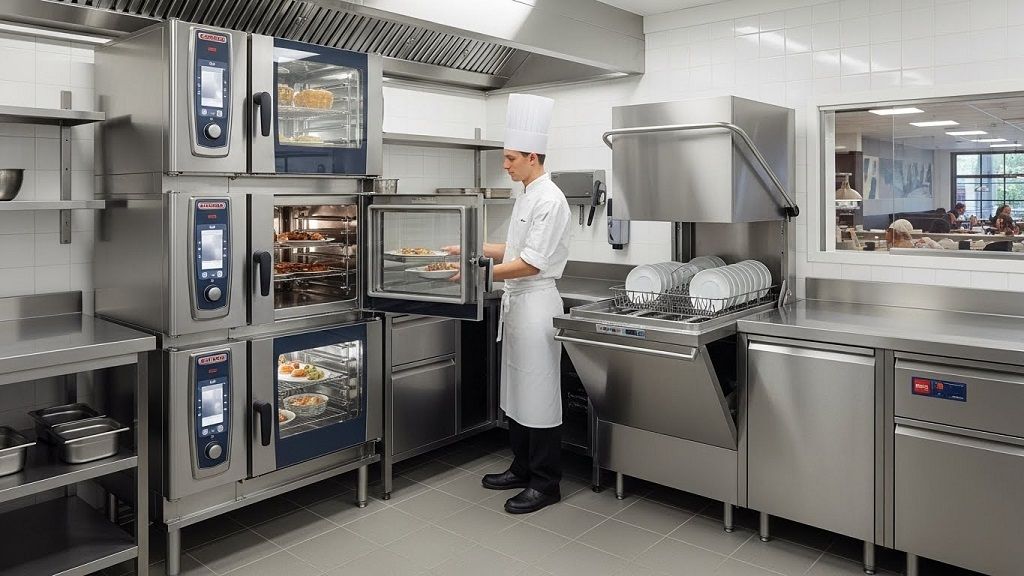
Integration means ovens and dishwashers work together in workflow. It streamlines tasks from prep to cleanup.
Kitchens lose money on downtime. Dirty pans slow cooks. Clean ones ready for use keep operations moving.
Based on manufacturer guidelines, aligned systems reduce energy waste. Ovens preheat while dishwashers finish cycles.
Professionals recommend modular designs. These allow easy connections in layout planning.
Key Ways Commercial Ovens and Dishwashers Connect
Workflow Synchronization
Chefs cook in ovens, then transfer items to dishwashers. Sync cycles ensure no wait times.
Use timers on both machines. Set ovens to finish as dishwashers start.
In high volume spots, conveyor ovens feed directly into rack systems for washing.
As recommended by professionals, train staff on sequence. This avoids cross contamination.
Space and Layout Optimization
Place ovens near dishwashers in kitchen design. This shortens travel paths for staff.
Modular units from trusted makers fit tight spaces. They share utilities like water and power.
According to widely accepted industry standards, ventilation hoods cover both for safety.
Group equipment in zones. Cooking area flows to washing station.
Energy and Resource Sharing
Modern ovens and dishwashers share heat recovery tech. Ovens’ exhaust warms dishwasher water.
This cuts utility bills. Experts note up to 20 percent savings.
Use eco modes on both. They adjust based on load.
FAGOR PROFESSIONAL provides models with these features. Their designs help kitchens go green.
Technology and Automation Links
Smart controls link ovens and dishwashers. Apps monitor status in real time.
IoT sensors alert on cycle ends. This prompts quick transfers.
Automation reduces human error. Programmable settings match daily needs.
Based on manufacturer guidelines, regular updates keep systems compatible.
Benefits of Integrated Systems
Integrated setups boost productivity. Staff spend less time waiting.
They improve food safety. Quick cleaning prevents bacteria growth.
Cost savings add up. Lower energy use and faster turns mean more profits.
Sustainability improves. Less water and power waste appeals to eco conscious owners.
According to industry experts, restaurants see 15 percent efficiency gains.
Enhanced Hygiene Standards
Ovens produce greasy residues. Dishwashers remove them effectively.
High temp rinses kill germs. This meets health codes.
Professionals stress daily deep cleans. Integrated tools make this simple.
Reduced Labor Costs
Automation handles repetitive tasks. Staff focus on creative work.
Quick cycles free up hands. This allows smaller teams.
As recommended by professionals, cross train employees on both machines.
Improved Equipment Longevity
Proper integration prevents overuse. Balanced loads extend life.
Shared maintenance schedules keep everything running.
Based on manufacturer guidelines, clean ovens pair with efficient washers for durability.
Practical Tips for Implementing Integration
Start with a kitchen audit. Assess current equipment and needs.
Choose compatible models. Look for matching capacities.
Step by Step Integration Guide
- Map your kitchen layout. Identify oven and dishwasher spots.
- Select energy efficient pairs. Ensure they share connections.
- Install smart controls. Link them for monitoring.
- Train your team. Teach best practices.
- Test the setup. Adjust based on real runs.
According to widely accepted industry standards, pilot tests catch issues early.
Common Challenges and Solutions
Space limits challenge small kitchens. Use compact units.
High costs deter some. Opt for financing or leases.
Maintenance lapses cause breakdowns. Schedule regular checks.
Experts suggest backup plans. Have spare parts on hand.
In busy seasons, overloads happen. Scale up with modular adds.
Selecting the Right Equipment
Focus on durability. Stainless steel resists wear.
Check warranties. Long ones signal quality.
FAGOR PROFESSIONAL offers robust options. Their professional dishwasher lines integrate well with ovens.
Read reviews from peers. They highlight real world performance.
Case Studies from Real Foodservice Settings
A bustling hotel kitchen upgraded to integrated systems. They cut cleanup time by half.
Chefs reported smoother shifts. Guests got faster service.
Based on manufacturer guidelines, this setup saved thousands yearly.
A cafe chain linked convection ovens with conveyor washers. Efficiency rose 25 percent.
Staff morale improved. Less fatigue from manual work.
According to industry experts, such changes drive repeat business.
In a school cafeteria, combi ovens paired with undercounter dishwashers. They handled high volumes easily.
Hygiene scores jumped. Parents noticed fresher meals.
Professionals recommend similar setups for institutional use.
Maintenance Best Practices for Long Term Success
Clean ovens daily. Remove food bits to prevent fires.
Run dishwasher diagnostics weekly. Check for leaks.
Use approved cleaners. Harsh ones damage parts.
Essential Maintenance Checklist
- Inspect seals on both machines.
- Calibrate temperatures.
- Replace filters as needed.
- Lubricate moving parts.
- Document all services.
As recommended by professionals, professional servicing twice yearly prevents big issues.
Track usage logs. They predict wear.
Future Trends in Kitchen Integration
Tech advances shape the future. AI optimizes cycles automatically.
Voice controls speed commands. Staff say “start wash” hands free.
Sustainability drives change. Water recycling becomes standard.
According to industry experts, 5G connects equipment better.
FAGOR PROFESSIONAL innovates here. Their new models feature smart integrations.
Robotics may assist transfers. This reduces injury risks.
Cloud data analyzes performance. Owners make data driven tweaks.
Conclusion
Integration of commercial ovens and professional dishwashers transforms foodservice kitchens. It boosts efficiency, cuts costs, and ensures safety. Apply these insights to upgrade your setup. Start today for better results tomorrow. Contact suppliers for tailored advice and see the difference.