
Betta fish are stunning creatures with flowing fins and vibrant colors. Many aquarium enthusiasts wonder if these beautiful fish can share their space with other species. The good news is that bettas can live harmoniously with certain companions when you make informed choices. This guide will help you create a thriving community tank that keeps your betta happy and healthy.
Understanding Betta Behavior and Temperament
Bettas earned their nickname “Siamese fighting fish” for good reason. Males are particularly territorial and aggressive toward other males of their species. However, this doesn’t mean they must live alone forever. Understanding their natural behavior helps you make better decisions about tank companions.
In their native Southeast Asian waters, bettas encounter various species. They show aggression primarily toward fish that resemble them or invade their perceived territory. Therefore, selecting companions that look different and occupy different tank zones increases success rates dramatically.
Male bettas display more aggression than females. They flare their gills and chase fish with long, flowing fins that trigger their territorial instincts. Additionally, they prefer the upper portions of the tank, which influences compatibility with bottom-dwelling species.
Essential Tank Requirements for Community Living
Before adding any companions, ensure your aquarium meets basic requirements. A larger tank provides more swimming space and reduces territorial disputes. Experts recommend at least 10 gallons for a betta community tank, though 20 gallons or more works even better.
Water parameters matter significantly for all inhabitants. Bettas thrive in temperatures between 76 and 82 degrees Fahrenheit. The pH should range from 6.5 to 7.5, with minimal ammonia and nitrite levels. Consequently, choose companions with similar water requirements to maintain a stable environment.
Plants and decorations create hiding spots that reduce stress. Live plants like java fern and anubias offer shelter while improving water quality. Caves, driftwood, and other structures give fish places to retreat when needed. This setup helps prevent conflicts and makes everyone feel secure.
Characteristics of Ideal Betta Companions
Successful tank mates share specific traits that minimize conflict. Size plays a crucial role in compatibility. Fish should neither be small enough to become prey nor large enough to intimidate or harm your betta. Mid-sized species typically work best.
Swimming habits influence compatibility significantly. Bottom-dwelling fish rarely encounter bettas that prefer surface areas. Similarly, fast swimmers can easily escape if a betta becomes territorial. Slow-moving fish with long fins, however, often trigger aggression.
Temperament matters more than almost anything else. Peaceful tank mates for betta fish should be non-aggressive and calm by nature. Fin-nipping species will harass your betta, while overly active fish create stress. Therefore, research each species’ behavior before making decisions.
Coloration and fin shape affect betta reactions too. Brightly colored fish with elaborate fins may provoke territorial responses. Neutral-colored species with short fins generally avoid triggering aggressive behavior. This consideration becomes especially important with male bettas.
Top Fish Species That Coexist Well with Bettas
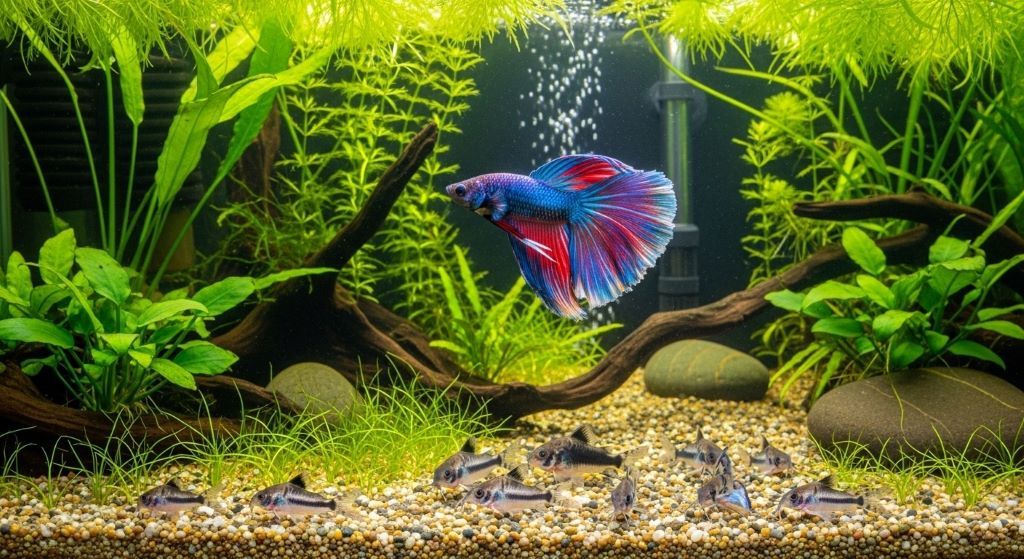
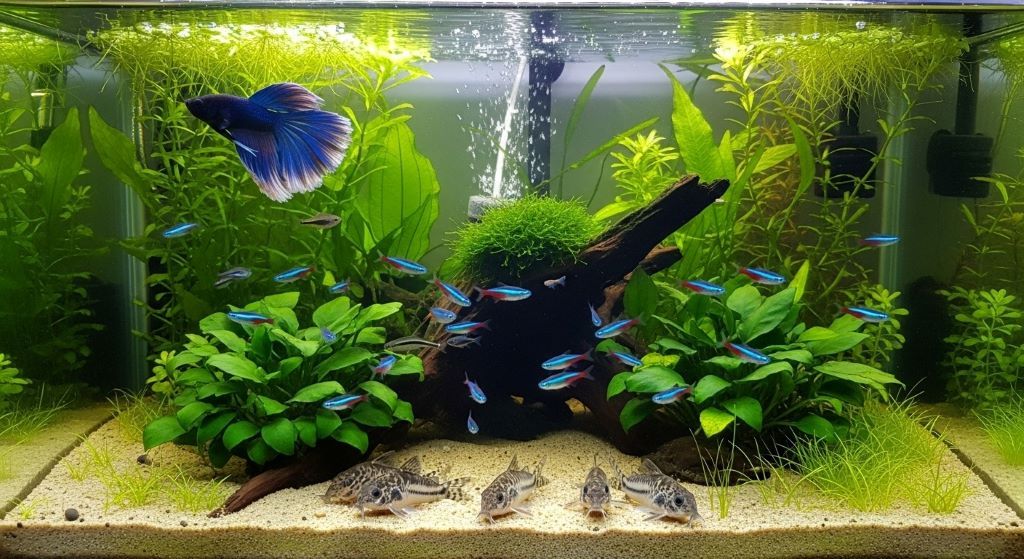
Several species have proven track records of successful cohabitation. Corydoras catfish rank among the best choices for community tanks. These bottom dwellers stay out of the betta’s territory while cleaning algae and leftover food. They prefer groups of at least six, which makes them ideal for larger tanks.
Kuhli loaches offer another excellent bottom-dwelling option. Their eel-like bodies and peaceful nature make them compatible companions. They hide during the day and become active at night, reducing overlap with betta activity periods. Moreover, their unique appearance doesn’t trigger territorial responses.
Neon tetras bring color and movement to mid-level tank areas. Their small size and schooling behavior keep them safe from bettas. A group of at least six neons creates a beautiful display while staying clear of trouble. However, ensure your betta has a calm temperament before adding these tiny fish.
Harlequin rasboras provide another schooling option for community tanks. These peaceful fish occupy the middle zones and have torpedo-shaped bodies that bettas don’t perceive as threats. They’re hardy and adapt well to various water conditions, making maintenance easier.
Malaysian trumpet snails contribute to tank cleanliness without bothering your betta. They burrow through substrate, preventing harmful gas buildup while consuming algae and debris. Additionally, their shells protect them from curious bettas. Nerite snails offer similar benefits with attractive shell patterns.
Ghost shrimp can work in betta tanks, though results vary by individual betta temperament. These transparent invertebrates clean algae and scavenge food particles. Their see-through bodies and quick movements help them avoid detection. Nevertheless, some bettas view them as food, so monitor interactions carefully.
Species to Avoid at All Costs
Certain fish should never share space with bettas. Other male bettas top this list, as they will fight until one dies. Female bettas can sometimes coexist but still require careful monitoring and adequate space. Even then, aggression may develop unexpectedly.
Guppies and other livebearers often trigger betta aggression. Their colorful tails and active swimming patterns mimic betta characteristics. Consequently, male bettas frequently attack these fish, viewing them as rivals. The stress harms both species and creates an unsafe environment.
Tiger barbs and similar fin-nipping species cause serious problems. They target slow-moving fish with long fins, making bettas prime victims. The constant harassment stresses bettas and damages their beautiful fins. This combination never ends well for anyone involved.
Cichlids and other aggressive species overpower bettas easily. These territorial fish establish dominance and attack perceived intruders. Even small cichlid species often prove too aggressive for betta companions. Therefore, keep these species in separate setups entirely.
Goldfish require completely different water conditions than bettas. They prefer cooler temperatures and produce more waste, creating unsuitable environments. Additionally, their size and eating habits make them incompatible with tropical community tanks.
Creating a Betta Compatibility Chart for Your Tank
Planning your community tank requires careful consideration of multiple factors. Start by listing fish species that interest you, then research their specific requirements. Note temperature preferences, pH ranges, tank size needs, and behavioral traits for each option.
A betta compatibility chart helps visualize potential combinations and identify conflicts before purchasing fish. Create columns for species name, temperament, tank zone, size, and special requirements. This organized approach prevents costly mistakes and saves time during the selection process.
Consider your betta’s individual personality when planning. Some bettas show remarkable tolerance, while others display aggression toward any tank mate. Observe your fish’s behavior before adding companions. A betta that flares at its own reflection may struggle with tank mates.
Introduce new fish gradually to minimize stress and territorial disputes. Add peaceful tank mates for betta first, starting with hardy species that establish themselves quickly. Monitor interactions closely during the first few weeks, watching for signs of aggression or stress in any fish.
Signs of Compatibility Issues and How to Address Them
Even with careful planning, problems sometimes arise. Recognizing warning signs early allows you to intervene before serious harm occurs. Torn fins indicate physical aggression, whether your betta attacked others or became a victim. Similarly, missing scales or visible wounds require immediate attention.
Behavioral changes signal stress or bullying. Fish hiding constantly, refusing food, or showing unusual swimming patterns need help. A betta that suddenly becomes lethargic may feel overwhelmed by tank mates. Conversely, increased aggression suggests territory issues or overcrowding.
Color changes often reflect stress levels. Bettas lose vibrancy when unhappy, developing pale or dull coloration. Other fish may display stress stripes or darkened colors. These visual cues provide early warnings about compatibility problems.
Address issues promptly to prevent escalation. Rearrange decorations to disrupt established territories and create new hiding spots. This simple change often reduces aggression significantly. If problems persist, separate aggressive individuals using tank dividers or different aquariums.
Sometimes personalities simply don’t mesh despite your best efforts. Having a backup plan ensures all fish stay safe and healthy. Keep an extra tank available for emergencies, or establish relationships with local aquarium stores that accept returns or exchanges.
Maintaining a Harmonious Community Tank
Success requires ongoing attention and proper maintenance. Regular water changes remove waste products that stress fish and trigger aggression. Test water parameters weekly to catch problems early. Stable conditions promote peaceful behavior and healthy fish.
Feed your betta separately if necessary to prevent competition. Some companions eat faster or more aggressively than bettas, leaving them hungry. Target feeding ensures everyone receives adequate nutrition without conflict. Sinking pellets for bottom dwellers and floating food for bettas work well together.
Provide enough space for all inhabitants as they grow. Fish purchased as juveniles eventually reach adult size, potentially creating overcrowding. Plan for future growth when stocking your tank. Overcrowding increases stress and aggression regardless of species compatibility.
Quarantine new additions before introducing them to your community tank. This practice prevents disease transmission and allows you to observe behavior without risking established fish. A two-week quarantine period catches most health issues before they spread.
The Role of Tank Size in Compatibility Success
Bigger tanks dramatically improve compatibility odds. More space means fish can establish territories without constant overlap. A 20-gallon tank accommodates significantly more peaceful species than a 10-gallon setup while reducing territorial disputes.
Vertical space matters as much as horizontal. Bettas prefer upper levels, while corydoras stay near the bottom. Utilizing all tank zones through strategic species selection maximizes capacity without overcrowding. This approach creates visual interest while promoting harmony.
Calculate bioload carefully when planning stocking levels. Each fish produces waste that beneficial bacteria must process. Overstocking overwhelms biological filtration, creating toxic conditions. Follow the general guideline of one inch of adult fish per gallon, adjusting for specific species needs.
Special Considerations for Female Bettas
Female bettas often tolerate companions better than males. They display less territorial aggression and rarely attack fish that don’t threaten them. However, they still require careful pairing with appropriate species. Don’t assume all compatibility rules change simply because your betta is female.
Sorority tanks housing multiple female bettas require expert-level care. These setups demand large tanks, numerous hiding spots, and careful monitoring. Even then, aggression may develop as hierarchies shift. Beginners should gain experience with single bettas before attempting sororities.
Female bettas still possess territorial instincts during breeding readiness. Hormonal changes trigger increased aggression temporarily. Therefore, maintain adequate space and hiding spots even in tanks with generally peaceful females.
Long-Term Success Strategies
Building a thriving community tank takes patience and observation. Don’t rush the process by adding too many fish too quickly. Gradual introductions allow you to identify and address problems before they escalate. This measured approach protects your investment and keeps all fish healthy.
Keep detailed records of your tank inhabitants and their interactions. Note which combinations work well and which create conflicts. This information proves invaluable when troubleshooting problems or planning future tanks. Additionally, sharing experiences helps other aquarists make informed decisions.
Join online communities or local aquarium clubs for support and advice. Experienced keepers offer valuable insights based on real-world situations. Learning from others’ successes and mistakes accelerates your journey toward maintaining a harmonious tank.
Stay informed about new species and updated care requirements. Aquarium science evolves constantly, with researchers discovering better practices regularly. Reading current articles and studies helps you provide optimal conditions for all tank inhabitants.
Conclusion
Choosing compatible tank mates for your betta requires research, planning, and patience. Understanding betta behavior helps you select species that occupy different tank zones and display peaceful temperaments. Bottom-dwelling corydoras, schooling tetras, and hardy snails often make excellent companions when introduced properly.
Success depends on providing adequate space, maintaining stable water conditions, and monitoring interactions carefully. A well-planned community tank brings diversity and interest to your aquarium while keeping your betta happy. Remember that each betta has a unique personality, so observe your fish and adjust your approach accordingly.
Start slowly with one or two compatible species, then expand gradually as you gain confidence. With proper preparation and ongoing attention, you can create a beautiful community tank that showcases your betta alongside carefully chosen companions.
Frequently Asked Questions
Can I keep two male bettas together with a tank divider?
Tank dividers allow male bettas to share aquarium space safely. However, they can still see each other through most dividers, causing constant stress and flaring. If using a divider, choose an opaque option that blocks visual contact completely. Additionally, ensure each section meets minimum size requirements and has its own filter and heater.
How many tank mates can I add to a 10-gallon betta tank?
A 10-gallon tank limits your options significantly. You might safely add a small group of six corydoras or a few snails. Avoid overstocking, as this creates water quality issues and increases aggression. For more diverse communities, upgrade to at least a 20-gallon tank.
What should I do if my betta attacks new tank mates immediately?
Remove the new fish immediately to prevent injury or death. Rearrange decorations and plants to disrupt territorial boundaries, then try reintroducing them after a few days. If aggression continues, your betta may not tolerate companions. Some bettas simply prefer solitary living.
Are there any colorful fish that work well with bettas?
Yes, several colorful species coexist peacefully with bettas. Ember tetras bring orange hues, while celestial pearl danios offer beautiful patterns. The key is choosing fish with different body shapes and swimming patterns than bettas. Avoid species with long, flowing fins regardless of color.
How long should I wait before adding tank mates to a new betta tank?
Wait at least two to three weeks after introducing your betta to a new tank. This period allows beneficial bacteria to establish and lets your betta acclimate to its environment. Additionally, you can observe your betta’s temperament before risking other fish.
Related Topics:
Ultimate Aquatic Invertebrates Care Guide: Essential Tips for a Thriving Habitat
Essential Water Parameters for a Thriving Reef Tank