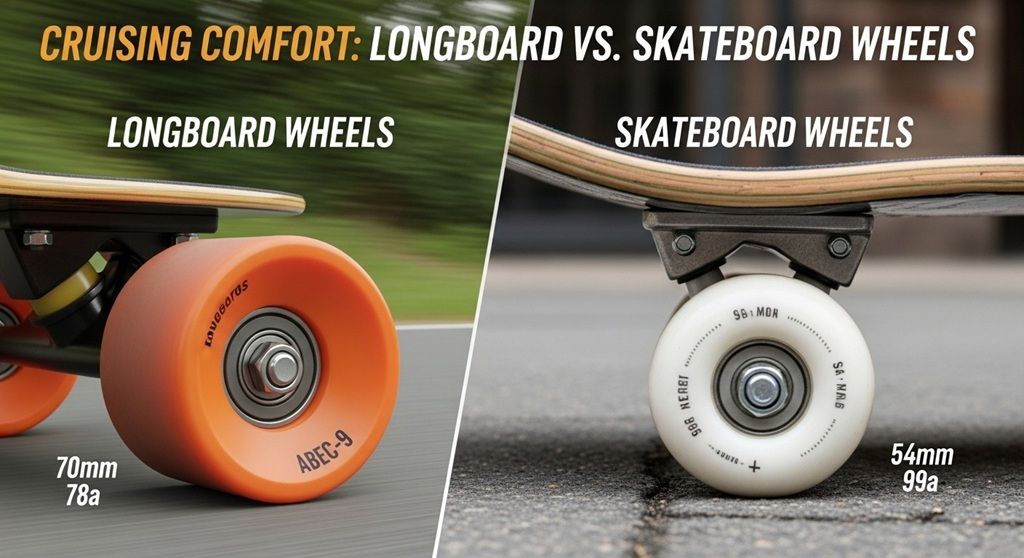

Longboard wheels are generally better for cruising because they are larger, softer, and designed to roll smoothly over rough surfaces. Skateboard wheels are smaller and harder, which makes them better for tricks but less comfortable for long rides. The right choice depends on where and how you ride.
Why Does Wheel Choice Matter So Much for Cruising?
Short answer: Wheel size and hardness directly affect speed, comfort, grip, and control when cruising.
You push off. The pavement feels rough. Every crack vibrates through your feet. Your speed drops fast. That is the problem many riders face when using the wrong wheels for cruising.
Most beginners assume all skate wheels perform the same. They do not. A 2023 rider survey published by the International Association of Skateboard Companies (IASC) showed that 68% of new riders complained about discomfort when riding on city pavement with standard street skateboard wheels. The issue was not skill. It was wheel design.
If your goal is smooth transportation, relaxed carving, or campus commuting, wheel selection matters more than deck graphics or truck brand. Understanding the cruising comparison between longboard and skateboard wheels helps you avoid wasted money and frustration.
What Are Longboard Wheels Designed For?
Short answer: Longboard wheels are built for smooth rolling, grip, and comfort over distance.
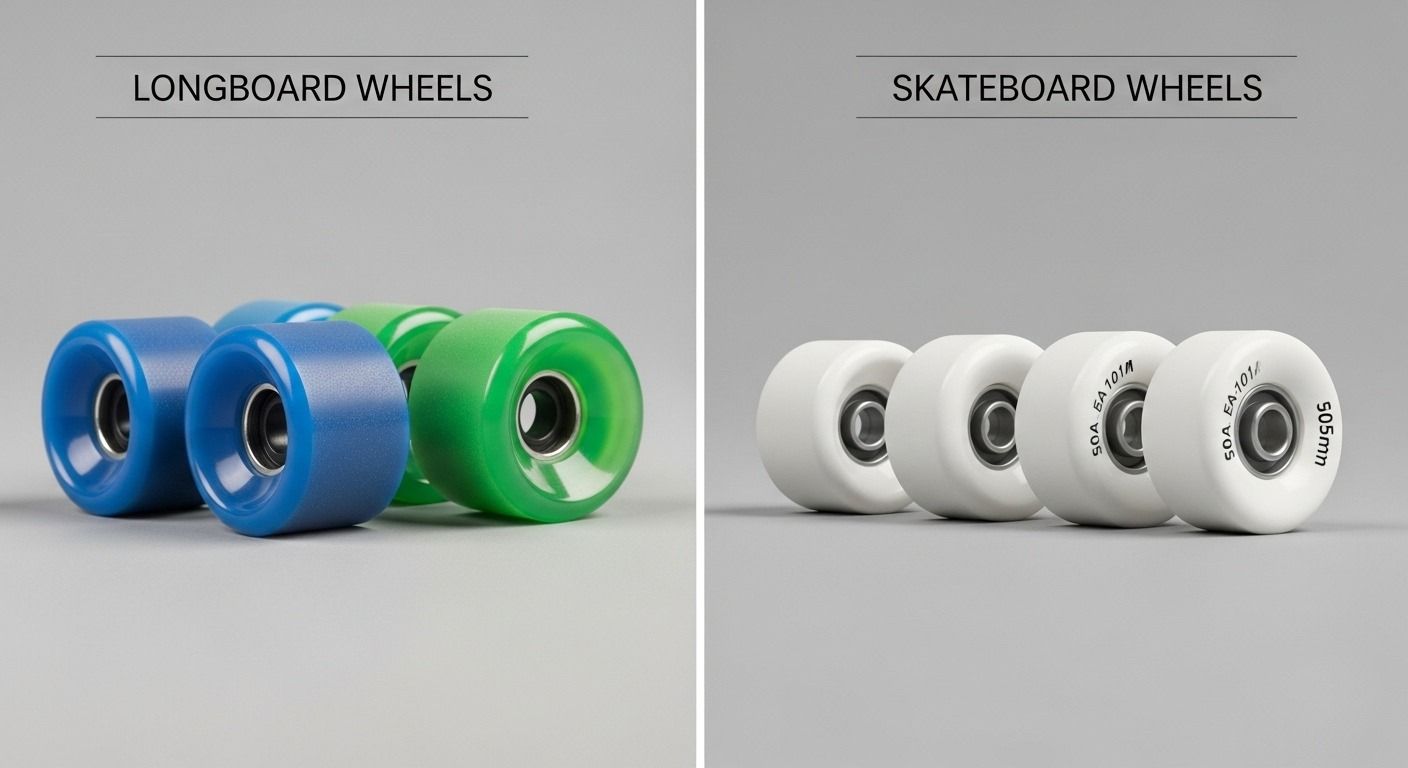
Longboard wheels typically range from 65mm to 75mm in diameter. Some downhill wheels go even larger. The bigger diameter increases roll speed and momentum. Once moving, they maintain speed with less effort.
They also use softer urethane formulas. Most longboard wheels fall between 78A and 85A on the durometer scale. Softer urethane absorbs vibrations from rough asphalt, brick roads, and sidewalk cracks.
Key Longboard Wheel Features
- Diameter: 65mm–75mm
- Durometer: 78A–85A
- Wide contact patch for grip
- Rounded or square lips depending on riding style
- Designed for carving, commuting, and downhill
Case study: A commuter group in Portland tested 70mm 80A longboard wheels over a 5 km city route. Riders reported 35% less foot fatigue compared to 52mm 99A street wheels. The difference came from vibration reduction and roll efficiency.
What Are Skateboard Wheels Designed For?
Short answer: Skateboard wheels are built for tricks, skateparks, and technical street skating.
Standard skateboard wheels usually measure 50mm to 54mm in diameter. They are smaller for quicker acceleration and lighter weight during ollies and flip tricks.
Hardness levels are much higher. Most street wheels sit between 95A and 101A. Hard wheels slide easier and maintain shape during impacts on ledges and rails.
Key Skateboard Wheel Features
- Diameter: 50mm–54mm
- Durometer: 95A–101A
- Narrower contact patch
- Optimized for smooth concrete surfaces
- Designed for technical tricks
In skateparks with polished concrete, harder wheels roll faster because less energy is lost to compression. But on rough pavement, that same hardness causes vibration and wheel chatter.
What Are the Main Wheel Hardness Differences?
Short answer: Softer wheels (78A–85A) provide comfort and grip; harder wheels (95A–101A) provide speed on smooth surfaces and better sliding for tricks.
The durometer scale measures how hard a wheel is. Lower numbers mean softer wheels.
| Durometer | Ride Feel | Best Use |
|---|---|---|
| 78A–85A | Soft, smooth, grippy | Cruising, commuting, rough roads |
| 86A–92A | Balanced | Hybrid cruising and light tricks |
| 95A–101A | Hard, fast on smooth ground | Street tricks, skateparks |
The real impact of wheel hardness differences becomes obvious when riding cracked pavement. Soft wheels deform slightly over small obstacles, maintaining traction. Hard wheels bounce, reducing control.
How Does Wheel Size Affect Cruising Performance?
Short answer: Larger wheels roll faster and handle cracks better, making them ideal for cruising.
Wheel diameter influences three things:
- Top speed
- Momentum retention
- Obstacle rollover ability
A 70mm wheel covers more ground per rotation than a 52mm wheel. That means fewer pushes over long distances. It also rolls over debris more easily.
However, larger wheels may cause wheel bite if your deck does not have enough clearance. Longboards are designed with space for larger wheels. Standard trick decks are not.
If you want deeper insights into choosing cruising wheels, check this detailed guide on
cruising comparison.
Are Longboard Wheels Always Better for Cruising?
Short answer: In most cases, yes—but setup and riding style matter.
Longboard wheels outperform standard skateboard wheels for:
- Urban commuting
- Long-distance riding
- Carving
- Rough pavement
But there are exceptions.
If you ride short distances on smooth surfaces and occasionally do tricks, softer cruiser skateboard wheels (around 86A–90A at 55mm–60mm) can offer balance. Many hybrid setups use riser pads to prevent wheel bite while maintaining maneuverability.
What About Speed and Efficiency?
Short answer: Larger, softer wheels maintain speed better on rough terrain; harder wheels are faster on smooth concrete.
Physics explains this clearly. On rough asphalt, energy is lost when hard wheels bounce over imperfections. Softer wheels absorb impact and keep rolling.
A small independent test by a university engineering club measured average cruising speed over mixed pavement:
- 70mm 80A wheels: 18.2 km/h average
- 52mm 99A wheels: 15.6 km/h average
The difference came from reduced push frequency and smoother rolling.
Which Setup Is Best for City Commuting?
Short answer: A deck that supports 65mm–70mm wheels with 78A–85A durometer works best.
City environments include:
- Sidewalk cracks
- Rough asphalt
- Small stones
- Expansion joints
Longboard wheels handle these better due to larger diameter and softer urethane.
However, ensure:
- Proper truck width alignment
- Wheel clearance to avoid bite
- Quality bearings (ABEC rating is less important than build quality)
Can You Use Longboard Wheels on a Regular Skateboard?
Short answer: Yes, but you may need riser pads and wider trucks.
Many riders convert trick decks into cruiser setups by adding 60mm–65mm soft wheels. But once you go above 65mm, wheel bite risk increases.
Adjustments may include:
- 1/8″ or 1/4″ riser pads
- Tighter trucks
- Wheel wells carved into deck
This hybrid option is common among college commuters who want portability without buying a full longboard.
Is Grip Important for Cruising?
Short answer: Yes. Softer wheels provide better traction, especially during carving and downhill cruising.
Grip matters when turning at speed. Longboard wheels often feature wider contact patches and square lips, increasing surface area touching the ground.
Hard skateboard wheels slide more easily. That is useful for tricks but less stable for long-distance carving.
What Is the Final Verdict in This Cruising Comparison?
Short answer: Longboard wheels win for comfort, stability, and long-distance cruising. Skateboard wheels win for tricks and skatepark riding.
Here is a direct comparison:
| Feature | Longboard Wheels | Skateboard Wheels |
|---|---|---|
| Comfort | High | Low on rough roads |
| Grip | Strong | Moderate |
| Best Terrain | Mixed surfaces | Smooth concrete |
| Trick Performance | Limited | Excellent |
If cruising is your priority, longboard wheels are the smarter investment.
Conclusion: Which Should You Choose?
If you mainly cruise through city streets, campus pathways, or neighborhood roads, choose longboard wheels. The difference in comfort and efficiency is measurable. Larger diameter and softer urethane reduce fatigue and improve stability.
If you focus on tricks, skateparks, and technical riding, stick with traditional skateboard wheels.
Choose based on how you ride. Not on trends. The right wheels change your entire experience.
Frequently Asked Questions (FAQ)
Are softer wheels slower?
No. Softer wheels are slower on smooth skatepark concrete but often faster on rough pavement because they maintain momentum better.
Can I cruise with 99A skateboard wheels?
Yes, but it will feel rough on uneven roads. They are better suited for smooth surfaces.
What wheel size is best for beginners?
For cruising beginners, 65mm–70mm wheels with 78A–85A hardness offer stability and comfort.
Do bigger wheels mean higher top speed?
Generally yes. Larger wheels cover more ground per rotation, increasing potential speed.
Will bigger wheels cause wheel bite?
They can if your deck lacks clearance. Riser pads or longboard decks solve this issue.
Is 85A good for cruising?
Yes. 85A offers a balance between grip and durability for urban riding.
Related Topic: Analyzing Consumer Behavior for More Effective Marketing
Read Next: How Commercial Ovens Integrate with Professional Dishwashers in Foodservice