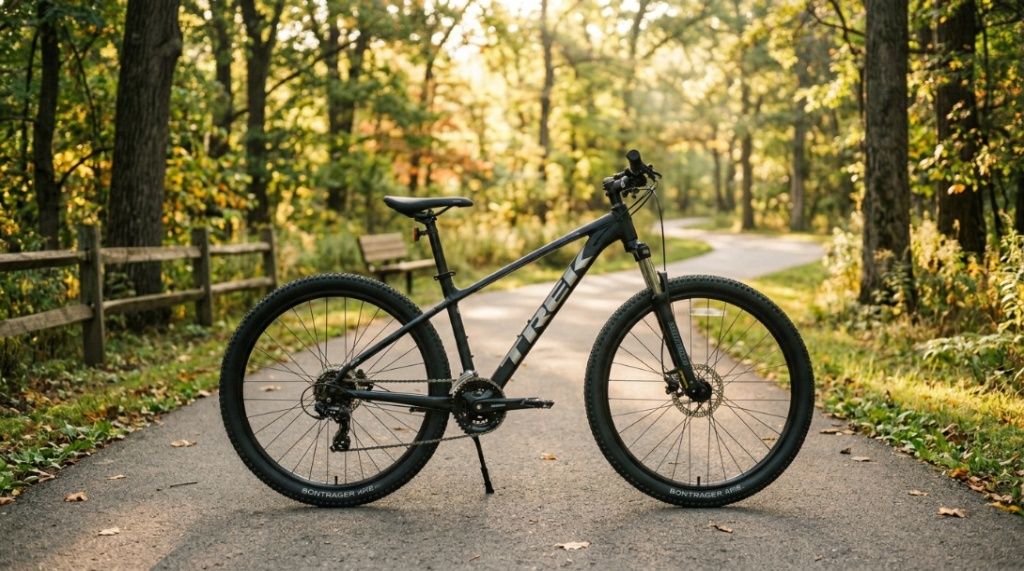

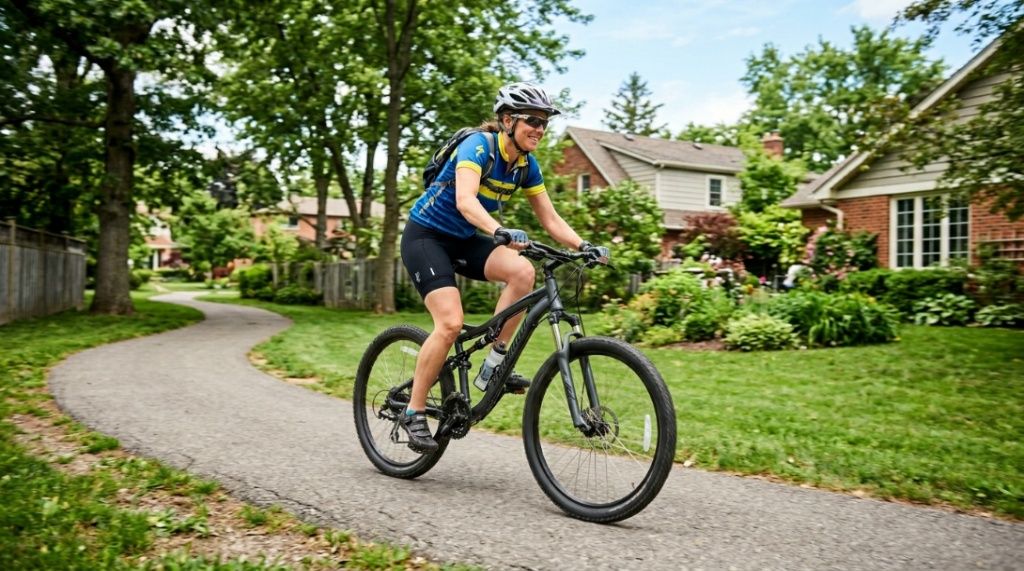
My neighbor rides a 26 inch mountain bike to work, to the grocery store, on evening trail rides with his kids, and for Saturday morning group rides — one bike, four purposes, zero complaints for three years straight. The 26-inch wheel size that the industry declared “dead” keeps working perfectly for riders who value versatility, affordability, and the nimble handling that makes everyday riding feel effortless rather than laborious. This mountain bike buying guide focuses specifically on choosing a 26er that serves everyday life — not just weekend trails — because most riders need a bike that handles the mundane (errands, exercise, commuting) as well as the exciting (singletrack, group rides, exploration).
Why Do 26 Inch Bikes Excel for Everyday Mixed Use?
26-inch mountain bikes excel for everyday use because their smaller wheels create lighter, more maneuverable bikes that accelerate quickly in stop-and-go urban riding, navigate tight spaces easily, store in smaller areas, and cost significantly less than equivalent 29ers — all advantages that compound during daily use rather than occasional trail-only riding.
- Urban maneuverability: Shorter wheelbase and quicker steering make navigating traffic, bike paths, parking lots, and tight spaces easier than longer 29er frames.
- Quick acceleration: Lower rotational weight means faster starts from stop signs, traffic lights, and trail intersections — where daily riders spend more time than weekend-only riders.
- Storage friendly: Smaller overall dimensions fit in apartments, garages, and vehicle trunks more easily than longer 29er bikes.
- Lower cost of ownership: 26-inch tires, tubes, and wheels cost 15–25% less than 29er equivalents. Over years of everyday riding with regular replacements, this savings accumulates meaningfully.
- Lighter weight: 1–3 lbs lighter than equivalent 29ers makes carrying up stairs, lifting onto racks, and general handling easier for daily-use scenarios.
What Components Matter Most for Everyday 26 Inch Bikes?
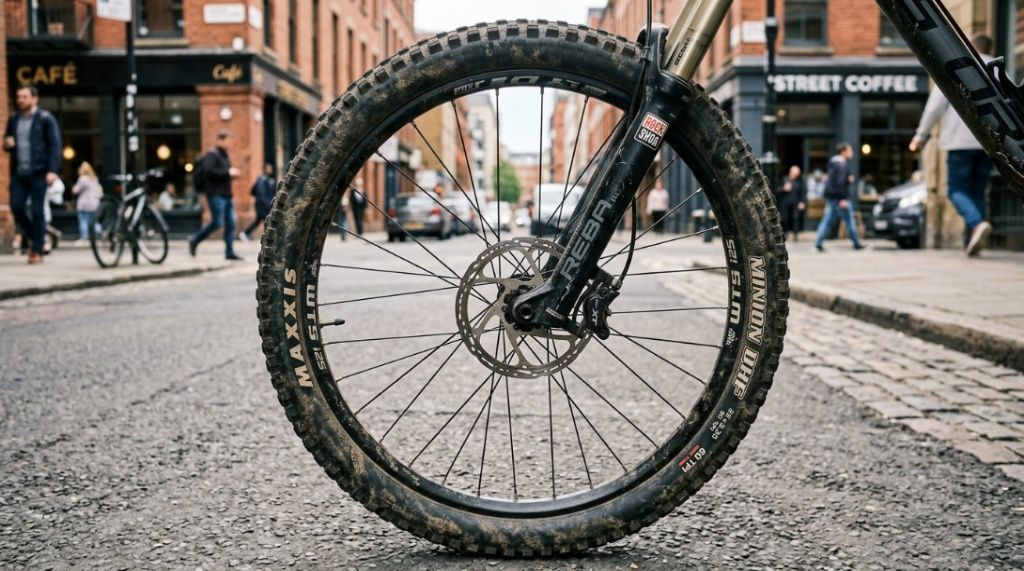
For everyday use, prioritize: reliable hydraulic disc brakes (daily safety in all weather), puncture-resistant tires (flats ruin commutes), comfortable saddle and grips (daily contact points), and a low-maintenance drivetrain (minimal adjustment needed between rides) — these four factors determine whether a bike invites daily use or creates daily frustration.
- Brakes: Hydraulic disc brakes provide consistent stopping in rain, mud, and dry conditions without the adjustment mechanical brakes need. For everyday riding where you encounter wet roads, gravel, and surprise stops, hydraulic brakes are a safety essential.
- Tires: Choose puncture-resistant compound with semi-aggressive tread (center smooth for pavement, edges knobby for off-road). Width 2.0–2.25″ provides comfort and light trail capability without excessive pavement drag.
- Saddle: Factory saddles are rarely comfortable for 30+ minute daily rides. Budget $40–$60 for an anatomically appropriate saddle immediately. This single upgrade determines whether you ride daily or avoid riding due to discomfort.
- Drivetrain: Shimano Altus or above provides adequate reliability for daily use. 1x systems (single chainring) reduce maintenance, eliminate front derailleur adjustment, and simplify daily riding. Chain guard or narrow-wide chainring prevents chain drops on bumpy commute surfaces.
What Budget Delivers a Reliable Everyday 26er?
$350–$600 delivers a 26-inch mountain bike reliable enough for daily commuting, weekend trails, and years of everyday use — this range accesses quality frames, adequate components, and the durability that daily riding demands without overspending on features used only by competitive riders.
- $250–$350: Basic everyday capability. Mechanical brakes, simple suspension, entry drivetrain. Handles light trails and pavement. May require upgrades within first year for daily use comfort.
- $350–$500 (Sweet spot): Hydraulic brakes (some models), better fork, improved drivetrain. Handles daily commuting and moderate trails without immediate upgrade needs. The BrightPeak 26-inch mountain bike sits in this value category — offering everyday adults a capable platform for mixed trail and pavement use at accessible pricing.
- $500–$700: Quality components throughout, reliable suspension, excellent brakes. Handles years of daily use without concern. Best value for committed everyday riders who want zero compromise on reliability.
- $700+ (used market): High-end 26ers from 2015–2020 sell used at $400–$700 with components that exceed any new bike at that price. The best value in everyday 26-inch mountain biking exists in the pre-owned market.
How Do You Set Up a 26er for Comfortable Everyday Riding?
Everyday comfort setup requires: raising handlebars 1–2 inches above saddle height (reduces back strain), choosing a wider saddle with pressure relief (prevents numbness), setting tire pressure 5–10 PSI below maximum (increases comfort), and installing ergonomic grips with palm platforms (eliminates hand numbness on longer rides).
- Handlebar height: Most mountain bikes position bars level or below saddle — aggressive for trails but uncomfortable for daily upright riding. Add a stem riser ($15–$25) or swap to a higher-rise handlebar to achieve 1–2 inches above saddle height.
- Saddle selection: Daily riding demands comfort over weight savings. Choose a saddle wide enough for your sit bones (measure at a bike shop or with cardboard test) with adequate padding and a center pressure-relief channel.
- Tire pressure: Lower pressure (30–40 PSI versus 40–50 PSI) absorbs road vibration and trail bumps without noticeably increasing effort. The comfort improvement for daily riding is dramatic at the cost of minimal speed difference.
- Grips: Ergonomic grips ($20–$30) with a flat palm platform distribute hand pressure across a wider area, eliminating the numbness and tingling that round grips cause during 30+ minute rides.
- Suspension setting: Set fork sag at 30–35% (softer than trail recommendation) for everyday riding. Softer suspension absorbs commute bumps and rough pavement that would otherwise transmit fatigue through your arms and shoulders.
Conclusion
The best 26 inch mountain bike for everyday riding combines reliable brakes, comfortable contact points, puncture-resistant tires, and a frame sized correctly for your body — purchased in the $350–$600 range for new bikes or $400–$700 for used premium options. Set up for comfort (raised bars, quality saddle, ergonomic grips, proper tire pressure) and the bike becomes a daily-use tool that handles everything from morning commutes to evening trail rides without demanding maintenance attention or causing physical discomfort.
Everyday bikes earn their value through consistency — the rides that happen because the bike is ready, comfortable, and inviting rather than requiring preparation or motivation. A well-chosen 26er at an accessible price point removes every barrier between you and daily riding. That is its real value: not spec-sheet superiority, but daily usability that accumulates into thousands of miles of fitness, transportation, and recreation over years of reliable service.
What makes your everyday bike work for daily use — specific setup choices, component upgrades, or simply the right size? Share below.
Finding the right frame size is only half the battle when preparing a bike for daily commutes; fine-tuning your components makes the real difference in preventing fatigue. Beyond selecting the right tire pressure and handlebar height, your saddle alignment plays a massive role in how your knees and back feel after a long ride. If you find yourself slipping forward or experiencing lower back strain, it is highly recommended to read about What is the Best Seat Position on a Bike? to ensure your weight distribution is perfectly balanced for daily riding.
Frequently Asked Questions
Is a 26 inch bike comfortable for long rides?
Yes — with proper setup. Raised handlebars, quality saddle, ergonomic grips, and appropriate tire pressure make 26ers comfortable for 2–3+ hour rides. The frame geometry and wheel size do not determine comfort — contact points and riding position do. A properly set-up 26er is as comfortable as any larger-wheeled bike with equivalent attention to fit.
How many miles per week can a budget 26er handle reliably?
A quality 26er ($350–$600 range) handles 50–100+ miles per week indefinitely with basic maintenance (weekly chain lube, monthly brake check, quarterly tune-up). Components wear at predictable rates regardless of weekly mileage. Budget for $150–$200 annual maintenance and the bike serves reliably for 5–10 years of daily use.
Should I buy a 26er or save for a 29er for everyday riding?
For purely everyday mixed-use riding (commuting, errands, light trails), a 26er at $400 provides identical practical value to a 29er at $600–$800. The 29er’s rollover advantage matters on rough trails — not on pavement and bike paths. If budget is a factor and trails are moderate, the 26er delivers equivalent everyday enjoyment at lower cost.
Can I convert a 26 inch mountain bike to an e-bike?
Yes — 26-inch hub motor conversion kits ($300–$600) transform any 26er into an electric-assist bike. The smaller wheel diameter actually produces slightly more torque per motor watt than 29er conversions. Common kits include rear hub motor, battery, controller, and throttle/pedal-assist sensor. Professional installation recommended for safety.
How do I make my 26er faster on pavement?
Three changes: semi-slick tires (biggest improvement — 15–25% less rolling resistance), lock out suspension fork (eliminates pedaling energy lost to bob), and increase tire pressure by 5–10 PSI for pavement days (reduces contact patch and rolling resistance). Together these changes make a 26er approximately 85–90% as efficient as a dedicated commuter bike on paved surfaces.
Are 26 inch bikes safe for heavier riders?
26-inch wheels are actually stronger per pound of load than 29er wheels (shorter spokes resist flex better). Most quality 26er frames support 250–300+ lbs. Verify specific weight limits in manufacturer specifications. For heavier riders, the 26er’s wheel strength advantage is a genuine safety benefit — fewer spoke failures and less wheel flex under lateral load during cornering.