
The cruel irony of most waterproof fishing shoes: they keep water out but trap heat and moisture inside—creating a foot environment so uncomfortable that anglers remove them mid-trip, defeating the entire purpose of waterproofing. Finding waterproof fishing shoes that stay comfortable all day requires understanding the engineering tension between water exclusion and breathability—and knowing which technologies actually solve this conflict rather than marketing around it. Waterproof fishing shoes are sealed footwear using membrane barriers (Gore-Tex, eVent, and proprietary films) or full-rubber construction to prevent external water from reaching your feet while maintaining structural integrity in wet environments. The fundamental problem? True waterproofing and true breathability are opposing physical forces. Sealing water out also restricts moisture vapor from escaping—trapping perspiration inside the shoe where it creates the same wet-foot condition you were trying to avoid. This guide identifies fishing footwear that genuinely balances these demands and honestly tells you when waterproof is the wrong choice entirely.
When Do You Actually Need Waterproof Fishing Shoes?
You need waterproof fishing shoes when water temperature is below 60°F, when prolonged standing in water is involved without full immersion, or when cold rain and spray create hypothermia risk—not simply because your feet “might get wet.”
The honest decision framework:
- Waterproof IS appropriate: Cold-water wade fishing (rivers under 60°F), fall/winter bank fishing in rainy conditions, early-morning trips with heavy dew and cold air, and any scenario where wet, cold feet create a genuine health risk (hypothermia, numbness affecting balance).
- Waterproof is NOT appropriate: Warm-water fishing (above 70°F), boat fishing in hot conditions, tropical saltwater environments, and any scenario where your feet will inevitably submerge above the shoe height (waterproof shoes that flood become water-holding buckets).
- The overbuying trap: Many anglers buy waterproof shoes for situations where quick-dry drainage shoes perform better. If water temperature is warm and you’re on a boat with deck drainage, waterproof shoes create unnecessary heat buildup without providing meaningful benefit.
Rule of thumb: if you’d be comfortable swimming in the water you’re fishing near, you don’t need waterproof shoes—you need drainage shoes. Waterproof is a cold-water and cold-air solution, not a universal wet-condition solution.
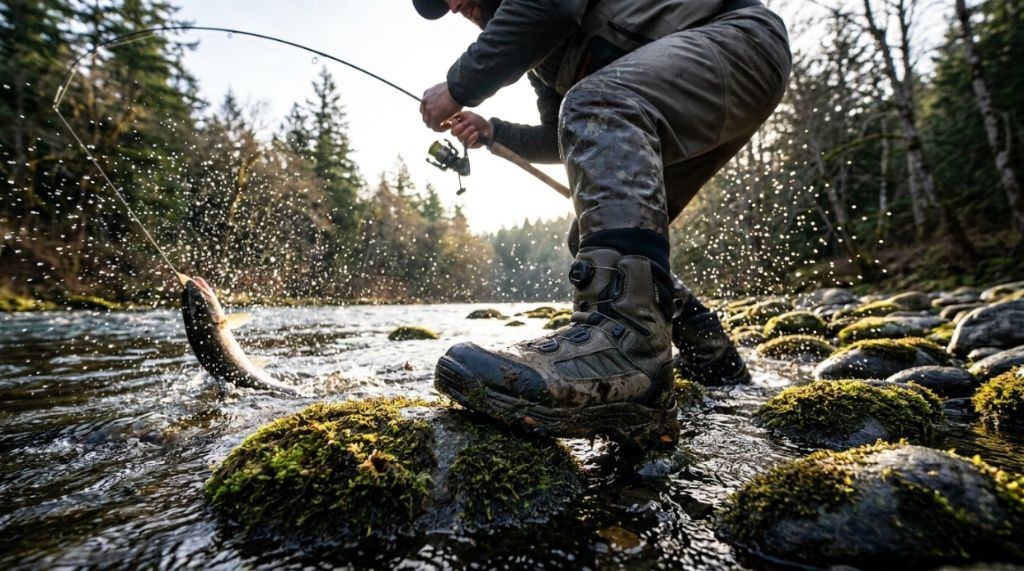
Close up of non slip rubber soles on durable fishing boots.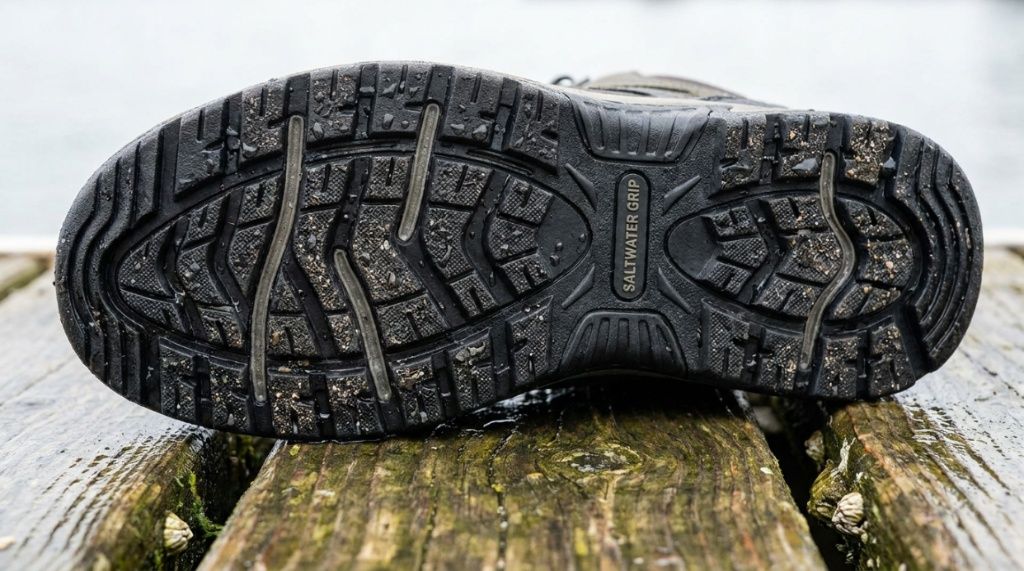
What Technologies Make Waterproof Shoes Breathable?
Gore-Tex, eVent, and similar microporous membranes create breathable waterproofing by using billions of microscopic pores too small for water droplets to enter but large enough for water vapor molecules (sweat) to escape—though real-world performance varies significantly from lab claims.
Technology comparison:
| Technology | Waterproof Rating | Breathability Rating | Durability | Price Impact |
|---|---|---|---|---|
| Gore-Tex (GTX) | Excellent | Good | Excellent (lifetime warranty) | +$40–$80 premium |
| eVent (DVSTORM) | Excellent | Very Good (superior to GTX) | Good | +$30–$60 premium |
| Proprietary membranes (brand-specific) | Good to Excellent | Varies widely | Varies | +$20–$50 premium |
| DWR coating only (no membrane) | Moderate (surface only) | Good (coating doesn’t block vapor) | Diminishes over time (reapplication needed) | +$10–$20 premium |
| Full rubber construction | Excellent (complete seal) | Zero (no breathability) | Excellent | Varies by brand |
Honest breathability reality: even the best membranes can only transfer approximately 5,000–15,000g of moisture vapor per square meter per 24 hours. An active angler’s feet produce roughly 200–400 ml of sweat per day. In practical terms, membrane breathability helps significantly but doesn’t eliminate internal moisture completely during high-activity fishing in warm conditions. Expectations should be realistic—”more comfortable than rubber boots” rather than “perfectly dry inside.”
What Comfort Features Matter for All-Day Waterproof Fishing?
All-day comfort in waterproof fishing shoes requires cushioned midsoles (EVA or PU foam), anatomical arch support, moisture-wicking internal linings, adequate toe box volume for swelling, and a break-in period before committing to full-day use.
Feature-by-feature comfort analysis:
- Midsole cushioning: Standing 6–12 hours on hard surfaces (boat decks, river rocks) without cushioning causes plantar fasciitis, heel pain, and fatigue that ends trips early. EVA foam provides lightweight cushioning. PU (polyurethane) provides denser, longer-lasting cushioning. Both outperform thin rubber midsoles dramatically for all-day comfort.
- Arch support: Critical for standing-intensive fishing. Most waterproof fishing boots have minimal built-in arch support—plan to add quality aftermarket insoles (Superfeet, Currex, or similar). This $40–$50 addition transforms all-day comfort more than any other single modification.
- Internal moisture management: Moisture-wicking linings (CoolMax, wool blends, or synthetic wicking fabrics) pull perspiration away from skin toward the membrane where it can escape. Cotton linings trap moisture against your skin—causing maceration and blisters during long days.
- Toe box volume: Feet swell 5–10% during all-day activity. Waterproof shoes that feel perfect at 7 AM feel restrictive by noon if the toe box is cut tight. Buy with afternoon (swollen) feet or size up a half-size from your standard. Verify you can wiggle all toes freely when fitted.
- Weight: Every ounce matters over 8–12 hours. Waterproof fishing shoes range from 14 oz to 40+ oz per shoe. Under 20 oz per shoe is comfortable for extended wear. Over 28 oz creates noticeable fatigue by mid-afternoon. Check the listed weight before purchasing.
- Ankle padding: The collar around the ankle opening contacts your lower leg with every step. Padded collars prevent rubbing and chafing during repetitive movement. Unpadded or thin collars create hotspots that develop into blisters during long fishing days.
How Do You Prevent Blisters in Waterproof Fishing Shoes?
Prevent blisters by wearing moisture-wicking socks (never cotton), breaking in shoes gradually over three sessions, using anti-chafe products on hot-spot areas, and ensuring heel lock-down prevents internal foot movement during activity.
Blister prevention protocol for all-day fishing:
- Sock selection (most important): Merino wool or synthetic moisture-wicking socks maintain dry skin contact. Cotton socks absorb moisture and hold it against your skin—creating the friction + moisture combination that guarantees blisters. Invest $15–$25 per pair for quality fishing socks.
- Break-in schedule: Day 1: wear for 2 hours. Day 2: wear for 3–4 hours. Day 3: wear it for a full trip. Identify hotspots during short sessions while you can still address them. Never debut new waterproof shoes on a full-day trip.
- Anti-chafe application: Apply BodyGlide, petroleum jelly, or a dedicated anti-chafe product to known friction areas (heels, toe knuckles, and ankle bones) before putting socks on. This creates a lubrication layer that prevents friction from converting to heat and blisters.
- Heel lock lacing: Use a “heel lock” or “runner’s loop” lacing technique at the top eyelets. This creates downward pressure on the heel cup, preventing your foot from lifting and creating friction during stride. Search YouTube for “heel lock lacing” for visual instruction—it takes 30 seconds and transforms heel blister prevention.
- Mid-trip sock change: For trips exceeding 6 hours, bring a second pair of dry socks. Changing socks at the halfway point removes accumulated moisture, refreshes cushioning, and resets friction. This single habit eliminates late-day blister development for most anglers.
What Are the Best Waterproof Fishing Shoes by Activity Type?
The best waterproof fishing shoes vary by activity: membrane-lined hiking boots for cold river wading, sealed rubber boots for offshore wet decks, waterproof trail shoes for cold-weather bank fishing, and neoprene booties for cold surf conditions.
Activity-matched recommendations:
- Cold river wade fishing: Simms Tributary Boot (Gore-Tex), Korkers Devil’s Canyon (interchangeable soles + waterproof membrane). Ankle support is critical for current resistance. Felt or rubber/stud combo soles for algae-covered rocks.
- Cold-weather bank fishing: Danner Vital or Keen Targhee waterproof trail shoes. Hiking shoe comfort with angling-appropriate durability. Lugged outsoles for muddy riverbanks. Moderate weight for walking to fishing spots.
- Offshore rough weather: XTRATUF Legacy 15″ boots or Grundéns Boundary boots. Full rubber waterproofing for deck flooding during heavy seas. Insulated versions available for cold-water trips.
- Cold surf fishing: O’Neill Psycho 5mm Booties or Xcel Drylock boots. Neoprene seals heat; sealed seams prevent water entry. Thick soles protect from shells and rocks in the surf zone.
- Spring/fall general fishing: Columbia Newton Ridge Waterproof or Merrell MOAB 3 Waterproof. Versatile trail-hiking comfort with waterproof membrane. Light enough for all-day wear, waterproof enough for wet grass and light rain.
How Long Do Waterproof Fishing Shoes Actually Stay Waterproof?
Waterproof membrane effectiveness typically lasts 1–3 years of regular fishing use before seam seal degradation, membrane fatigue, and DWR coating loss allow water seepage — though rubber boots maintain waterproof integrity for 3–5+ years.
Waterproofing degradation timeline:
- Months 1–6: Full waterproof performance. Seams sealed, membrane intact, DWR coating active. Water beads and rolls off surfaces.
- Months 6–12: DWR coating begins fading on high-wear areas. Fabric “wets out” (absorbs surface moisture) in these zones, but the membrane still blocks penetration. Shoes feel heavier when the surface saturates.
- Months 12–18: Seam sealant begins degrading at flex points (toe bend, ankle crease). Pin-hole leaks may appear during extended submersion. Surface DWR largely depleted—reapplication needed.
- Months 18–36: Membrane itself fatigues from repeated flex cycles. Leakage increases, particularly at stress-point seams. Shoes remain “water-resistant” but no longer truly waterproof for extended exposure.
Extending waterproof lifespan:
- Re-apply DWR treatment (Nikwax, Grangers) every 3–4 months or when water stops beading
- Clean shoes before re-treating — DWR bonds to clean fabric, not dirty surfaces
- Dry shoes completely between uses — repeated wet storage accelerates membrane degradation
- Avoid machine washing—agitation damages seam seals and membrane bond points
- Apply seam sealer to visible wear points proactively, before leaks develop
Finding the right gear isn’t just about protecting your feet from the elements; it’s about safeguarding your entire body from the fatigue of a long day on the water. While a solid pair of wading boots provides the stable foundation you need on slippery rocks, repetitive casting can still take a heavy toll on your upper body. If you notice your wrist aching after a few hours of launching heavy lures, pairing your footwear with the Best Fishing Wrist Brace for Pain-Free Casting can keep you casting smoothly without the nagging joint pain.
Conclusion
Waterproof fishing shoes that stay comfortable all day exist — but finding them requires honest assessment of when waterproofing actually serves you, which technology delivers genuine breathability, and which comfort features prevent the foot fatigue that ruins full-day trips. The best waterproof fishing footwear uses quality membrane technology (Gore-Tex or eVent), pairs it with cushioned midsoles and moisture-wicking linings, and fits with room for natural foot swelling.
Be honest about your needs. If you fish in warm water from boats, drainage shoes outperform waterproof options. If you wade cold rivers or fish in rainy, cold-weather conditions, proper waterproof shoes protect both comfort and safety. Match technology to environment, invest in quality socks and insoles, break in shoes before full-day use, and maintain waterproofing actively. Comfortable dry feet for 12 hours is achievable — it just requires intentional selection rather than grabbing the first “waterproof” shoe you find.
Frequently Asked Questions
Are Gore-Tex fishing shoes worth the extra cost?
For cold-water applications (water/air under 60°F), yes—Gore-Tex provides reliable waterproofing with meaningful breathability that keeps feet drier and warmer than non-membrane alternatives. The $40–$80 premium pays for itself in comfort across a season of cold-weather fishing. For warm-water fishing, Gore-Tex shoes create unnecessary heat buildup—your money is better spent on quality drainage shoes instead.
Can waterproof fishing shoes be resoled?
Some premium wading boots (Simms, Korkers) offer resoling services or interchangeable sole systems that extend boot life without full replacement. Most standard waterproof fishing shoes cannot be resoled economically — the bonded membrane construction makes deconstruction difficult. Budget for full replacement every 2–3 years for regular-use waterproof fishing footwear.
Why do my waterproof fishing shoes still feel wet inside?
Internal wetness in waterproof shoes is almost always perspiration—not leaks. Active feet produce 200–400 mL of sweat daily. Even breathable membranes can’t evacuate all moisture during high-exertion activities. Solutions: wear moisture-wicking socks (not cotton); add a mid-day sock change; verify DWR coating isn’t depleted (causing outer fabric saturation that blocks membrane breathability); and ensure shoes aren’t too tight (compression reduces breathability).
Should I choose waterproof or water-resistant fishing shoes?
Choose waterproof for extended water contact (wading, heavy rain, cold spray) where keeping feet dry is a safety and comfort necessity. Choose water-resistant for splash protection and light rain where brief moisture exposure is tolerable. Water-resistant shoes breathe better than waterproof (no full membrane barrier) and cost less — making them the better choice when full waterproofing isn’t required by conditions.
How do I dry waterproof fishing shoes properly?
Remove insoles, open the tongue fully, and air-dry in a shaded ventilated area. Never use direct heat (radiators, dryers, campfires) — heat damages waterproof membranes and adhesives permanently. Speed drying by stuffing loosely with newspaper (absorbs internal moisture) or using a fan. In humid conditions, position shoes near dehumidifier. Full drying typically takes 12–24 hours in moderate conditions.
Do waterproof fishing shoes work for winter fishing?
Waterproof shoes provide an essential barrier against cold water intrusion during winter fishing—but waterproofing alone isn’t enough for cold conditions. You also need insulation (200–400g Thinsulate or equivalent) and thick moisture-wicking socks. Waterproof-only shoes without insulation still allow cold transfer through the sole and walls, leaving feet cold despite staying dry. For winter fishing below 40°F, choose insulated waterproof boots specifically.