
Strong perimeter anchorage is rarely noticed until problems begin to surface. Small movements at the edges of a building can quietly undermine an otherwise solid system. Experienced roof contractors know that the perimeter is where stress concentrates, making careful inspection at the boundaries a key part of protecting long-term stability.
Understanding What Perimeter Anchorage Means for Roof Stability
Perimeter anchorage refers to how the outer edges of a system are secured to the structure below. These areas handle greater forces than interior sections, especially during high winds and storms. A failure at the perimeter often leads to progressive damage, allowing wind to lift materials inward like a zipper.
Seasoned commercial roof contractors in Huntsville AL understand that anchorage is not just about fasteners. It involves the relationship between edge metal, membranes, substrates, and structural supports. Weak anchorage may not leak immediately, but it creates vulnerability that worsens over time.
How Contractors Check Fasteners Along Roof Edges and Parapets
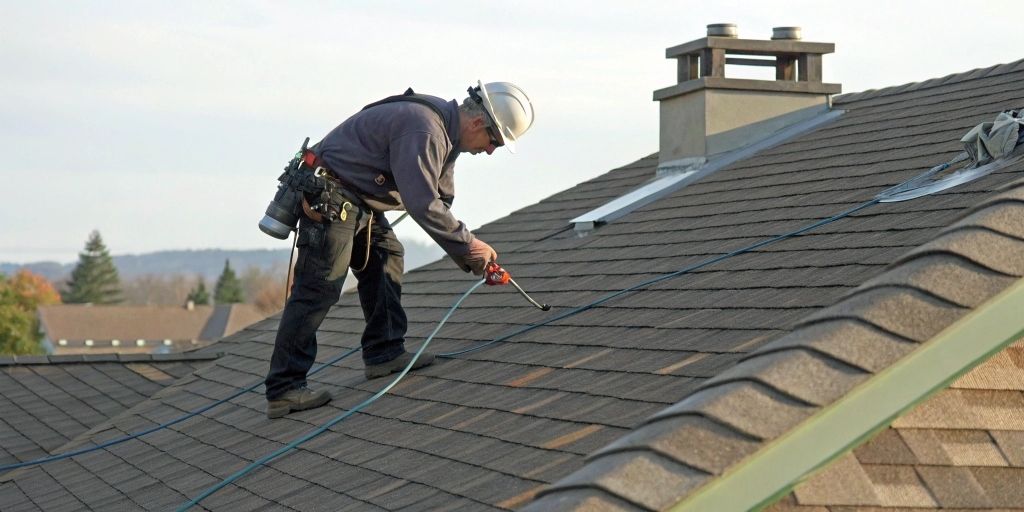
Inspection often begins with fasteners along parapets and edges. Contractors look for spacing issues, corrosion, missing hardware, or signs of pull-out. Even one compromised fastener can transfer stress to nearby points, increasing the risk of failure. Hands-on checks matter here. Huntsville commercial roof contractors often test fasteners by gently applying pressure to detect movement that would not be obvious visually. Fasteners that spin, shift, or feel loose signal deeper anchorage concerns beneath the surface.
Why Loose Flashing Signals Potential Anchorage Failure
Flashing plays a major role in edge protection. When flashing appears loose or uneven, it often indicates that the underlying anchorage has weakened. Wind can catch these loose sections, gradually prying materials away from the structure.
Roof companies near me understand that loose flashing is rarely an isolated issue. It usually points to inadequate fastening patterns, degraded substrates, or improper installation. Addressing flashing problems early helps prevent larger perimeter failures.
How Wind Exposure Reveals Weak Points at Roof Boundaries
Wind does not affect every section equally. Corners, edges, and transitions experience higher uplift pressures. Contractors often assess wind exposure based on building height, surrounding terrain, and prevailing weather patterns.
Commercial roofing contractor inspections pay close attention to areas that show signs of repeated wind stress, such as wrinkled membranes or lifted edge metal. These clues help identify anchorage points that are no longer resisting environmental forces effectively.
What Contractors Look for in Seams near Gutters and Fascia
Seams near gutters and fascia are frequent trouble spots. These areas combine water flow, thermal movement, and mechanical stress. Contractors examine seams for separation, uneven overlap, or signs of sealant failure.
Roofing near me inspections often reveal that seam issues stem from inadequate anchorage rather than material defects. When edge components are not firmly secured, seams absorb movement they were never designed to handle.
How Soft Edge Areas Suggest Underlying Support Issues
A soft or spongy feel along the perimeter raises immediate concern. This condition may indicate deteriorated decking, compressed insulation, or moisture intrusion weakening the support beneath.
Experienced roof contractors use careful foot pressure to assess edge firmness. Softness suggests that anchorage points may no longer be anchored to solid material, increasing the likelihood of uplift or separation during severe weather.
Why Corner and Junction Checks Are Critical for Anchorage
Corners and junctions concentrate stress from multiple directions. These areas often fail first when anchorage is insufficient. Contractors inspect these zones closely for cracks, gaps, or displaced materials.
Huntsville commercial roof contractors know that even small issues at corners can escalate quickly. Reinforced anchorage at junctions helps distribute forces more evenly across the perimeter, reducing the chance of localized failure.
How Technicians Use Touch and Visual Clues to Find Gaps
Not all anchorage issues are visible from a distance. Technicians rely on touch, sound, and subtle visual cues to identify gaps or movement. A slight flex, hollow sound, or uneven surface can reveal hidden weaknesses.
Roof companies near me often train crews to trust these physical indicators as much as what they see. Combining tactile inspection with visual assessment allows contractors to spot problems early, before they compromise the entire system.
Perimeter anchorage demands attention, experience, and a methodical approach. Yellowhammer Roofing supports building owners by conducting detailed inspections, identifying weak anchorage points, and recommending durable solutions that improve edge stability. Their work helps reduce storm-related damage and extends the service life of roofing systems through careful, informed evaluation.