
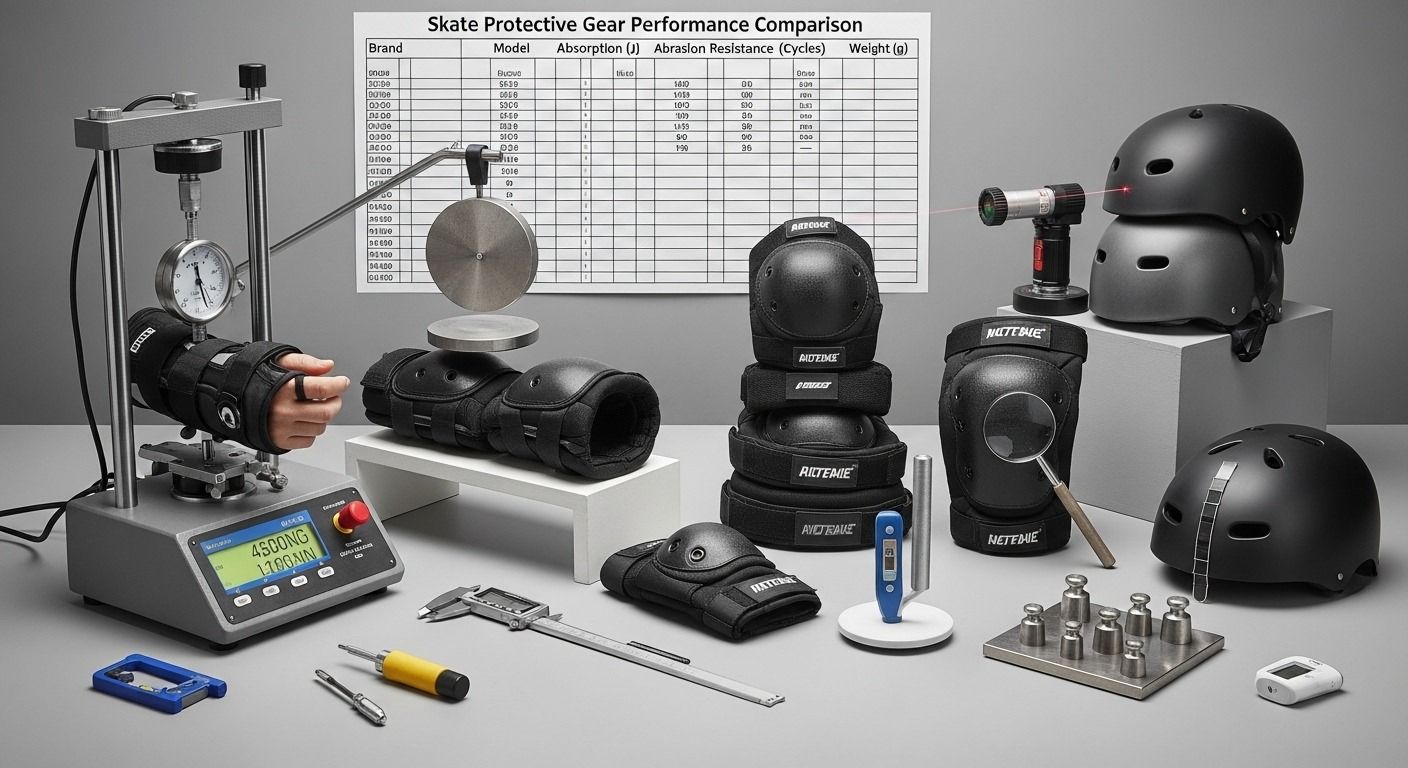

Skate protective gear sets are tested by measuring impact absorption, abrasion resistance, strap security, fit stability, and durability under controlled lab conditions and real-world skating scenarios.
Falls are not a “maybe” in skating. They are a certainty. What changes is the outcome. Protective gear decides whether a fall ends as a minor scare or a hospital visit. Yet many skaters buy pads based on looks, brand hype, or price. That’s the real problem.
This guide explains exactly how skate protective gear sets are tested and compared. No marketing fluff. No vague claims. Just real testing methods, data points, and evaluation criteria used in professional skate pad reviews and safety gear testing.
We follow the PAS framework:
- Problem: Most skaters don’t know how protective gear is evaluated.
- Agitation: Poor gear increases injury risk and false confidence.
- Solution: Clear, transparent testing standards explained in simple terms.
Whether you skate a board, inline skates, or a scooter, this article shows how experts compare gear so you can choose protection that actually works.
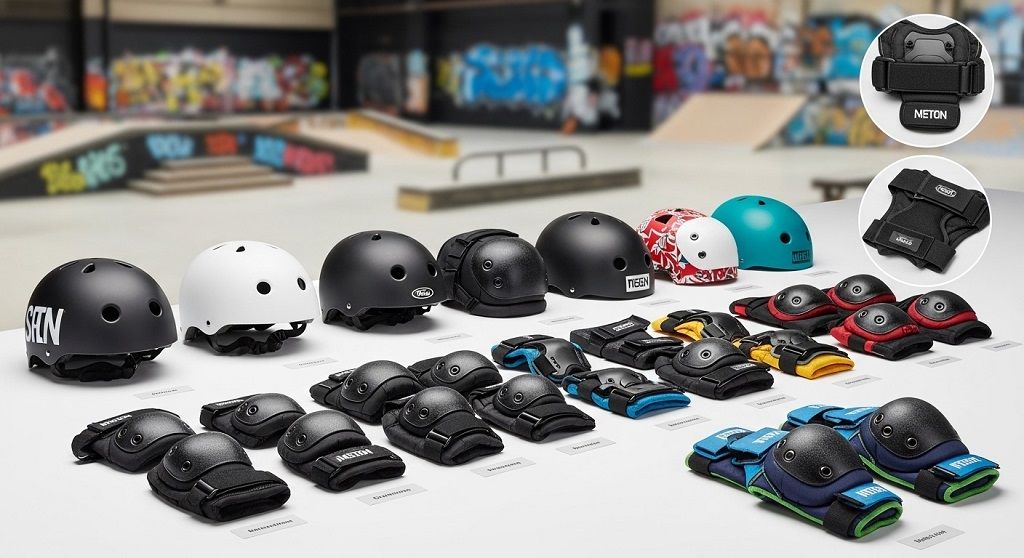
Why Is Testing Skate Protective Gear Necessary?
Short Answer: Testing verifies whether pads can reduce injury risk during real falls.
Skate injuries are well-documented. According to emergency department data from multiple safety studies, wrist, knee, and elbow injuries account for over 60% of skate-related trauma. Many of these injuries happen while wearing low-quality or poorly fitted gear.
Without standardized testing, brands can claim “high impact protection” without evidence. Testing removes guesswork. It shows:
- How much force pads actually absorb
- Whether caps crack or deform
- If straps loosen during repeated falls
- How pads perform after wear and sweat exposure
In short, testing protects skaters from bad assumptions.
What Standards Are Used in Safety Gear Testing?
Short Answer: Reputable skate pads follow EN, ASTM, or CE impact standards.
Professional skate pad reviews rely on recognized safety benchmarks. The most common include:
- EN 14120: European standard for roller sports protective equipment
- ASTM F1492: Impact protection standard used in action sports
- CE Certification: Confirms compliance with health and safety regulations
These standards define acceptable force transmission limits. For example, impact energy is measured in joules, and sensors record how much force passes through the pad to the body.
If transmitted force exceeds the threshold, the pad fails.
High-quality safety gear testing always references at least one of these standards.
How Is Impact Absorption Tested on Skate Pads?
Short Answer: Pads are struck with controlled force while sensors measure energy transfer.
Impact absorption is the most critical test. Labs use drop-weight impact rigs. A weighted striker falls from a fixed height onto the pad placed over a force sensor.
Key metrics recorded:
- Peak transmitted force (kN)
- Energy dispersion rate
- Material rebound behavior
Case study data from independent testing shows that dual-density foam pads reduce peak force by up to 35% compared to single-layer foam designs.
Hard caps matter too. High-impact polyethylene caps spread force across a wider surface, reducing localized trauma.
If a pad bottoms out, cracks, or rebounds too sharply, it scores poorly.
How Is Abrasion Resistance Evaluated?
Short Answer: Pads are dragged across abrasive surfaces under load.
Real falls involve sliding, not just impact. Abrasion testing simulates asphalt contact.
Testing methods include:
- Rotating drum abrasion rigs
- Weighted slide tests on concrete
- Cap wear measurement after repeated contact
Results are measured in material loss (mm) and time to failure.
Data from skate pad reviews shows that thicker caps with reinforced edges last up to 2.5x longer than thin injection-molded caps.
Abrasion resistance matters most for street skating and park riding.
How Do Reviewers Test Strap Security and Fit?
Short Answer: Pads are stress-tested for slippage, stretch, and closure failure.
Loose pads fail even if materials are strong. Strap testing focuses on real movement.
Methods include:
- Repeated flexion cycles (500–1,000 reps)
- Tension pull tests on Velcro closures
- Dynamic movement simulations
Review data shows that butterfly-style dual straps maintain position better than single-sleeve designs, especially for knee pads.
Fit scoring also considers size accuracy and ergonomic shaping. Pads that rotate during falls lose points.
How Is Comfort Measured Without Bias?
Short Answer: Comfort is assessed through blind wear testing.
Comfort is subjective, but testing controls for bias.
Test panels wear pads during timed skating sessions. They rate:
- Heat buildup
- Chafing risk
- Range of motion
Panels do not know brand names during testing. This removes brand influence.
Breathable mesh liners and moisture-wicking fabrics consistently score higher in long sessions.
How Durability Testing Predicts Long-Term Use?
Short Answer: Pads undergo accelerated wear simulations.
Durability testing compresses months of use into days.
Tests include:
- Compression cycling of foam
- Sweat and moisture exposure
- UV aging for outdoor use
Independent safety gear testing shows that EVA foam loses up to 18% impact efficiency after 6 months of heavy use. Higher-density foams lose less than 8%.
This data helps reviewers estimate replacement timelines.
How Are Skate Protective Gear Sets Compared Side by Side?
Short Answer: Scores are weighted across protection, fit, durability, and value.
Professional skate pad reviews use scoring matrices.
| Category | Weight |
|---|---|
| Impact Protection | 40% |
| Fit & Stability | 25% |
| Durability | 20% |
| Comfort | 10% |
| Value | 5% |
This prevents cheap pads from ranking high based only on price.
Do Cheap Skate Pads Pass Safety Gear Testing?
Short Answer: Some pass minimum standards, many do not.
Price alone does not determine safety. However, data from comparative reviews shows:
- Low-cost pads often fail abrasion tests
- Straps stretch faster
- Foam compresses permanently
Passing minimum standards does not equal long-term protection.
How Should Skaters Use Test Data When Buying Gear?
Short Answer: Prioritize impact scores and fit consistency.
Marketing terms are meaningless without data.
When reading skate pad reviews, focus on:
- Measured force reduction
- Slip test results
- Durability timelines
This ensures protection matches your skating style.
Conclusion: What Testing Really Tells You About Skate Gear
Protective gear is not an accessory. It is safety equipment. Testing separates real protection from false confidence.
Understanding how skate protective gear sets are tested and compared helps you avoid poor choices. Impact absorption, abrasion resistance, strap security, and durability are measurable. Reliable skate pad reviews rely on data, not opinions.
If you skate regularly, invest in gear that has been tested, compared, and verified. Your body absorbs enough impact already. Your pads should take the rest.
CTA: Before buying your next skate pad set, check verified safety gear testing results and compare real data. Your next fall should be protected, not regretted.
FAQ: Skate Protective Gear Testing and Reviews
How often should skate pads be replaced?
Answer: Replace pads every 6–12 months with regular use or after major impacts.
Are certified pads always better?
Answer: Certification ensures minimum safety, not maximum durability.
Do thicker pads protect better?
Answer: Thickness helps, but foam density and cap design matter more.
Can I trust online skate pad reviews?
Answer: Trust reviews that show test data, not opinions.
Are wrist guards tested differently?
Answer: Yes. Wrist guards include torsion and hyperextension tests.
Does brand reputation matter?
Answer: Only if supported by consistent test results.
Related Topics: Miami Fashion & Lifestyle Trends, Street Style & Guides
What Next: How a Commercial Roofing Contractor Spots Weak Perimeter Anchorage