
You are fighting a feisty snook under the Florida sun. Your hands are slick with sunscreen and sweat. The line burns your palm as the fish makes a run. You promise yourself this is the last time. Without the right protection, a great day on the water turns into a painful lesson. Finding durable fishing gloves under $50 that can survive Florida’s brutal mix of heat, salt, and sharp teeth is not easy. Most cheap gloves fall apart after one trip. You need gear that grips when wet, blocks UV rays, and won’t shred on a grouper’s gill plate. This guide cuts through the marketing fluff to show you exactly what to look for, where to save, and what features actually matter for Florida anglers.
What Makes a Fishing Glove Truly Durable for Florida Conditions?
Durability in Florida fishing gloves means resistance to saltwater corrosion, UV degradation, and physical abrasion. A glove that lasts must have reinforced stitching, high-denier synthetic fabrics, and strategic padding in high-wear zones like the palm and finger tips.
Material Science: Why Neoprene and Synthetic Leather Win
Neoprene handles Florida’s heat better than pure leather because it dries fast and resists mildew. Synthetic leather (like Amara or Clarino) offers excellent abrasion resistance without stiffening after saltwater exposure. Avoid cheap cotton or thin spandex blends—they shred on the first encounter with a catfish spine.
Stitching and Seam Construction You Must Check
Look for double-stitched or flatlock seams. Single-stitched gloves often split at the stress points between the thumb and index finger. If the manufacturer hides the seam details, assume they are weak. Reinforced Kevlar thread at the fingertips adds months of life.
The Truth About Florida’s Sun and Glove Lifespan
Direct UV exposure breaks down elastane and cheap rubber coatings. Choose gloves with a UPF 50+ rating not just for skin protection, but because the UV-resistant treatment keeps the fabric from becoming brittle. A glove that fades after two trips is a glove that will tear on the third trip.
Which Glove Features Are Non-Negotiable for Florida Anglers?
Any glove you buy must offer heat management, grip in wet conditions, and protection from sharp objects. Without these three pillars, the glove is useless for Florida’s diverse fishing environments—from inshore flats to offshore wrecks.
Breathability vs. Protection: Finding the Balance
Full leather gloves trap sweat, leading to heat exhaustion and blisters. Look for gloves with mesh panels on the back of the hand or perforated neoprene. These allow airflow while keeping the palm thick enough to handle a treble hook.
Grip Technology That Works on Slippery Fish
Textured silicone or rubberized coatings outperform smooth synthetic leather when wet. Check for raised dots or waffle patterns on the palm and fingers. A glove that loses grip when wet is a safety hazard, not a tool.
Cut and Abrasion Resistance You Can Trust
Fish teeth, gill plates, and braided fishing line cut like knives. Gloves with a cut-resistance rating of at least ANSI Level 3 are ideal for handling toothy species like Spanish mackerel or bluefish. Level 2 is acceptable for panfish and bass.
How Should Gloves Fit to Avoid Fatigue and Blisters?
A glove that fits poorly causes hand fatigue, reduces dexterity, and creates friction points that blister. The perfect fit feels snug but not tight, with no excess material at the fingertips.
Measuring Your Hand Correctly for Fishing Gloves
Measure the circumference of your dominant hand just below the knuckles (excluding the thumb). Use a fabric tape measure. Write down the inches. Most brands provide a size chart. If you are between sizes, size up—a slightly loose glove is better than one that restricts blood flow.
The Pre-Work Test: Checking Fit Before You Buy
Put the glove on and make a fist. If the palm fabric bunches up, the glove is too big. If the webbing between your fingers feels tight, it is too small. Bend your wrist fully—the cuff should not dig in. Wear the glove for five minutes in the store if possible.
When to Size Up for Layering or Florida Cold Fronts
During winter fronts in Florida, water temperatures drop into the 50s. You may want a thin liner glove underneath. If you plan to layer, buy one full size larger than your normal measurement.
Can You Get Reliable UV and Sun Protection Under $50?
Yes. Many affordable gloves now include UPF 50+ fabric as a standard feature. You do not need to spend premium money for sun protection. The key is ensuring the protection covers the entire glove, not just the back of the hand.
Why UPF Rating Matters More Than SPF for Gloves
UPF (Ultraviolet Protection Factor) measures fabric protection. SPF measures sunscreen. A glove with UPF 50+ blocks 98% of UV rays. Always check the tag. If the glove does not list a UPF rating, assume it offers no sun protection,Once you have the right gear to protect your hands, ensuring your catch weight is accurate is just as important for any successful outing. Check out our guide on the to complete your tackle box essentials.
Fingerless vs. Full-Fingered Sun Gloves
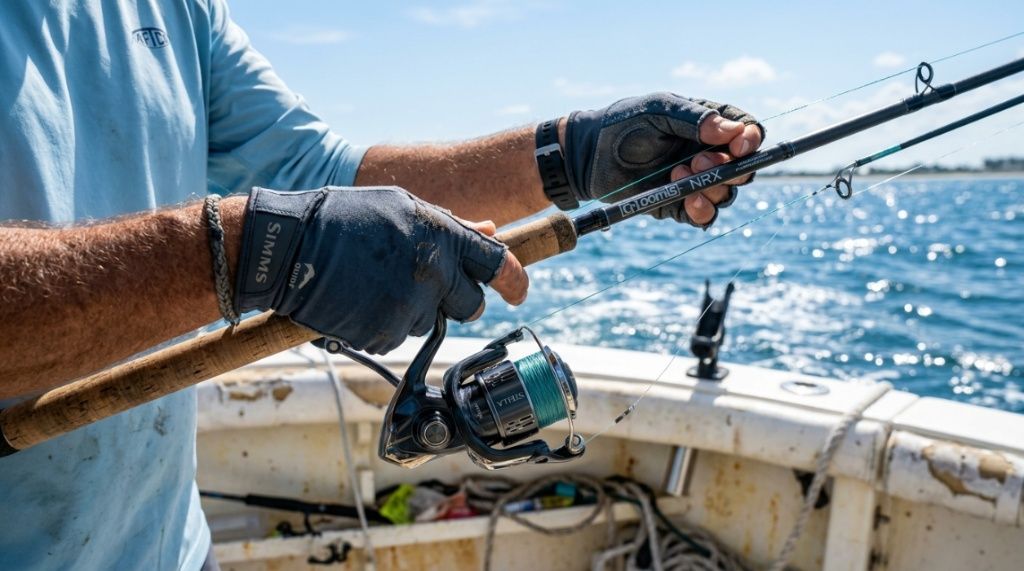
Fingerless gloves keep your fingertips free for tying knots and handling bait, but your fingers burn within 20 minutes under the Florida sun. Full-fingered gloves offer complete coverage. For long days on the water, full-fingered is safer.
Color Choices That Reduce Heat Absorption
Light colors like white, tan, or light gray reflect sunlight. Dark gloves absorb heat, making your hands sweat faster. For Florida’s climate, white or light-colored gloves keep your hands cooler and extend your on-water comfort.
Which Glove Type Is Best for Inshore Fishing in Florida?
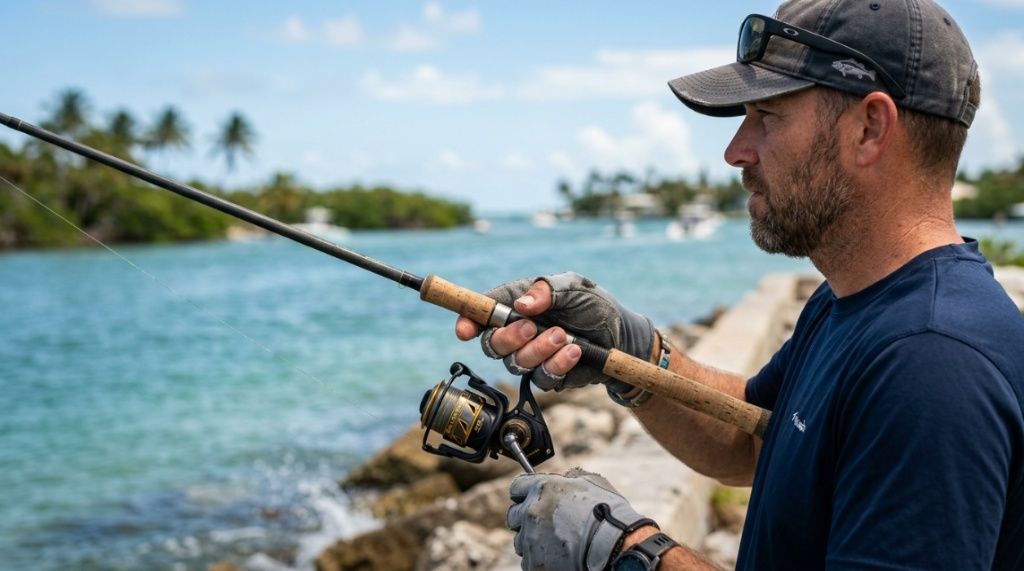
For inshore fishing targeting redfish, snook, and trout, a lightweight synthetic glove with a textured palm and breathable back is ideal. You need dexterity for casting and sensitivity for feeling bites.
Best Glove Style for Live Bait Handling
Half-finger or three-quarter-length gloves give you the manual dexterity needed to thread a shrimp on a hook or lip a fish. Look for reinforced fingertips on the covered sections to prevent wear from pinfish spines.
Recommended Features for Artificial Lure Fishing
When casting lures all day, you need a glove that wicks sweat and prevents sunburn on the back of your hands. A minimalist fingerless glove with a silicone palm grip works well. Avoid bulky cuffs that interfere with your reel seat.
Durability Expectations for Inshore Gloves
With proper rinsing after each trip, a good inshore glove should last a full season (6–9 months of weekly use). Rotating between two pairs extends their life significantly.
What About Offshore and Surf Fishing Gloves Under $50?
Offshore and surf conditions demand heavier protection against rope burns, heavy fish weight, and sharp metal components like leader wire and hooks. A durable fishing gloves under $50 can still handle these tasks if you choose a reinforced model.
Padded Palms for Fighting Big Fish
Look for gel or foam padding in the palm and base of the fingers. This absorbs vibration from a pumping rod and prevents the rod butt from digging into your hand during long fights with amberjack or kingfish.
Gauntlet Cuffs for Surf Casting
Surf casters need a gauntlet-style cuff that extends past the wrist. This keeps sand, water, and debris out of the glove. It also protects your wrist from rope burn when anchoring or launching a kayak through the breakers.
Reinforced Index Finger and Thumb for Line Handling
These two areas take the most abuse from braided line. A glove with a reinforced patch (often made of synthetic leather) on the index finger and thumb will not develop holes after a few trips.
How Do You Maintain Cheap Fishing Gloves to Make Them Last?
Rinsing and drying properly is the single most important maintenance step. Salt crystals left in the fabric act like sandpaper, cutting fibers from the inside. Neglect turns a $40 glove into trash in two weeks.
The Freshwater Rinse Rule
Immediately after fishing, rinse your gloves in fresh, cool water. Squeeze gently to work the salt out of the fabric. Do not use hot water—it can shrink neoprene and warp synthetic leather.
Drying Methods That Prevent Cracking and Odor
Air dry your gloves away from direct sunlight inside your home or in a shaded, breezy area. Do not put them in a dryer or on a heater vent. High heat breaks down elastic fibers and causes synthetic leather to crack.
When to Retire a Glove
Once you see a hole in the palm or a seam that is pulling apart, retire the glove. A compromised glove offers less grip and less protection. Trying to patch it rarely works because the surrounding fabric is already weakened.
Is a $10 Glove Just as Good as a $45 Glove?
No. A $10 glove typically uses thin fabric, single stitching, and no UV protection. It may survive one or two trips. A $45 glove uses reinforced materials, better ergonomics, and offers real protection. The cost difference reflects the longevity and safety features.
Where the Cheap Glove Fails First
The thumb crotch and palm seam are the first failure points on cheap gloves. These areas experience constant tension when gripping a rod. A $10 glove often splits at the thumb within three hours of fishing.
What the Extra $35 Buys You
The extra money goes toward reinforced stitching, better articulation in the fingers (pre-formed curves), moisture-wicking liners, and a proven grip pattern. You also get a warranty that a $10 glove never offers.
A Smart Budget Strategy
If you absolutely cannot exceed $20, buy two pairs of the best-reviewed budget gloves you can find. Rotate them so each pair has time to dry fully. This doubles your overall durability without spending $40 on one premium pair.
Which Affordable Glove Materials Should You Avoid in Florida?
Avoid gloves made primarily of cotton, thin acrylic, or non-coated mesh. These materials absorb saltwater, do not dry quickly, and offer zero protection against cuts, sun, or fish spines. They also stretch out permanently after a few uses.
Why Cotton Blends Are a Trap
Cotton holds moisture against your skin for hours, causing maceration (skin softening) and increasing blister risk. Once wet with saltwater, cotton becomes abrasive and heavy. It also rots quickly in a damp tackle bag, Affordable Fishing Lures That Actually Catch More Fish
Cheap PVC Coatings That Peel
Some budget gloves use a thin PVC (plastic) coating for grip. This coating flakes off after repeated flexing and salt exposure. Stick with silicone or rubberized coatings that bond chemically to the fabric base.
Fabric Blends That Spawn Odor
Gloves made entirely of polyester or nylon without antimicrobial treatment develop a strong, unpleasant smell after a few uses. Look for gloves labeled “anti-odor” or treated with silver ion technology to kill bacteria.
How Do You Pick the Right Glove for Your Fishing Style?
Your specific fishing style dictates the glove features you need. A kayak angler has different requirements than a pier fisherman or a flats guide. Matching the glove to your style maximizes comfort and durability.
Kayak Anglers: The Need for Dexterity and Drainage
You need a glove that drains water quickly when you plunge your hand in to land a fish. Look for mesh backs and open cuffs. Waterlogged gloves add weight and slow you down. Avoid thick neoprene that takes hours to dry.
Pier and Bridge Fishermen: Heavy Abrasion Resistance
You are dealing with concrete railings, metal leaders, and large fish. A glove with a reinforced palm and Kevlar thread is non-negotiable. Gauntlet cuffs protect your wrists from sharp barnacles on the pier railing.
Fly Fishing: Minimalist Protection for Sensitivity
Fly anglers need maximum feel for the line and fly. A snug-fitting fingerless glove with a thin synthetic leather palm offers protection from sunburn and minor cuts without deadening your touch. Avoid bulky cuffs that snag your fly line.
Frequently Asked Questions
Are fishing gloves worth the money for casual anglers?
Yes. Even casual anglers benefit from sun protection and blister prevention. A pair of $20 gloves protects your hands for two seasons of occasional fishing.
Can I use gardening gloves for fishing in Florida?
No. Gardening gloves lack UV protection, have poor grip when wet, and typically have thick cotton that becomes heavy and uncomfortable. They also do not drain water well.
How often should I replace my fishing gloves?
Replace them when you notice any hole, frayed seam, or loss of grip. For weekly use, expect to replace them every 6 to 12 months.
Do fingerless gloves protect against sunburn?
They protect the palm and back of the hand but leave your fingers exposed. Use sunscreen on your fingers if you choose fingerless models.
Can I machine wash my fishing gloves?
Yes, but only on a gentle cycle with cold water and mild detergent. Air dry only. Do not use fabric softener, which breaks down grip coatings.
What is the best color for Florida fishing gloves?
White, light gray, or tan. These colors reflect sunlight and keep your hands cooler. Dark colors absorb heat and increase sweating.
Do I need different gloves for freshwater vs. saltwater fishing?
You can use the same gloves. The key is rinsing them immediately in fresh water after saltwater use. Salt residue destroys glove fabric faster than freshwater.