Complete Buying Guide for Impact Drivers (Featuring Milwaukee M18 Fuel)

Imagine tackling a deck build or furniture assembly. You reach for your tool, and it powers through tough screws without stalling or stripping. That tool changes everything. Impact drivers deliver rotational force plus concussive blows. This combination drives fasteners faster and with less effort than standard drills. Moreover, the global power tools market reached USD 39.45 billion in 2024. Experts project growth to USD 45.52 billion by 2029. This surge highlights rising demand for efficient DIY tools and professional tools alike. For instance, brands like Milwaukee lead with innovative models.
Transitioning from basic drills to impact drivers boosts productivity. However, choosing the right one matters. This guide covers everything you need.
What Is an Impact Driver and How Does It Work?
Impact drivers specialize in driving screws and bolts. They combine rotation with rapid impacts. Consequently, they handle dense materials or long fasteners easily.
The mechanism starts with a brushless motor in top models. It spins the anvil. When resistance builds, a hammer strikes the anvil. This creates bursts of torque. As a result, users feel less wrist strain. Additionally, the noise and vibration remind you of the power at work.
Furthermore, most models use a 1/4-inch hex chuck. It accepts hex-shank bits quickly. No key needed. This design speeds up bit changes on the job.
Impact Driver vs. Drill: Key Differences and When to Use Each
People often confuse impact drivers with drills. Both spin bits, yet they excel at different tasks.
Drills focus on creating holes. They offer steady torque and adjustable clutches. This prevents overdriving. In contrast, impact drivers activate impacts under load. They provide higher torque bursts.
Here are the main differences:
- Torque Delivery: Drills supply constant torque. Impact drivers add impacts for breakthroughs.
- Best Uses: Use drills for precise drilling or light screwing. Choose impact drivers for heavy fastening, like lag bolts or deck screws.
- User Fatigue: Impacts reduce cam-out and wrist twist. Therefore, long sessions feel easier.
- Noise and Vibration: Impact drivers sound louder. However, they require less downward pressure.
Many pros pair both. A drill handles holes. An impact driver drives fasteners. This combo tackles most projects efficiently.
Benefits of Owning an Impact Driver
Impact drivers transform tough jobs. First, they sink large screws without predrilling. This saves time on decks or framing.
Second, higher torque prevents stripping. Bits stay seated better. Moreover, compact sizes reach tight spaces.
Third, cordless models offer freedom. Brushless motors extend runtime. As a result, you complete more per charge.
Finally, versatility shines. Drive screws, bolts, or nuts. Some models even loosen stubborn fasteners.
Key Features to Look for in an Impact Driver
Selecting the best model requires focus on specs. Start with torque. Higher in-lbs handle demanding tasks.
Next, consider speed settings. Variable triggers and modes offer control. For example, low modes suit delicate work.
Then, evaluate impacts per minute (IPM). Higher rates drive faster.
Brushless motors top the list. They run cooler and last longer. Additionally, they deliver more power efficiently.
Lighting matters too. Tri-LED setups illuminate without shadows.
Ergonomics play a role. Grippy handles and balanced weight reduce fatigue.
Essential Specs Explained
- Torque: Measures twisting force. Aim for 1800+ in-lbs for pros.
- RPM: Higher speeds quicken light tasks.
- IPM: More impacts speed heavy driving.
- Battery Platform: Stick to one ecosystem for shared packs.
Top Brands and Why Milwaukee Stands Out
Brands like DeWalt, Makita, and Ryobi perform well. Yet Milwaukee tools dominate professional sites.
Milwaukee invests in innovation. Their M18 system includes over 250 tools. This compatibility appeals to users.
Moreover, REDLINK intelligence protects from overloads. POWERSTATE motors provide superior performance.
Spotlight: Milwaukee M18 Fuel Impact Driver
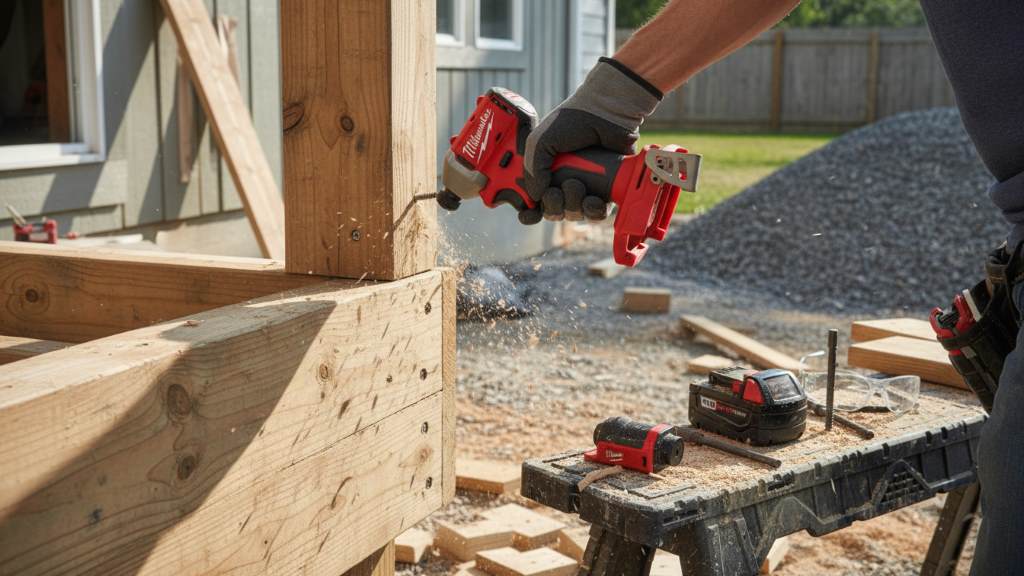
The Milwaukee M18 Fuel (model 2953) leads in 2025. It delivers 2000 in-lbs torque. Speeds reach 3900 RPM. Impacts hit 4400 IPM.
This fourth-generation model shrinks size slightly. It measures just 4.47 inches long. Consequently, it fits tight spots.
Four modes include self-tapping screw setting. It reduces walking and overdriving.
Tri-LED lights brighten work areas. The brushless motor ensures longevity.
Pros praise trigger control. It accelerates smoothly for precision.
Compared to rivals:
- Outperforms many in speed tests.
- Matches top torque levels.
- Excels in runtime with high-output batteries.
Milwaukee tools suit both DIY enthusiasts and contractors.
How to Choose the Right Impact Driver for Your Needs
Assess your projects first. Occasional home fixes need mid-range models.
Frequent heavy use demands pro-level power. Consider these factors:
- Voltage: 18V/20V balances power and weight. 12V suits light tasks.
- Torque and Speed: Match to materials. Hardwoods require more.
- Brushless vs. Brushed: Always choose brushless for efficiency.
- Battery Ecosystem: Expand easily with compatible tools.
- Size and Weight: Compact models ease overhead work.
- Additional Modes: Auto-stop or precision settings add value.
Test in-store if possible. Feel the grip and balance.
Recommended Categories
- Best for DIY: Mid-torque with good battery life.
- Best for Pros: High torque, durable build.
- Best Compact: Short length for confined spaces.
Accessories and Bits You Need
Quality bits prevent stripping. Invest in impact-rated sets.
Common additions:
- Extension bars for reach.
- Socket adapters for nuts.
- Magnetic bit holders.
Spare batteries keep workflow going. High-output packs boost performance.
Related:
What Happens During a Plumbing Inspection?
What to Expect During a Glass Window Repair Consultation in Athens AL
Maintenance and Safety Tips
Clean vents regularly. Dust buildup reduces efficiency.
Store batteries cool. Avoid extreme temperatures.
Wear eye and ear protection. Impacts create noise and debris.
Hold firmly. Let impacts do the work.
Check bits for wear. Dull ones cause slips.
Conclusion
Impact drivers revolutionize fastening. They save time and effort on countless tasks. From understanding differences to key features, this guide equips you.
The Milwaukee M18 Fuel exemplifies top performance. Its power, control, and durability shine.
Ready to upgrade? Evaluate your needs. Pick a model that fits. Start driving fasteners like a pro today.
FAQs
What makes an impact driver better than a regular drill for screwing?
Impact drivers add concussive blows. This boosts torque under load. They drive longer screws without predrilling. Less cam-out occurs too.
Can I use an impact driver for drilling holes?
Impact drivers accept drill bits. However, they lack clutches. Precision suffers. Use a dedicated drill for accurate holes.
Is a brushless impact driver worth it?
Brushless models run longer per charge. They deliver more power. Durability increases without brushes wearing. The investment pays off quickly.
How much torque do I need in an impact driver?
Light DIY needs 1000-1500 in-lbs. Professional tasks benefit from 1800+ in-lbs. Higher torque handles denser woods or larger fasteners.
Are Milwaukee impact drivers the best choice?
Milwaukee excels in power and innovation. Many pros prefer them. Other brands compete closely. Choose based on your ecosystem and needs.
References
- Fortune Business Insights. Power Tools Market Size Report. https://www.fortunebusinessinsights.com/industry-reports/power-tools-market-101444
- MarketsandMarkets. Power Tools Market Analysis. https://www.marketsandmarkets.com/Market-Reports/power-tools-market-50744034.html
- Pro Tool Reviews. Milwaukee M18 Fuel Impact Driver Review. https://www.protoolreviews.com/milwaukee-m18-fuel-impact-driver-review/
- Milwaukee Tool Official Site. M18 Fuel Impact Driver Specs. https://www.milwaukeetool.com/products/details/m18-fuel-1-4-hex-impact-driver/2953-20