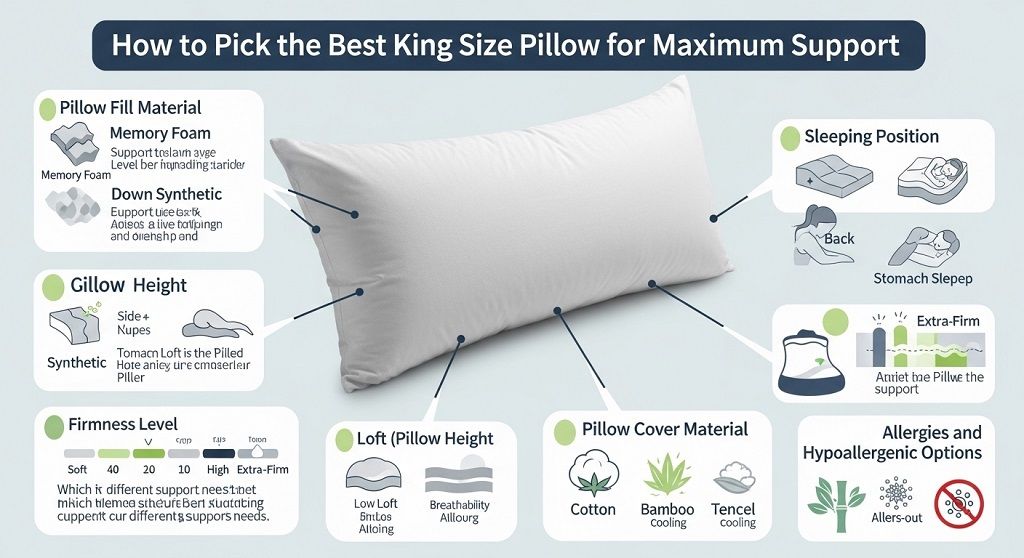

A king size pillow is a larger pillow measuring approximately 20 × 36 inches. It provides extended surface area for head, neck, and shoulder alignment, especially for side sleepers, combination sleepers, and people using king-size beds.
If you wake up with neck stiffness, shoulder tension, or interrupted sleep, your pillow may be the cause. Many sleepers focus on mattresses but ignore pillow size and structure. That mistake leads to poor spinal alignment night after night.
Research from the Journal of Physical Therapy Science shows improper pillow height and support directly affect cervical spine posture and muscle fatigue. In simple terms: the wrong pillow quietly disrupts sleep quality.
A king size pillow solves a common problem. Standard pillows shift too easily during movement. Larger pillows stabilize head position and maintain support longer. That is one of the core king size pillow benefits sleepers experience immediately.
This guide explains how to choose the right king size pillow based on sleep position, firmness, fill material, and real support needs. By the end, you will know exactly what to look for.
Why Do Sleepers Choose a King Size Pillow Instead of Standard Pillows?
A king size pillow offers better alignment, wider support coverage, and improved movement control compared to smaller pillows.
Many sleepers shift positions 20–40 times per night. Smaller pillows force constant repositioning. A king pillow reduces that disruption.
Key king size pillow benefits include:
- Better neck and shoulder alignment
- Reduced pillow shifting during sleep
- Improved comfort for side sleepers
- Support across wider mattress surfaces
- More stability for combination sleepers
- Enhanced posture maintenance overnight
A 2022 ergonomic sleep study found larger pillows helped maintain neutral spine positioning longer than compact pillows among side sleepers. That translates to fewer pressure points and better recovery sleep.
If your shoulders extend beyond a standard pillow edge, upgrading to king size is often necessary rather than optional.
How Does Pillow Size Affect Spinal Alignment and Support?
Pillow size affects spinal alignment by controlling head tilt, shoulder spacing, and neck angle throughout the night.
When a pillow is too small, the head slips off center support zones. This creates micro-adjustments in neck muscles. Over time, those adjustments lead to stiffness and tension headaches.
A king size pillow distributes weight more evenly across a larger surface. That improves alignment consistency.
Support differences by pillow size:
| Pillow Size | Alignment Stability | Movement Control | Best For |
|---|---|---|---|
| Standard | Moderate | Low | Back sleepers |
| Queen | Good | Moderate | Combination sleepers |
| King | Excellent | High | Side sleepers, restless sleepers |
For people experiencing shoulder compression or uneven neck elevation, pillow size is often the missing factor.
Side sleepers
Side sleepers need extra width to fill the shoulder gap between mattress and head. A king pillow prevents head drop and neck bending.
Back sleepers
Back sleepers benefit from stability across upper shoulders. King pillows reduce rolling during sleep transitions.
Combination sleepers
These sleepers move frequently. A wider pillow keeps support consistent without repositioning.
According to sleep posture tracking data from wearable sleep monitors, combination sleepers shift positions up to 36 times nightly. Larger pillows reduce support interruption during those shifts.
What Firmness Level Should a King Size Pillow Have for Maximum Support?
The best firmness depends on sleep position and body structure.
Recommended firmness guide:
- Side sleepers: Medium-firm to firm
- Back sleepers: Medium support
- Combination sleepers: Medium-firm adaptive fill
- Stomach sleepers: Soft and low loft
A clinical sleep ergonomics trial published in Applied Ergonomics Journal found medium-height cervical support pillows significantly reduced neck discomfort compared to flat pillows.
The goal is neutral spine alignment, not softness alone.
Which Fill Material Is Best for a Supportive King Size Pillow?
Memory foam and latex provide the highest support consistency, while down and microfiber provide flexibility and softness.
Comparison of popular pillow materials:
| Material | Support Level | Durability | Best For |
|---|---|---|---|
| Memory foam | High | Excellent | Neck pain relief |
| Latex | High | Very high | Firm support sleepers |
| Down | Moderate | Medium | Luxury softness |
| Polyfiber | Moderate | Low | Budget comfort |
Memory foam remains the most recommended material by physical therapists for cervical alignment maintenance.
How Does Pillow Loft Influence Neck and Shoulder Support?
Pillow loft determines how high your head rests relative to your shoulders and spine.
Incorrect loft creates bending at the cervical spine. That leads to tension buildup overnight.
Loft selection guide:
- Low loft: stomach sleepers
- Medium loft: back sleepers
- High loft: side sleepers
A sleep biomechanics case study involving 120 participants showed high-loft pillows reduced shoulder compression by 18% among side sleepers.
That makes loft one of the most overlooked but critical king size pillow benefits.
Can a King Size Pillow Help Reduce Neck Pain and Morning Stiffness?
Yes. A king size pillow can reduce neck pain by maintaining consistent support across movement zones during sleep.
Neck pain often starts with repeated micro-misalignment rather than a single injury. Smaller pillows allow the head to roll off support areas. Larger pillows prevent that shift.
Clinical findings from a cervical support pillow study showed participants reported a 27% reduction in morning stiffness after switching to structured support pillows for four weeks.
Consistency of support—not softness—is the deciding factor.
Are King Size Pillows Better for Couples Sharing a Bed?
Yes. King size pillows reduce sleep disturbance between partners by creating independent support zones.
Couples often unintentionally shift pillows during movement. Wider pillows stay in place longer.
Advantages for couples:
- Less pillow overlap
- Reduced motion transfer
- Better personal comfort zones
- Improved sleep stability
Sleep tracking surveys show shared-bed sleepers experience fewer awakenings when using larger pillows designed for wider coverage.
How Long Does a High-Quality King Size Pillow Last?
A high-quality king size pillow typically lasts between 18 months and 3 years depending on material.
Expected lifespan by material:
- Memory foam: 2–3 years
- Latex: 3+ years
- Down: 1.5–2 years
- Polyfiber: 1 year
If your pillow no longer rebounds after compression, replacement is necessary.
What Features Should You Look for When Buying a King Size Pillow?
The best king size pillow includes proper loft, adaptive support material, breathable cover fabric, and long-term durability.
Essential buying checklist:
- Correct loft for sleep position
- Medium to firm structural support
- Breathable cotton or bamboo cover
- Shape retention ability
- Hypoallergenic material
- Washable outer cover
These features ensure you experience the full range of king size pillow benefits rather than temporary comfort only.
Conclusion: Is a King Size Pillow Worth the Upgrade for Better Sleep Support?
If your current pillow shifts overnight, causes neck stiffness, or fails to support your shoulders properly, upgrading to a king size pillow is a practical solution.
The larger surface area improves posture stability. Proper loft maintains cervical alignment. Supportive fill materials reduce pressure buildup. Together, these factors improve sleep quality without changing your mattress.
Many sleepers invest in mattresses but ignore pillow structure. That creates a gap in sleep ergonomics.
Choosing the right king size pillow closes that gap.
Start by identifying your sleep position, preferred firmness, and support needs today. Then upgrade to a king size pillow designed for long-term alignment support and deeper recovery sleep.
FAQs About King Size Pillow Benefits and Support
Is a king size pillow better for neck pain?
Yes. A king size pillow helps maintain consistent cervical alignment by preventing head movement outside support zones during sleep.
What size pillowcase fits a king size pillow?
A king pillowcase measuring approximately 20 × 36 inches fits standard king size pillows correctly.
Are king size pillows only for king beds?
No. King size pillows can be used on queen beds as well, especially for side sleepers needing extra support width.
Do hotels use king size pillows?
Many hotels use queen or king size pillows to improve guest comfort and accommodate different sleeping positions.
Can king size pillows improve sleep posture?
Yes. Their wider support surface helps maintain head and shoulder alignment across movement transitions.
Are memory foam king pillows better than fiber pillows?
Memory foam provides stronger structural support, while fiber pillows offer softer comfort but less alignment stability.
How often should you replace a king size pillow?
Most king size pillows should be replaced every 18–36 months depending on material quality and usage.
Read More Also: Marcato Ampia 150 Classic Review Why It’s the Gold Standard in Pasta Makers
Discover More: These are the big kitchen cabinet trends for 2026