What Beginners Should Pack for a First Lake Day Trip (Gear Sizes That Matter)

Packing for a first lake day trip feels straightforward until you stand in the tackle aisle staring at a wall of hooks, weights, and line. Most beginners overpack lures they never tie on and underpack the small terminal tackle that actually catches fish. Getting the basics right starts with sizing. A 4 0 hook size //fishinggearshops.com/fishing-gear/rods-reels/hooks-tackle/3-0-vs-4-0-hook/, for example, sits in a sweet spot for several common freshwater species, and knowing where it fits helps you build a kit that works instead of one that just looks full. Here is what to bring, what to leave home, and which sizes genuinely matter.
Quick Answer
For a first lake day trip, pack a medium-power spinning rod and reel, 8–12 lb monofilament line, a small box of hooks in sizes 1, 2, 1/0, and 3/0–4/0, split shot and bullet weights, a few bobbers, pliers, line clippers, sunscreen, water, and a basic first-aid kit. Hook size should match your target: small hooks for panfish, 3/0–4/0 for bass-sized soft plastics, and inline circle hooks for live or cut bait.
Key Takeaways
- Match hook size to the fish and bait, not to what looks impressive in the package—4/0 works for large soft plastics and bigger bass, not bluegill.
- Line weight in the 8–12 lb range covers most beginner lake situations and is forgiving enough to learn on.
- Terminal tackle (hooks, weights, swivels, bobbers) catches more fish for beginners than a bag of expensive lures.
- Safety and comfort items like sunscreen, water, and pliers are not optional—they decide how long you actually stay out.
- Check your state’s fishing license and local regulations before you go; rules vary by lake and species.
The Gear Sizes That Actually Matter
Beginners often assume the rod and reel are the hard part. They are not. The sizes that change whether you catch fish are in the terminal tackle: hook, line, weight, and bait. Get these roughly right and a basic setup outperforms an expensive one with mismatched components.
Hook Size: Where 4/0 Fits and Where It Doesn’t
Hook sizes run from tiny (numbered, like 8 or 10) up through larger “aught” sizes (1/0, 2/0, 3/0, 4/0, and beyond). A 4/0 hook is on the larger end of what a beginner will use—it is designed for bulky soft plastics, larger live baits, or bigger bass. It is the wrong choice for bluegill, crappie, or trout, where a size 6–10 hook is more appropriate.
The practical rule: the hook gap should be roughly one-third to one-half the width of the bait you are using, and the hook should be small enough that a fish can take it fully into its mouth. Oversized hooks cause missed strikes and gut-hooking; undersized hooks bend or fail on a strong fish.
| Target Fish | Typical Hook Size | Common Bait |
|---|---|---|
| Bluegill/sunfish | 8–10 | Worms, small pieces of bait |
| Crappie | 4–6 | Minnows, small jigs |
| Trout | 6–10 | Worms, PowerBait |
| Largemouth bass | 1/0–4/0 | Soft plastics, live bait |
| Catfish | 2/0–5/0 (circle) | Cut bait, chicken liver |
If you are only going to carry one hook range as a beginner, size 1 through 1/0 covers a surprising amount of ground. Add 3/0–4/0 for bass and catfish plastics and you have a usable set.
Line Weight and Type
For a first lake trip, 8–12 lb monofilament is the most forgiving choice. It stretches slightly, which absorbs the surges of a fighting fish, and it is cheaper to replace when you inevitably backlash or snag. Braid (20–30 lb) has less stretch and better sensitivity, but it is less forgiving of mistakes and costs more.
Match line to your rod’s rating—if the rod says 6–12 lb, stay in that window. Overloading a rod with heavy line risks breaking the rod tip on a hard hookset.
Weights and Bobbers
Bring a small assortment of split shot (BB, 1, 2, 3), a few 1/8 and 1/4 oz bullet weights for Texas-rigging soft plastics, and a couple of slip bobbers. Slip bobbers let you adjust depth quickly, which is useful when you do not know how deep the fish are. A single 1/4 oz bullet weight plus a 3/0 hook and a plastic worm is one of the simplest, most effective bass setups a beginner can carry.
What to Pack Beyond Tackle
Tackle is the obvious part. The less obvious part is everything that keeps you on the water longer and out of trouble.
- Rod and reel: a medium-power spinning combo rated 6–12 lb is the standard beginner recommendation.
- Pliers and line clippers: for removing hooks and trimming knots. Long-nose pliers also help release fish with minimal harm.
- Small first-aid kit: hooks end up in fingers more often than beginners expect.
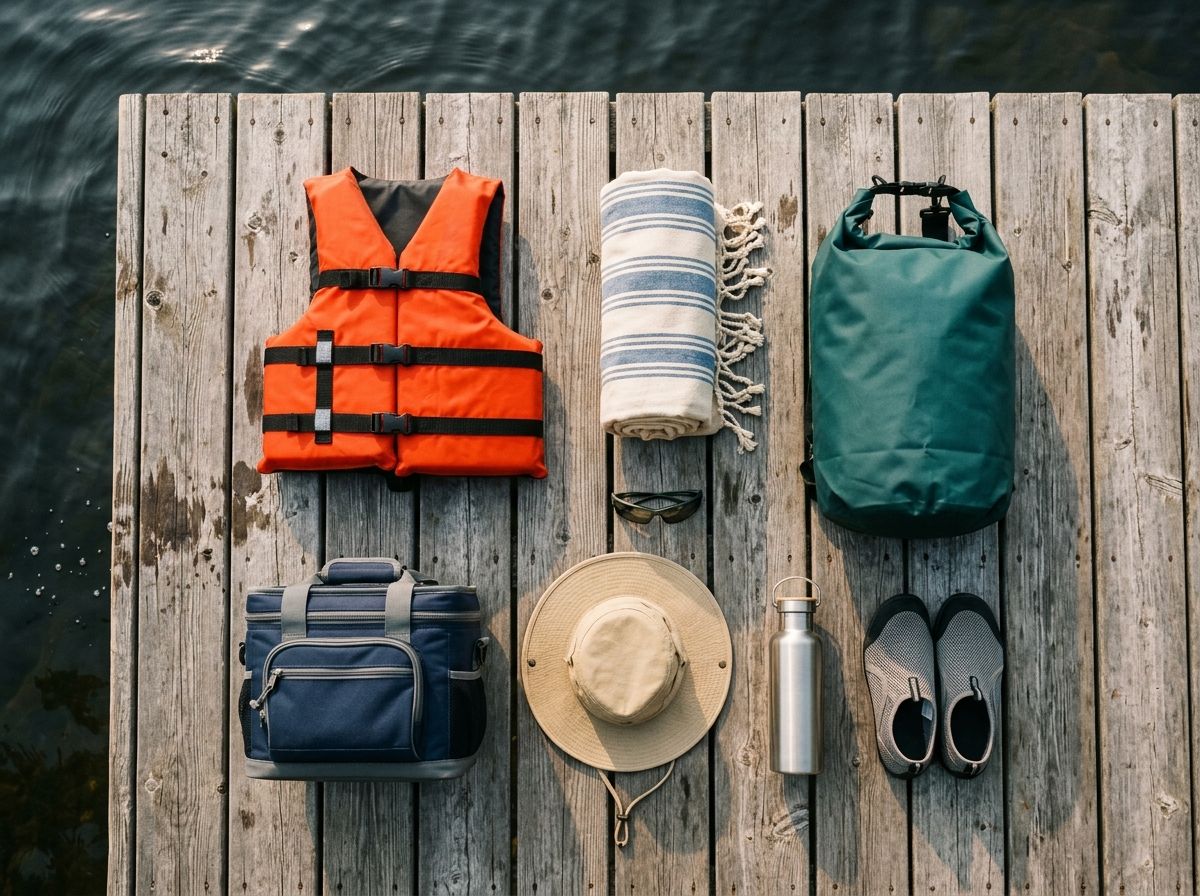
- Sunscreen, hat, sunglasses: glare off a lake is intense and skin damage is cumulative.
- Water and snacks: a lake day is longer than it looks on a map.
- Trash bag: monofilament and packaging are hazardous to wildlife; take them out with you.
- Fishing license and regulations: required in most U.S. states and easy to check online before you go.
- Weather-appropriate layer: lake weather shifts fast and wind off the water is colder than it feels on shore.
Common Beginner Mistakes to Avoid
The goal is not to bring less—it is to bring the right things. These are the mistakes that most often shorten a first lake trip.
Overloading on Lures, Undersupplying on Terminal Tackle
A beginner with forty lures and no spare hooks is worse off than one with six lures and a full terminal box. Hooks get lost to snags, break off, and dull. Hooks and weights are the consumables; budget accordingly.
Using the Wrong Hook for the Bait
A 4/0 hook with a tiny worm rarely works. The hook needs to match bait size so the point stays exposed and the bait still moves naturally. When in doubt, size down.
Ignoring Line Condition
Old monofilament on a hand-me-down reel is a hidden failure point. If the line is stiff, cloudy, or has visible kinks, respool before the trip. Fresh line is cheap insurance.
Packing the Night Before—or Not Packing at All
Packing the morning of a trip means forgotten sunscreen, no water, and a last-minute tackle scramble. Pack the night before and check the license and forecast at the same time.
A Simple First-Trip Setup That Works
If you want a single rod-and-tackle combination to start with, here is one that handles most beginner lake scenarios:
- Medium-power spinning rod, 6–12 lb rating.
- Reel spooled with fresh 10 lb monofilament.
- Size 1/0 and 3/0 hooks in a small box.
- Split shot and 1/8–1/4 oz bullet weights.
- Two slip bobbers and a few swivels.
- A pack of soft plastic worms and a container of live or cut bait.
- Pliers, line clippers, sunscreen, water, hat.
This setup is not glamorous. It does, however, catch panfish, bass, and catfish, and it teaches you how hook size, weight, and bait interact—which is the real skill you are building on a first trip.
Frequently Asked Questions
What is a 4/0 hook best used for?
A 4/0 hook is a good match for larger soft plastic baits, thick-bodied worms, and bigger live or cut baits, typically when targeting bass or catfish. It is generally too large for panfish and trout.
How many hooks should a beginner bring?
Bring at least 15–25 hooks spread across two or three sizes. Hooks are inexpensive, easy to lose to snags, and dull over time, so having spares prevents an early end to the trip.
Do I need a fishing license for a lake day trip?
In most U.S. states, yes, if you are 16 or older. License requirements, age exemptions, and species rules vary by state, so check your state wildlife agency’s website before you go.
What line weight should a beginner use on a lake?
8–12 lb monofilament covers most beginner situations. Stay within your rod’s stated line rating and replace old or damaged line before the trip.
Is a bobber necessary?
Not always, but it helps. A bobber keeps bait at a set depth, signals strikes clearly, and is one of the simplest ways to fish for panfish and trout from shore.
How do I know which hook size to pick?
Match the hook to the bait and the fish. Smaller hooks for small baits and small fish; larger hooks for bulky baits and larger fish. When in doubt, size down—a slightly small hook lands more fish than an oversized one.
Conclusion
A first lake day trip does not require a full tackle shop. It requires a rod you can cast, line that is not about to fail, a handful of correctly sized hooks, and the small items that keep you comfortable and safe. Focus on matching hook and line size to your bait and target fish, bring spare terminal tackle, and pack the comfort and safety basics the night before. Do that, and you will spend your first trip learning to fish instead of learning what you forgot.