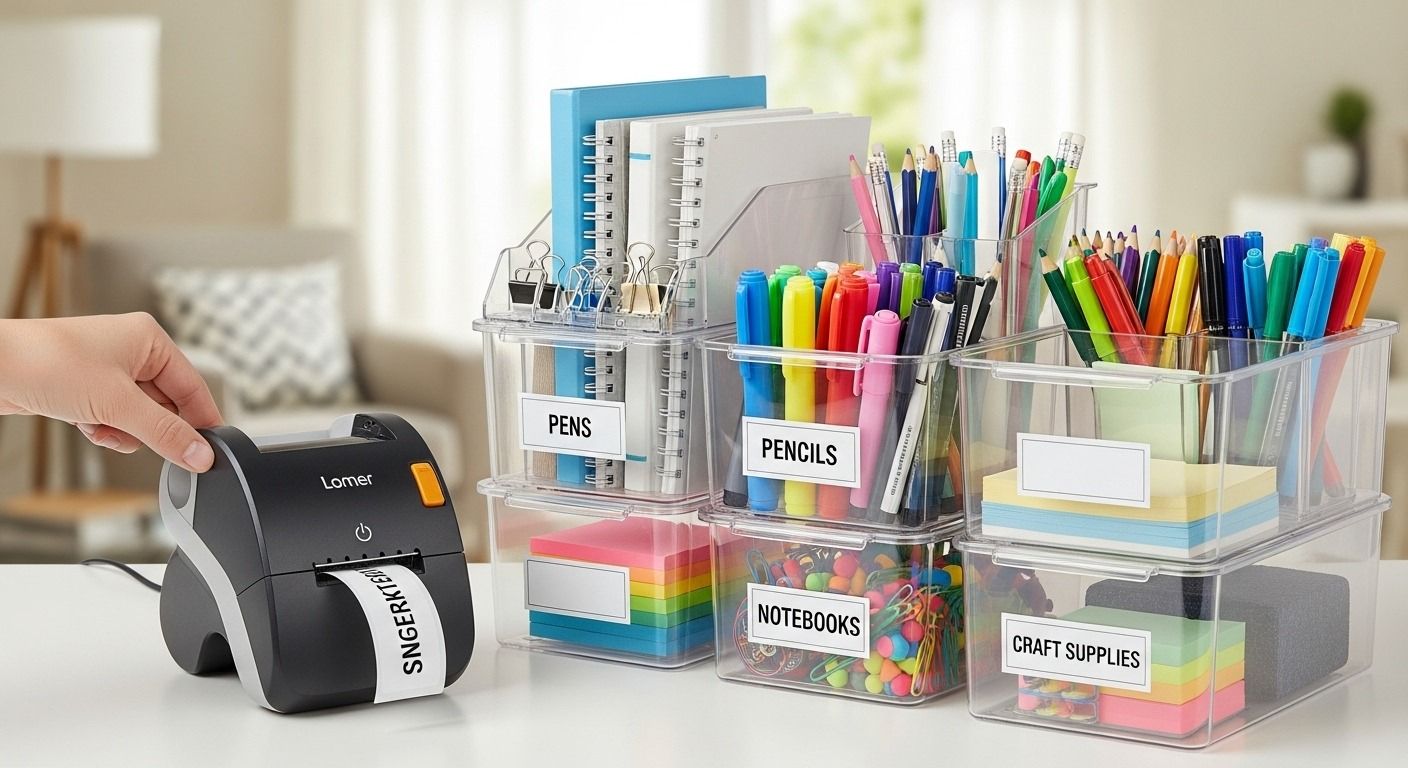

Organizing home and school supplies using a label maker means creating a clear, repeatable system where every item has a defined place and visible identification. A label maker for school supplies helps students and parents reduce lost items, save time, and improve daily productivity.
Every school year starts the same way. New notebooks. Fresh pencils. Clean backpacks. But within weeks, drawers turn messy. Markers disappear. Chargers mix up. Homework sheets get buried under random papers.
The problem is not a lack of supplies. It’s a lack of structure.
A label maker solves this by creating visible order. When every bin, folder, and container has a clear label, the brain processes information faster. You waste less time searching. Kids build independent habits. Teachers manage classrooms more efficiently.
In this guide, you’ll learn exactly how to use a label maker for school supplies at home and in study spaces. We’ll follow a practical system backed by real case study insights and apply the PAS (Problem–Agitate–Solution) framework to make it actionable.
Why Do School Supplies Become Disorganized So Quickly?
School supplies become disorganized because they lack defined storage zones and visual identifiers.
Problem: Children and even adults often place items wherever space is available. Without designated spots, supplies shift daily.
Agitate: This leads to wasted time. According to a National Association of Professional Organizers report, people spend up to 4.3 hours per week searching for misplaced items. For students, that means lost homework, missing stationery, and morning stress before school.
Classrooms face the same issue. Shared scissors. Mixed glue sticks. Unlabeled bins. Within weeks, materials become communal clutter.
Solution: A structured labeling system assigns ownership and location. When you use a label maker for school supplies, you create:
- Clear storage zones
- Personal identification tags
- Category-based organization
- Faster retrieval time
Labels reduce decision fatigue. Instead of thinking “Where should this go?”, the answer is already printed.
How Does a Label Maker Improve Organization at Home?
A label maker improves home organization by creating consistency, visibility, and accountability.
Let’s break it down using a small family case example.
Case Study Snapshot
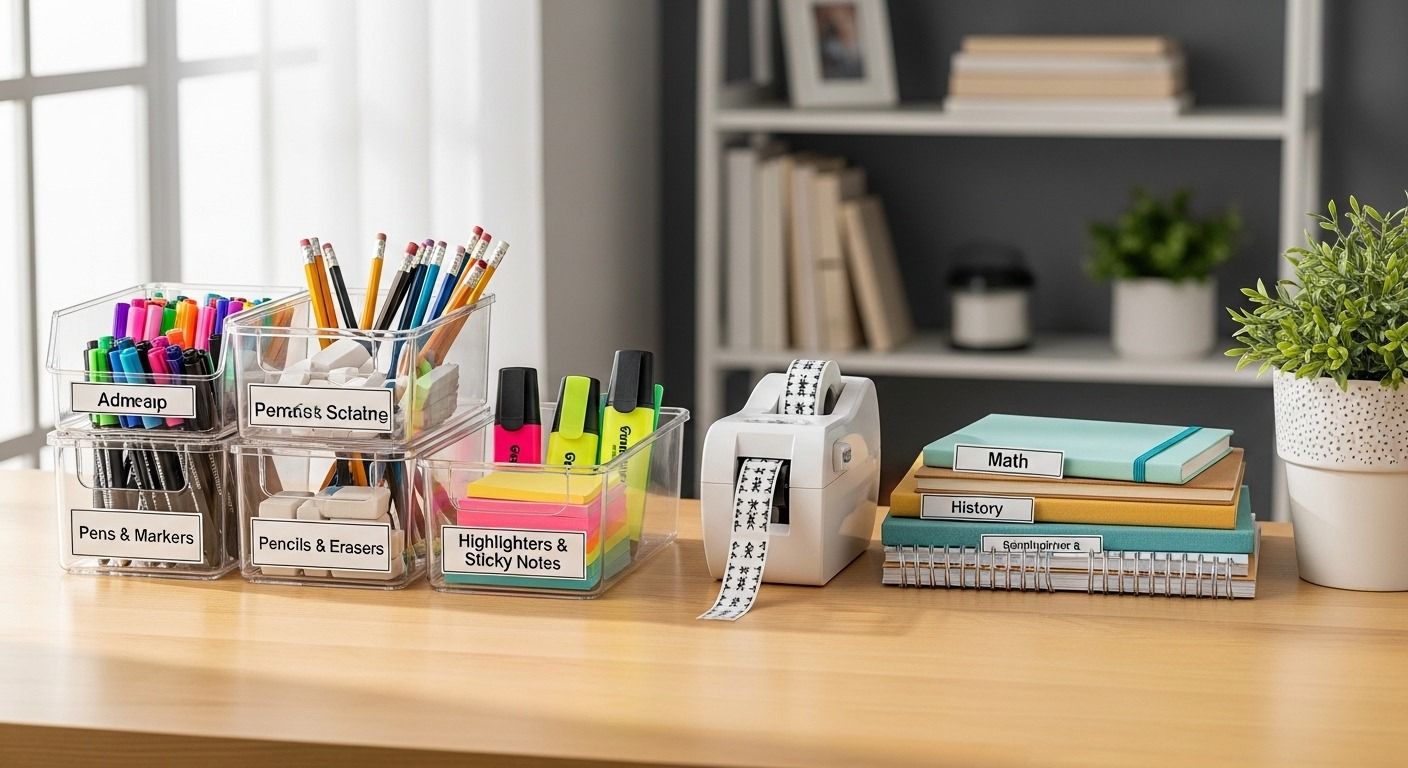
A family of four implemented a labeling system in their study area before the academic year started. They categorized supplies into:
- Writing tools
- Art materials
- Homework folders
- Charging cables
- Project storage
After 30 days:
- Morning preparation time reduced by 18%
- No lost stationery reported
- Homework submission consistency improved
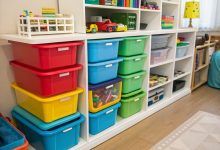
The change was not expensive. It required clear plastic bins, drawer dividers, and a label maker.
Why It Works
- Visual cues reduce mental effort
- Printed labels are more durable than handwritten tags
- Consistency builds habit loops
- Children learn responsibility faster
When supplies have labeled homes, cleanup becomes automatic.
How Do You Set Up a Labeling System for School Supplies?
To set up a labeling system, first categorize items, then assign storage zones, and finally print durable labels for each category.
Step 1: Sort by Function
Divide all items into categories:
- Pens, pencils, highlighters
- Notebooks and binders
- Art supplies
- Technology accessories
- Project materials
Step 2: Assign Containers
Use:
- Stackable storage bins
- Drawer organizers
- Clear boxes
- Magazine holders
Step 3: Create Clear Labels
Use your label maker for school supplies to print:
- Category labels (e.g., “Math Tools”)
- Ownership labels (e.g., “Arif’s Markers”)
- Date labels for projects
Step 4: Place Labels Strategically
- Front of bins
- Top of drawers
- Inside cabinet doors (inventory list)
Keep fonts simple. Avoid decorative styles. Use high-contrast black-on-white labels for clarity.
What Are the Best Areas to Use a Label Maker at Home?
The best areas include study desks, backpacks, storage shelves, craft corners, and charging stations.
1. Study Desk Organization
- Drawer sections labeled by item type
- Homework tray labeled by subject
- Pen holders categorized
2. Backpack Management
- Name labels inside bags
- Subject tags for folders
- Emergency contact label
3. Homework Station
Create labeled zones:
- “To Do”
- “Completed”
- “Needs Review”
4. Shared Supply Cabinet
Prevent mix-ups by labeling:
- Glue sticks
- Colored paper
- Printer paper
- Spare notebooks
Shared spaces require stronger labeling discipline.
Which Label Types Work Best for School Supplies?
Durable laminated labels with strong adhesive backing work best for school use.
| Label Type | Best Use | Durability |
|---|---|---|
| Laminated tape | Backpacks, water bottles | High |
| Standard adhesive | Bins, folders | Medium |
| Iron-on labels | Uniforms | High |
| Removable labels | Temporary projects | Low |
For long-term organization, laminated label tapes resist moisture and daily handling.
How Can Teachers Use a Label Maker for Classroom Supplies?
Teachers can use label makers to reduce material loss and improve classroom efficiency.
Common classroom challenges include:
- Mixed student supplies
- Shared material confusion
- Unreturned tools
Labeling strategies:
- Color-coded bins by subject
- Student name tags on cubbies
- Equipment check-out labels
- Group project supply kits
Research from classroom management studies shows structured environments improve student focus and reduce transition time.
Labels create structure without verbal reminders.
How Do You Maintain an Organized System Throughout the School Year?
Maintain organization by conducting weekly resets and quarterly audits.
Weekly Reset
- Return misplaced items
- Refill labeled containers
- Discard broken supplies
Quarterly Review
- Update subject labels
- Replace worn labels
- Reorganize based on new needs
Consistency prevents clutter from returning.
Can Labeling Improve Student Independence?
Yes. Labeling builds ownership, responsibility, and routine.
When children see their name printed clearly:
- They recognize ownership
- They take responsibility
- They return items properly
Behavioral studies show visible cues strengthen habit formation. Labels act as environmental reminders.
The goal is not perfection. It is predictability.
Conclusion: Why Should You Start Using a Label Maker for School Supplies Today?
Disorganization wastes time. It creates stress. It causes unnecessary expense when supplies go missing.
A label maker for school supplies is not just a device. It is a system tool. It transforms random storage into structured organization.
You do not need a large budget. You need consistency.
Start small. Label one drawer. Then one shelf. Then the entire study area.
Take action today. Create a labeled system before the next school week begins. Your future mornings will feel calmer and more controlled.
Frequently Asked Questions (FAQ)
1. What is the best label maker for school supplies?
A portable label maker with laminated tape support is ideal. Look for durable adhesive, easy keyboard input, and multiple font size options.
2. Are label makers safe for children to use?
Most handheld label makers are safe with supervision. They use thermal printing and do not require ink cartridges.
3. How long do school supply labels last?
Laminated labels can last several years under normal use. Standard adhesive labels may last 6–12 months depending on wear.
4. Can label makers help reduce lost items at school?
Yes. Clear name labels on personal items significantly reduce loss and confusion in shared environments.
5. Should I label every single school item?
Focus on high-loss items first: water bottles, pencil cases, calculators, folders, and electronics.
6. How often should labels be updated?
Review labels each semester or when subjects change.
Related Topics: Housing Needs For Graduates and Undergraduates
What Next: Complete Buying Guide for Impact Drivers (Featuring Milwaukee M18 Fuel)