
A pool bag works harder than almost any other bag you own. It carries wet towels, sunscreen bottles, snacks, toys, and everything else your family needs for a day at the water. It gets dropped on wet concrete, dragged across grass, stuffed into car trunks, and exposed to chlorine, salt, and direct sunlight week after week.
Most bags are simply not built for that kind of punishment. They stretch, tear, fade, or fall apart before summer is even over. However, the right bag can survive an entire season and still look good doing it.
This guide will show you exactly what to look for so you can invest in a bag that goes the distance. From materials and construction to size and features, every factor is covered here.
Why Most Pool Bags Fail Before the Season Ends
Understanding why bags fail helps you avoid the same mistake twice. The most common reasons are poor material choices, weak stitching, and handles that are not reinforced. These are not random defects. They are predictable outcomes of cutting costs during manufacturing.
Cheap bags use thin woven fabric that cannot handle prolonged moisture exposure. The fibers weaken when wet and break down faster when exposed to chlorine or salt water repeatedly. Additionally, low-cost hardware such as zippers, snaps, and D-rings corrode quickly near pools or beaches.
Handles are another common failure point. When a bag is loaded with heavy gear, the stress concentrates where the handle meets the bag body. If that connection is not reinforced with extra stitching or a riveted base, it tears away within a few weeks of heavy use. Therefore, knowing where to look for signs of quality before you buy can save you money and frustration in the long run.
Choosing the Right Material for Maximum Durability
Material is the single most important factor in a pool bag’s lifespan. Not all fabrics perform equally under summer conditions.
Canvas and Waxed Canvas
Canvas is a classic choice for good reason. It is thick, tightly woven, and highly resistant to tearing. Heavy-duty canvas bags handle weight well and resist abrasion from rough surfaces. Waxed canvas adds another layer of protection by repelling water before it can soak through the fabric.
The trade-off is weight. Canvas bags are heavier than synthetic alternatives, which can be a consideration if you are walking long distances to the beach or pool. However, for sheer durability, few materials match a well-made canvas tote.
Polyester and Nylon
Synthetic fabrics have improved dramatically in recent years. High-denier polyester and nylon are lightweight, water-resistant, and hold up well under UV exposure. Denier refers to the thickness of the individual fibers. A higher denier number means a thicker, tougher fabric.
Look for bags made from at least 600-denier polyester or 420-denier nylon for reliable durability. Anything below those numbers is likely to be thinner and less resistant to the wear and tear of a full summer. Additionally, bags with a laminated or coated interior are easier to wipe clean and more resistant to moisture seeping through from wet items inside.
PVC and Waterproof Coated Fabrics
PVC-coated bags and fully waterproof totes are ideal for pool environments where everything inside is likely to get wet at some point. These materials do not absorb water at all, making them easy to empty, rinse, and dry after each use. They also resist mold and mildew, which is a real concern when wet towels spend extended time inside a closed bag.
The downside is that PVC can feel stiff and less comfortable to carry for long periods. Some lower-quality PVC bags also crack over time in extreme heat, so look for options with a flexible formulation and UV stabilizers in the material.
What to Look for in Construction and Stitching
Even the best fabric fails if the construction is poor. Pay close attention to how a bag is put together before making a purchase.
Double-Stitched and Reinforced Seams
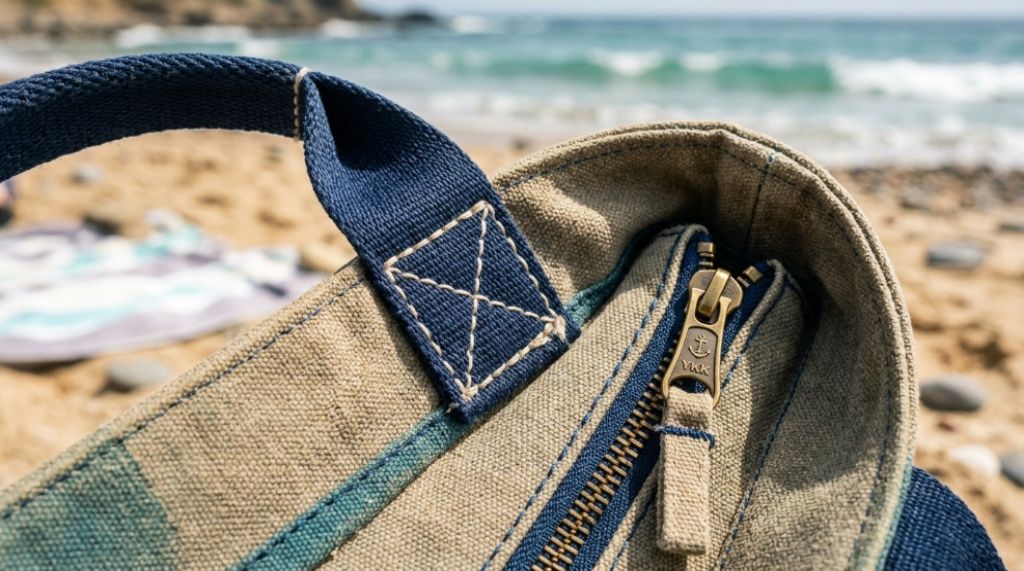
Every seam in a pool bag is a potential weak point. Double-stitched seams use two parallel rows of thread, which distributes stress more evenly and resists tearing far better than single-stitched alternatives. Bar-tack stitching, which consists of closely spaced stitches in a small rectangular pattern, is a strong indicator of quality. You will often find it at the corners of pockets and at the base of handles.
Run your finger along the seams of any bag you are considering. The stitching should feel tight and even with no loose threads. Uneven or widely spaced stitches are a warning sign, regardless of how attractive the bag looks from a distance.
Reinforced Handles and Carry Points
Handles take the most punishment of any part of a pool bag. Long-lasting beach bags always reinforce handles with extra stitching, webbing tape, or metal rivets at the attachment points. Wide, padded handles distribute weight more comfortably and are less likely to dig into your shoulder after a long carry.
Test the handles before buying if you can. Tug them firmly in the direction they would naturally be stressed when carrying a full load. A well-made handle should feel secure with no movement at the base.
Quality Zippers and Hardware
Zippers on pool bags need to resist moisture and sand. Look for zippers from reputable manufacturers such as YKK, which is widely recognized as the industry standard for reliability. Coil zippers with a smooth pull are less likely to jam with sand than cheaper alternatives.
Metal hardware such as D-rings, clasps, and feet should be made from rust-resistant materials. Stainless steel and anodized aluminum hold up well in chlorinated and saltwater environments. Plastic hardware is acceptable if it is reinforced and rated for weight, but thin plastic clips and snaps tend to crack under load.
Sizing and Compartment Layout
A durable bag that is the wrong size for your needs will frustrate you regardless of how well it is made. Think carefully about how you actually use a pool bag before choosing a size.
How Much Space Do You Actually Need?
A solo swimmer needs far less space than a parent packing for three children. A bag with a capacity of 20 to 30 litres suits most individuals comfortably. Families typically benefit from 40 litres or more, especially if they are bringing multiple towels, changes of clothing, food, and toys.
Overpacking a bag that is too small stresses the seams and handles faster. Therefore, buying slightly larger than you think you need is almost always the right decision.
Wet and Dry Compartment Separation
One of the most useful features in a heavy-duty tote is a separate wet compartment. This allows you to store soaking wet towels or swimwear away from dry items like phones, wallets, and snacks. A waterproof inner lining or a designated zip pocket for wet items makes a meaningful difference in how practical a bag is to use day after day.
Additionally, exterior pockets are valuable for items you need to access quickly, such as sunscreen, keys, or a water bottle. A bag that forces you to dig through everything to find your sunglasses will wear on you quickly, no matter how well it is made.
Features That Add Long-Term Value
Beyond basic construction, certain features extend the useful life of a pool bag and make it more versatile across the whole summer.
Padded base panels protect the bottom of the bag from abrasion when set down on concrete or rough surfaces. Removable base inserts are even better, as they can be taken out and cleaned separately. External anchor points or clip rings allow you to attach smaller pouches, wet bags, or towel hooks without adding bulk inside the main compartment.
Adjustable straps give the bag flexibility for different users and loads. A bag that works as a shoulder tote, a crossbody, and an over-the-arm carry handles more situations without requiring multiple bags. This versatility extends the bag’s usefulness well beyond the pool season.
Care and Maintenance to Extend Your Bag’s Life
Even the most durable bags need basic maintenance to perform well over multiple seasons. Rinse your bag with fresh water after every pool or beach trip to remove chlorine, salt, and sand. These substances degrade fabric and hardware when left to sit.
Allow the bag to dry completely before storing it. Storing a damp bag in a dark, enclosed space encourages mold and mildew growth, which weakens fabric fibers and creates persistent odors. Turn the bag inside out when drying to ensure the interior dries as quickly as the exterior.
For fabric bags, occasional spot cleaning with a mild soap and soft brush keeps them looking fresh. Avoid harsh detergents or bleach, which can break down waterproof coatings and weaken stitching over time.
Conclusion
A pool bag that falls apart mid-summer is more than an inconvenience. It is a waste of money and a source of daily frustration. The solution is knowing what to look for before you buy.
Focus on material quality first. Choose canvas, high-denier synthetics, or waterproof coatings depending on your needs. Inspect the stitching, handles, zippers, and hardware for signs of reinforcement and quality construction. Pick a size that matches how you actually pack, and look for thoughtful features like wet compartments and padded bases.
Long-lasting beach bags and heavy-duty totes are not always the most expensive ones on the shelf. They are the ones built with care, using the right materials and construction techniques. With the guidance in this article, you now have everything you need to make a smart, confident choice that will carry you through this summer and many more to come.
Frequently Asked Questions
What is the most durable material for a pool bag?
Heavy-duty canvas and high-denier polyester or nylon are the most durable options for general use. For environments where the bag will regularly get wet, PVC-coated or fully waterproof fabrics are the most practical choice because they do not absorb moisture and are easy to clean.
How do I know if a pool bag’s handles are strong enough?
Look for handles that are double-stitched at the attachment points, reinforced with bar-tack stitching, or secured with metal rivets. Wide, webbing-style handles distribute weight better than thin straps and are less likely to tear away from the bag body under load.
Can pool bags handle saltwater and chlorine exposure?
Not all of them. Bags made from untreated natural fabrics or low-quality synthetics degrade faster with regular exposure to chlorine and salt. Look for bags with treated or coated fabrics and rust-resistant hardware to ensure they hold up through regular pool and beach use.
What size pool bag should I buy for a family of four?
A capacity of 40 litres or more is practical for most families of four. This gives you enough space for multiple towels, swimwear changes, snacks, sunscreen, and any toys or floats without overstressing the seams and handles.
How should I store my pool bag at the end of summer?
Rinse it thoroughly with fresh water, allow it to dry completely, and store it in a cool, dry place away from direct sunlight. Prolonged UV exposure degrades most fabrics and coatings even when the bag is not in use. A breathable storage bag or pillowcase keeps it protected without trapping moisture.