
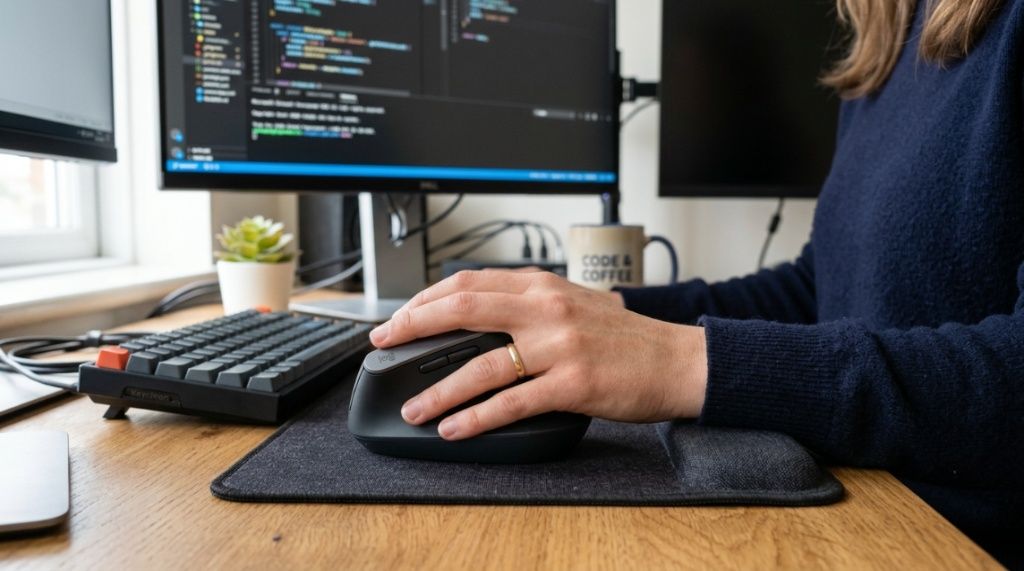
How to Find an Affordable Ergonomic Mouse in Ohio (Without Breaking the Bank)

Your wrist aches after a long day of spreadsheet jockeying, and the dull throb in your forearm is becoming a familiar companion. You’ve finally decided to ditch the flat, lifeless mouse that came with your office setup. But now you face a new problem: the market is flooded with vertical grips, trackballs, and sculpted wonders that cost a small fortune. You need relief, but your budget is tight. The search for an affordable ergonomic mouse Ohio residents can actually rely on feels overwhelming. Many assume that ergonomic means expensive, but that’s simply not true. You can find significant relief without draining your savings by focusing on the right features, knowing which brands offer budget-friendly models, and avoiding the overhyped premium traps. Let’s cut through the noise and find you a mouse that saves your wrist and your wallet.
What Features Actually Matter in a Budget Ergonomic Mouse?
When you’re shopping with a strict budget, you cannot afford to waste money on gimmicks. The core purpose of an ergonomic mouse is to keep your hand, wrist, and forearm in a neutral, relaxed position. Forget the flashy RGB lighting and the 15 programmable buttons that you’ll never use. In the affordable segment, you need to prioritize three key mechanical and design features: the vertical grip angle, the size relative to your hand, and the sensor quality for your specific use case.
Why Vertical Grip Angle Is Non-Negotiable
A conventional mouse forces your palm to face down, which twists the radius and ulna bones in your forearm. This rotation compresses the carpal tunnel. An ergonomic mouse typically tilts your hand into a handshake position (vertical) or a semi-vertical position. For a budget pick, you want a tilt of at least 45 degrees. Most affordable vertical mice from brands like Anker or VicTsing stay in the 50-60 degree range. This is sufficient to reduce pronation without requiring you to relearn your grip completely.
Which Size and Shape Fit Your Hand Best?
One of the biggest mistakes buyers make is purchasing a “one-size-fits-all” design. If your hand is large (over 7.5 inches from wrist to fingertip), a small vertical mouse will force you into a cramped pinch grip. Conversely, if you have smaller hands, a massive sculpted mouse will strain your thumb. Always check the product dimensions. Look for a mouse that supports a full palm or relaxed claw grip. For budget models, a medium-to-large size that allows your entire palm to rest on the device is safest.
Can a Cheap Sensor Keep Up with Your Work?
You don’t need a 16,000 DPI gaming sensor for Excel or CAD work. However, you need a reliable optical sensor that doesn’t skip or jitter. Standard 800-1200 DPI is perfectly fine for productivity. More importantly, check if the mouse has a rubberized or textured coating. Budget mice can get slippery after a few hours, forcing you to grip harder—negating the ergonomic benefit. Prioritize a matte or soft-touch surface over glossy plastic.
Why Are Some Ergonomic Mice So Expensive, and Is the Price Justified?
Premium ergonomic mice from Logitech (like the MX Vertical) or Evoluent often retail for $80–$100+. The price increase comes from advanced sensor technology, multi-device Bluetooth pairing, high-end build materials (aluminum, PBT plastic), and proprietary software for button remapping. While these are nice features, they are not essential for fixing wrist pain. The core ergonomic geometry does not cost $70 extra to manufacture. You are paying for polish and ecosystem integration, not necessarily for better injury prevention.
The “Premium Software” Trap
Many expensive mice require proprietary software to adjust DPI or button functions. On a budget, this is a liability. If you are using a work computer with locked-down admin rights, you won’t be able to install that software anyway. An affordable mouse that is “plug-and-play” (works immediately with Windows or Mac) is actually more practical for office environments. You lose the ability to customize, but you gain reliability.
Where the Extra Money Does Go
In pricier models, you pay for battery longevity (some last 4 months on a single charge vs. 2 weeks), quieter switches, and a more refined wheel. The Logitech MX series has a flawless MagSpeed scroll wheel, which is great if you scroll through hundreds of pages daily. However, if your scrolling needs are average, a standard tactile wheel on a affordable ergonomic mouse Ohio shoppers often find will do the job perfectly well. In 2024, a $30 mouse gets you 90% of the health benefit of a $100 mouse.
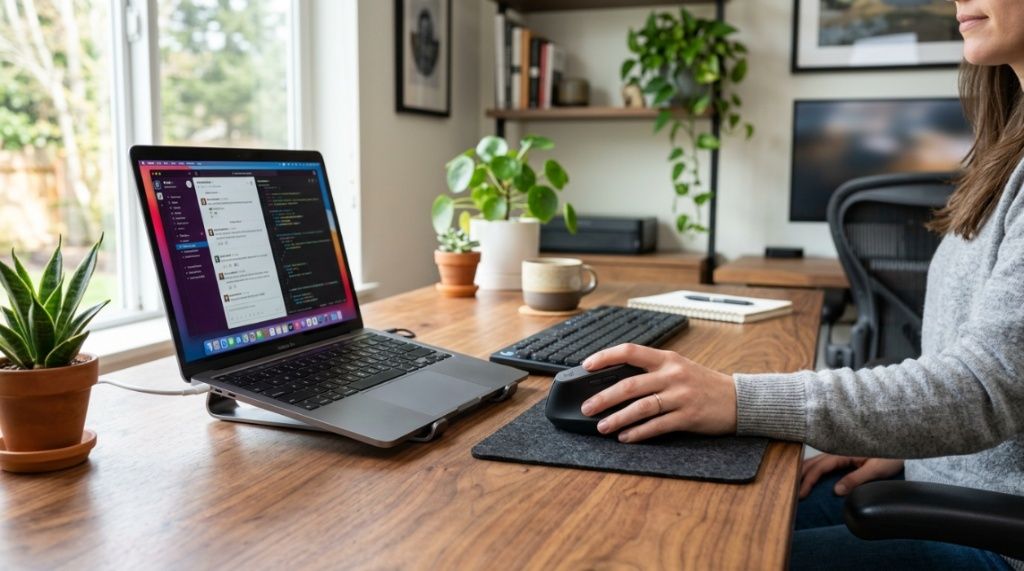
How to Test an Ergonomic Mouse Without Buying It First?
The best way to know if a cheap mouse works is to test it physically. Ohio has several major retailers, including Micro Center (located in Columbus and Mayfield Heights), Best Buy, and even some Staples locations that keep ergonomic displays out. However, testing in-store is tricky because you can’t feel the glide without a mousepad. Instead, use the “grip test”. Hold the mouse with your hand relaxed. If you can insert a piece of paper under the back of your palm without lifting your fingers off the buttons, the fit is likely good.
Utilize Local Office Supply Stores in Columbus and Cincinnati
Don’t just check the big-box electronics stores. Local office supply vendors often have demo units. Additionally, consider the return policies. This is crucial. If you buy from Amazon (which is common in Ohio), check the return window—make sure it’s at least 30 days. Buy the mouse, use it for three days, and take note of any shoulder tension. If it hurts, return it. Do not “get used to it”. The right ergonomic mouse should feel comfortable within the first 15 minutes.
Reading Reviews for Common Complaints
When shopping online, filter reviews by “3-star” and “4-star” ratings. Don’t read the 5-star reviews; they are usually written by people who just unboxed it. Instead, look for specific complaints about the scroll wheel breaking after 3 months or the coating peeling. A budget mouse might have a shorter lifespan (3-4 years), but it shouldn’t fail in the first six months. Look for brands with a dedicated customer support line for the U.S. market, as importing warranties can be a hassle.
Which Budget Ergonomic Mouse Styles Are Best for Different Hand Conditions?
Not all pain is the same. If you have tendonitis in your wrist, a vertical mouse is best. If you have arthritis in your thumb, a trackball or a mouse with a wide thumb rest is better. If you have tennis elbow (lateral epicondylitis), you need a mouse that allows your whole arm to move from the shoulder, meaning a larger, flatter mouse might be worse. Understanding your specific diagnosis is the first step to finding an affordable solution.
The Vertical Mouse for Carpal Tunnel Relief
For mild Repetitive Strain Injury (RSI), a vertical mouse is the standard recommendation. Budget options like the Anker 2.4G Wireless Vertical Mouse (often around $20) are excellent. They force your hand to rotate upward, which takes the pressure off the median nerve. However, they require you to lift your elbow slightly, which can be tiring for your shoulder muscles if you have neck issues. Test this at your desk—if your elbow starts to ache, try a semi-vertical model instead.
Trackballs for Zero Arm Movement
If you suffer from severe wrist pain where even moving the mouse is agony, a trackball is your answer because your hand stays still while your thumb or fingers move the ball. The Logitech M570 is a classic thumb-operated trackball (~$30). It is not technically “ergonomic” in the vertical sense, but it eliminates arm movement entirely. The downside is that thumb tracking can cause a different type of strain (De Quervain’s tenosynovitis). Use it sparingly and alternate with a vertical mouse.
While investing in an affordable ergonomic mouse in Ohio will instantly relieve wrist strain during long sessions, combining hardware comfort with software efficiency is the ultimate productivity boost. Once your workspace is properly set up, learn how to navigate video timelines effortlessly by checking out our guide on YouTube Keyboard Shortcuts for Power Users to speed up your daily workflow.
The “Sculpted” Mouse for General Comfort
Microsoft’s Sculpt Ergonomic Mouse (often $35-$40) offers a unique dropped design that keeps your wrist straighter than a traditional mouse but doesn’t force a full vertical grip. It includes a handy Windows key and a separate click bar. This is a great middle ground if the full vertical orientation feels alien. In the budget segment, this is often considered “affordable” because it has a higher MSRP but is frequently discounted. Check local Ohio Walmarts; they often have this model on clearance.
Why Should You Avoid “Gaming” Ergonomics for Office Work?
Gaming mice with weird honeycomb holes and adjustable palm rests are marketed as ergonomic, but they are designed for aggressive claw grips and low sensitivity settings. They are not optimized for typing or scrolling/side-button usage. Furthermore, gaming mice often have braided cables that create drag or require high-friction mousepads to control the high DPI. This can increase the force needed to move the mouse, which is counterproductive for office work.
The Weight Trap in Office Mice
Budget ergonomic mice sometimes add heavy metal weights to feel “premium”. This is a huge red flag. An ergonomic mouse should be lightweight and glide easily. If you have any shoulder issues, a heavy mouse (over 100 grams) will fatigue your deltoids. Look for a weight of 75g-90g. This allows precise movements using small finger adjustments rather than large arm motions. Avoid any product listing that brags about being heavy.
Why Wireless Passively Reduces Strain
A wireless mice allows you to position the receiver (USB dongle) wherever you want, but more importantly, it eliminates cable drag. A cable that catches on the desk edge forces you to pull harder to move the mouse, creating micro-strains in your wrist. For under $25, you can get a reliable 2.4GHz wireless ergonomic mouse that easily lasts 6 months on a single AA battery. Skip the cheap Bluetooth-only mice as they can have input lag issues on Windows—a wired 2.4GHz dongle is more reliable for work.
Can a Budget Ergonomic Mouse Help with Shoulder and Neck Pain?
Yes, in a roundabout way. Neck and shoulder pain often comes from the arm being abducted (held out) away from the body. This happens when the mouse is too big and forces your arm out. A proper ergonomic mouse doesn’t fix your posture, but it allows your shoulder to relax. If you find you are slouching, you might actually need a more compact mouse that allows you to keep your elbow tucked close to your torso.
The Small Mouse Myth for Large Men
Many men assume they need a giant mouse. In reality, a smaller vertical mouse often keeps the elbow closer to the body, reducing shoulder abduction. If you have a wide desk, a big sculpted mouse might cause you to reach, which is terrible for the neck. Look for a mouse with no sharp front edge. The left-click should be easily accessible without stretching your index finger. If you have to slide your palm forward to click, it’s too big.
Setting Up Your Desk Height to Maximize Effect
Even the best budget ergonomic mouse won’t help if your desk is too high. Your forearm must be parallel to the floor. When you sit down, your elbow should be at a 90-degree angle. If your desk is too high, you will be forced to hold your arm up, which causes pain in the upper traps. No mouse can compensate for a bad desk setup. Use an adjustable chair to make sure your direct line of sight is at the top of your monitor.
Where to Find the Best Deals on Ergonomic Mice in Ohio?
You don’t have to rely solely on Amazon. Ohio has physical stores where you can see prices and sometimes find open-box deals. Micro Center is your best bet for this category—they have an in-house brand (Inland) that offers vertical mice for around $15. Their return policy is generous if you have the receipt. Also, check the clearance racks at Best Buy; last year’s models often drop by 50% when new models come out.
What About Buying Refurbished or Used?
Refurbished mice are a great way to save money, but only if they have a 90-day warranty. Mice are prone to sweat damage and worn switches. A used mouse might have a sticky click or a degraded rubber coating that rubs off on your hand. If you go this route, purchase from reputable places like Amazon Warehouse, not garage sales. For the price of a new budget mouse (under $30), the risk of buying used often isn’t worth the $10 you save.
Online Deals and Coupon Codes for Ohio Residents
Sign up for deal alert sites like Slickdeals or follow r/buildapcsales. Often, you can stack a manufacturer rebate with a promo code. When you spot a deal, check the seller’s shipping timeline to Ohio. A mouse is small, so shipping is usually free. If you need it urgently, opt for the local store pickup if available. Many big-box retailers offer same-day pickup in Cincinnati, Cleveland, and Dayton, letting you avoid shipping fees altogether.
How to Properly Adjust Your Settings to Reduce Strain Immediately
Once you unbox your new mouse, the work isn’t done. You must adjust Windows pointer speed. Do not use “Enhance pointer precision” (acceleration) for work—it makes the cursor move unpredictably. Set the mouse speed to the middle (6/11) and use your arm to move, not your wrist. However, with a vertical mouse, you actually use your fingers to nudge the sensor, which is more precise.
Optimizing Button Mapping for Your Workflow
As an analyst or writer, you likely use Copy (Ctrl+C) and Paste (Ctrl+V) frequently. On a budget ergonomic mouse, assign the side buttons (if it has them) to these commands. This saves you from reaching for the keyboard constantly. If the mouse doesn’t have side buttons, install AutoHotKey (free software) and program a key combination to do it with your keyboard. This reduces repetitive finger stretching.
Micro-Breaks and Stretching Protocols
An ergonomic mouse reduces the risk, but it doesn’t eliminate the need for breaks. Every 30 minutes, perform a simple stretch: extend your arm straight, palm up, and gently pull your fingers down for 15 seconds. This is the “prayer stretch” for wrists. Set a timer using the Windows Clock App. Your $25 mouse is useless if you type for 4 hours straight without resting your hands.
Comparing the Top 3 Affordable Ergonomic Mice Under $40
To give you a concrete starting point, we have analyzed three market leaders in the budget category. These are widely available in retail and online, and they offer distinct benefits. The table below compares their dimensions, tilt angle, sensor type, and wireless connectivity to help you decide based on your specific hand size and technical requirements.
Key Specifications at a Glance
| Model | Approximate Price | Tilt Angle | Key Feature |
|---|---|---|---|
| Anker Vertical Ergonomic Mouse | $20 | 50° | Rubber grip, 3 DPI levels |
| Logitech M570 Trackball | $30 | Traditional | Thumb ball, no wrist movement needed |
| Microsoft Sculpt Ergonomic Mouse | $35 (often on sale) | 30° (dropped design) | Windows key, unique pivot shape |
Which One Should You Choose?
If you have wrist pain when lifting your hand, the Anker is your choice. If you have pain from moving the mouse, pick the Logitech M570. If you have a slightly smaller hand and want a balanced shape, select the Microsoft Sculpt. Remember, you can always buy two of these for the price of one premium mouse. Keep one at work and one at home to ensure consistent ergonomic support regardless of where you are in Ohio.
Is a Vertical Mouse Hard to Get Used To?
Yes, initially. Expect a learning curve of 24-48 hours. Your first instinct will be to rotate the mouse back to a flat position. To speed up adjustment, lower your sensitivity so you use your entire forearm to move the mouse, rather than your wrist. The vertical mouse is designed to slow you down slightly, which reduces rapid, jerky movements.
Dealing with the “Lazy Elbow” Syndrome
Users of vertical mice often let their elbow rest on the desk, leaving the arm hanging. This is wrong. The elbow should be slightly lifted off the desk, creating a gap. This activates the shoulder muscles to stabilize the arm, which is actually good for blood flow and posture. It feels tiring for the first two days, but within a week, your arm will naturally settle into a comfortable position. If the strain is too much, switch to a trackball.
When Should You Adjust Your Chair?
When you plug in a vertical mouse, your arm is rotated outward. This changes your sitting posture. You may find that your chair needs to be raised or lowered by half an inch. Ensure that when you hold the mouse, your arm is not flared out. If your arm is tight against your ribcage, the mouse is too small. If it’s winging out, the mouse is too big. Adjust your seat height first before attacking the mouse.
Frequently Asked Questions
What is the cheapest ergonomic mouse that actually works?
The Anker 2.4G Wireless Vertical Mouse, often priced around $17, is the cheapest reliable option. It offers a solid 50-degree tilt and a comfortable rubberized grip that outperforms many mice costing twice as much.
Can a cheap ergonomic mouse help with carpal tunnel syndrome?
Yes, but only if the pain is related to pronation (palm-down twisting). A vertical mouse helps keep the wrist in a neutral posture, reducing median nerve pressure. However, it is not a cure for advanced carpal tunnel—that requires rest and possibly medical intervention.
Are wireless ergonomic mice under $25 reliable?
They are generally reliable for office use. The 2.4GHz dongle connection is stable and doesn’t suffer from the lag issues of cheap Bluetooth. Battery life is typically 3-6 months, which is good. Just buy from a known brand like Anker, Logitech, or VicTsing to ensure the sensor doesn’t skip.
How long should a budget ergonomic mouse last?
A cheap ergonomic mouse should last 2-3 years with normal office use. The switches are rated for about 3 million clicks, which is roughly half of a premium mouse. If you work 8 hours a day clicking constantly, expect the side buttons to wear out first.
Is it better to use a trackball or vertical mouse for arthritis?
For arthritis in the fingers and thumb, a vertical mouse is often worse because you need to grip it. A trackball, like the Logitech M570, allows your fingers to rest while your thumb moves the ball, or conversely, a finger-operated trackball (like a large finger trackball) is best for thumb arthritis. Choose based on where the pain is located.
Does the mousepad matter for an ergonomic mouse?
Yes. A hard plastic mousepad requires less force to move the mouse than a soft, cloth pad. If you are using a vertical mouse, you need a slightly larger mousepad (at least 12×10 inches) because the vertical grip changes how you manage the Y-axis. A standard small pad will cause you to run out of room.
Can I use an ergonomic mouse with a laptop keyboard?
Absolutely. The mouse is independent of the keyboard. However, if you are using a laptop on a lap desk, you need a hard, flat surface for the mouse. A vertical mouse does not work well on a soft bed or couch, so use a tray.
Conclusion: Your Next Step Toward Pain-Free Computing
Finding an affordable ergonomic mouse Ohio workers can trust is actually a simple process when you know what to look for. Stop worrying about the biggest brand names or the flashiest specs, and focus on the tilt angle, the fit in your palm, and the wireless reliability. You don’t need to spend $100 on an MX Master Vertical when a $25 Anker or a $35 Microsoft Sculpt provides the same anatomical benefits. Remember the key takeaways: you want a handshake-like grip (minimum 45 degrees), a soft-textured surface, and a 2.4GHz wireless dongle for minimal drag. Test the mouse with your specific workflow—not just a 30-second click in the store. If it causes any new shoulder pain within a week, return it. Your wrist health is not tied to the price tag but to the neutrality of your posture.
The time to act is now. Every day you use that flat government-issue mouse, you are reinforcing poor mechanics. Check your budget, pick one of the three models mentioned above, and order it today. Give your hands the support they deserve for the long work days ahead.