
Buying your first mountain bike feels exciting until you start browsing. Suddenly you’re drowning in spec sheets, price tags, and conflicting advice. You want a bike that rides well, lasts more than a season, and doesn’t drain your bank account. The problem? The market is flooded with options, and many beginners end up overspending on features they don’t need or buying cheap bikes that fall apart within months. The good news is that picking the right best mountain bike for beginners first mountain bike purchase doesn’t have to be overwhelming. This guide breaks down exactly what matters, what doesn’t, and how to make a smart buying decision you won’t regret.
What Should a Beginner Look for in a Mountain Bike?
A beginner needs a mountain bike that’s reliable, easy to handle, and built for the type of riding they’ll actually do. Focus on frame material, wheel size, suspension type, and brakes before worrying about premium components.
Most new riders make the mistake of either buying the cheapest bike they can find or splurging on a high-end model packed with features they won’t use. The sweet spot sits in the $300–$800 range, where you get solid construction without paying for professional-grade components.
Frame Material Matters More Than You Think
Steel and aluminum are the two most common frame materials for entry-level mountain bikes. Steel absorbs bumps well and is extremely durable, but it’s heavier. Aluminum is lighter and resists rust, making it the more popular choice for beginners. For your first bike, aluminum offers the best balance of weight, durability, and cost.
Wheel Size Affects How the Bike Feels
Modern mountain bikes come with 27.5-inch or 29-inch wheels. Smaller riders often prefer 27.5-inch wheels because they’re more maneuverable. Taller riders benefit from 29-inch wheels that roll over obstacles more easily. If you’re between 5’4″ and 5’10”, either size works, so test ride both if possible.
Is Full Suspension Worth It for a First Mountain Bike?
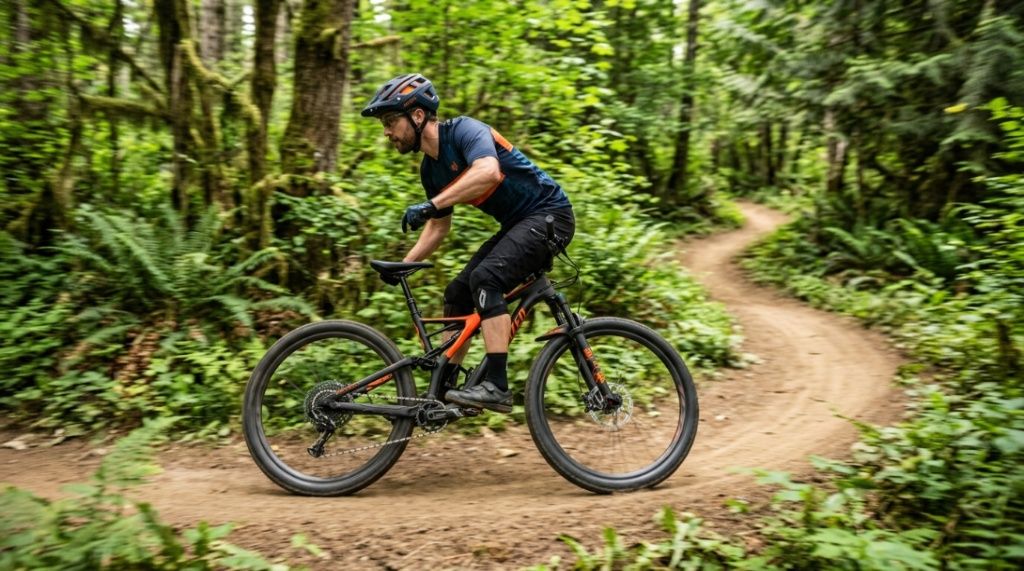
For most beginners, a hardtail (front suspension only) is the smarter choice. Full suspension bikes cost more, weigh more, and require more maintenance.
Front suspension handles the bumps and roots you’ll encounter on beginner and intermediate trails. Full suspension becomes necessary when you’re riding aggressive downhill terrain or hitting large drops. If you’re just starting out, a quality hardtail will serve you well for years and leave money in your pocket for gear and trail access.
When Full Suspension Makes Sense
Consider full suspension if you live near rocky, technical trails or plan to ride aggressively from day one. Otherwise, save the extra $300–$600 and invest in a better hardtail. You can always upgrade later once you know your riding style.
How Much Should You Spend on Your First Mountain Bike?
Budget between $400 and $800 for a dependable beginner mountain bike. Below $300, quality drops significantly. Above $800, you’re paying for features that won’t make a noticeable difference for new riders.
| Price Range | What You Get | Best For |
|---|---|---|
| Under $300 | Poor components, frequent repairs, heavy frame | Not recommended for trail riding |
| $400–$600 | Solid frame, decent components, reliable brakes | Casual trail riders and beginners |
| $600–$800 | Better suspension, smoother shifting, lighter build | Serious beginners planning to ride often |
| $800–$1,200 | Quality components across the board | Beginners committed to the sport long-term |
Spending more than $1,200 on a first mountain bike is unnecessary. At that price point, you’re entering intermediate territory, and you’ll get more value by first discovering what type of riding you enjoy before investing heavily.
Which Brake Type Is Best for Beginner Mountain Bikers?
Disc brakes are the clear winner for mountain biking. They provide consistent stopping power in wet, muddy, and dry conditions. Rim brakes simply can’t compete on the trail.
There are two types of disc brakes: mechanical and hydraulic. Mechanical disc brakes use a cable to engage the brake and are easier to maintain at home. Hydraulic disc brakes use fluid to engage the brake and offer stronger, more modulated stopping power with less hand effort.
Mechanical vs. Hydraulic: What’s the Difference for Beginners?
Mechanical disc brakes are found on most bikes under $600. They work well and are simple to adjust with basic tools. Hydraulic disc brakes feel smoother and require less hand strength, which reduces fatigue on longer rides. If your budget allows, hydraulic brakes are worth the upgrade. If not, mechanical disc brakes are perfectly capable for beginner and intermediate trails.
How Do You Choose the Right Mountain Bike Size?
Getting the correct frame size is the single most important factor in buying a mountain bike. A bike that’s too large or too small will feel uncomfortable, handle poorly, and can even cause injury over time.
Most manufacturers provide a sizing chart based on your height. Here’s a general guide:
- 5’0″–5’4″: Small frame (14–16 inches)
- 5’4″–5’8″: Medium frame (16–18 inches)
- 5’8″–6’0″: Large frame (18–20 inches)
- 6’0″–6’4″: Extra-large frame (20–22 inches)
These ranges vary by brand, so always check the specific manufacturer’s chart. When you stand over the top tube, you should have at least 1–2 inches of clearance. If possible, visit a local bike shop and test ride different sizes. The right fit makes every ride more enjoyable and keeps you in control on technical terrain.
Can You Buy a Mountain Bike Online and Still Get a Good Deal?
Yes, buying online can save you money, but there are trade-offs. You won’t get a test ride, and the bike will arrive partially assembled, requiring some setup.
Many reputable online retailers ship bikes that are 90% assembled. You’ll typically need to attach the front wheel, handlebars, pedals, and seat. If you’re not comfortable doing this, budget an extra $50–$80 for a local bike shop to assemble it for you. That said, some excellent beginner bikes are available online at competitive prices. For example, best mountain bike for beginners options like the Dynacraft Magna Echo Ridge offer solid entry-level performance at a budget-friendly price point, making them a popular choice for new riders who want decent quality without overspending.
Tips for Buying a Mountain Bike Online
- Check the return policy carefully. You want at least 30 days to test the bike.
- Read reviews from verified buyers, not just the product description.
- Confirm the frame size using the manufacturer’s specific chart.
- Factor in assembly costs if you’re not doing it yourself.
- Look for free shipping deals, which can save $30–$60.
What Are the Most Common Mistakes First-Time Mountain Bike Buyers Make?
The biggest mistakes include buying based on looks alone, ignoring frame size, choosing the cheapest option, and not test riding before purchasing.
Many beginners are drawn to bikes with aggressive styling or flashy colors without considering whether the components are actually trail-worthy. A good-looking bike with poor brakes and a heavy frame will frustrate you on every ride. Similarly, buying a bike that doesn’t fit properly leads to back pain, knee strain, and a general dislike of the sport.
Mistakes to Avoid at the Register
- Buying from a department store: Big-box store bikes often use low-quality components that fail quickly and are difficult to service.
- Ignoring the warranty: Look for at least a one-year manufacturer’s warranty on the frame.
- Skipping essential gear: Budget for a helmet, gloves, and a water bottle holder alongside the bike.
- Overlooking future upgrades: Choose a bike with standard components so you can upgrade parts as your skills improve.
How Important Are Gears on a Beginner Mountain Bike?
Gears are essential for handling climbs, descents, and flat sections efficiently. For beginners, a bike with 7 to 21 gears provides enough range for most trail conditions.
You don’t need the 24- or 27-speed drivetrains found on more expensive bikes. A 1×7 or 1×8 drivetrain (one chainring in front, 7 or 8 gears in the back) is simpler to operate and less likely to cause shifting problems. Simplicity matters when you’re still learning to ride and don’t want to fuss with your gears on a steep climb.
Should You Buy a Used Mountain Bike as Your First?
Buying used can stretch your budget, but it comes with risks. Inspect the frame for cracks, check that the wheels spin true, and test the brakes and gears thoroughly before handing over any money.
If you go the used route, bring along someone who knows bikes or take the bike to a shop for a professional inspection. A $20 inspection fee can save you from buying a bike with hidden damage or worn-out components that need expensive replacement.
What Accessories Do You Actually Need for Mountain Biking?
You don’t need to buy everything at once. Start with the essentials and add gear as you discover what your riding style demands.
- Helmet: Non-negotiable. Look for a helmet with MIPS technology for added impact protection.
- Gloves: Protect your hands from blisters and trail debris.
- Water bottle and cage: Staying hydrated on the trail is critical.
- Basic repair kit: Include a multi-tool, tire levers, and a spare tube.
- Padded shorts: Optional for short rides, but a game-changer on longer trails.
How Do You Know When You’ve Outgrown Your First Mountain Bike?
You’ll know it’s time to upgrade when you consistently feel limited by the bike’s components rather than your own skills. Signs include frequent mechanical issues, suspension that bottoms out on trails you can ride confidently, and gears that no longer shift smoothly despite regular maintenance.
Most riders get 2–5 years out of a solid beginner bike before needing an upgrade. By then, you’ll have a much clearer idea of what type of mountain biking you enjoy, whether that’s cross-country, trail riding, or downhill, and you can invest accordingly.
Frequently Asked Questions
What is the best mountain bike brand for beginners?
Brands like Trek, Giant, Specialized, and GT offer excellent entry-level mountain bikes in the $400–$800 range. These companies use quality components and provide reliable warranties, making them safe choices for new riders.
Is a $500 mountain bike good enough for trail riding?
Yes, a $500 mountain bike from a reputable brand is more than capable of handling beginner and intermediate trails. At this price point, you get reliable brakes, decent suspension, and a durable frame that will last for years with proper maintenance.
Can I ride a mountain bike on the road?
You can, but mountain bike tires create more rolling resistance on pavement. If you plan to ride mostly on roads, consider a hybrid bike instead. For mixed use, mountain bikes work fine on pavement for short commutes.
How heavy should a beginner mountain bike be?
Most beginner mountain bikes weigh between 28 and 35 pounds. Lighter bikes are easier to handle but cost more. For your first bike, don’t obsess over weight. Focus on fit, comfort, and component quality instead.
Do I need front suspension for casual trail riding?
Yes, front suspension makes a noticeable difference on trails with roots, rocks, and uneven terrain. It absorbs impacts that would otherwise travel through your arms and shoulders, making rides more comfortable and controlled.
How often should I service my mountain bike?
Perform basic maintenance after every ride, including cleaning the chain and checking tire pressure. Take your bike to a professional for a full tune-up every six months or after approximately 500 miles of riding.
Final Thoughts on Picking Your First Mountain Bike
Choosing your first mountain bike comes down to a few key decisions: get the right size, pick a reliable hardtail in your budget, and buy from a brand that stands behind its product. Don’t chase specs you don’t understand or spend money on features you won’t use. The best bike for you is the one that fits well, rides smoothly, and gets you excited to hit the trail. Start with a solid foundation, ride often, and upgrade when your skills demand it. Your future self will thank you for making a smart, informed choice today.