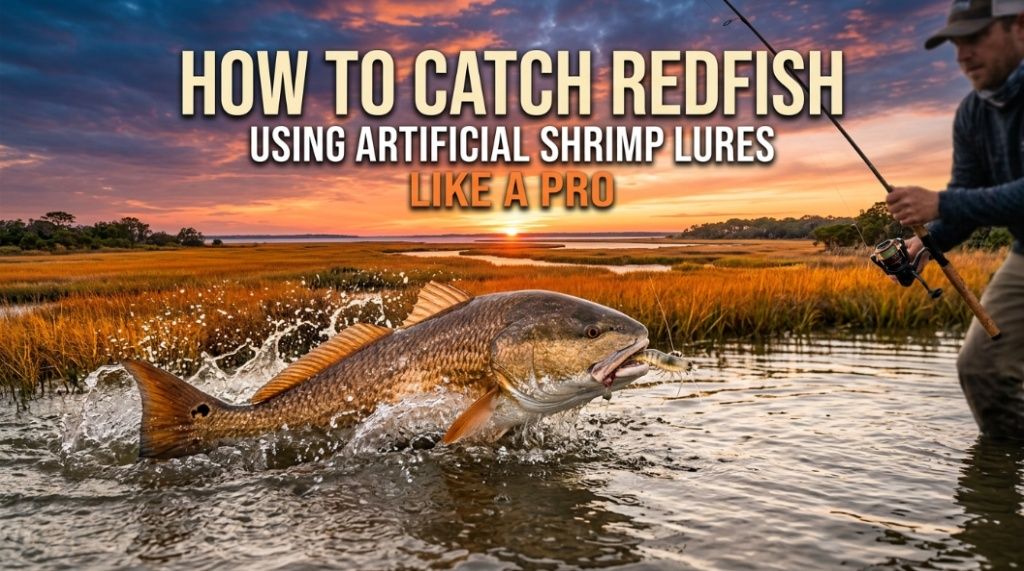

The most effective way to catch redfish using shrimp lures is to match the lure presentation to real shrimp behavior short hops, pauses, and natural drift near the bottom where redfish feed.
Why shrimp lures consistently catch redfish
Redfish don’t think twice before eating shrimp. That’s the entire game. If your lure behaves like a real shrimp, you win. If it doesn’t, you get ignored.
Shrimp are one of the primary food sources for redfish across coastal flats, marshes, and estuaries. Studies on red drum feeding patterns show crustaceans (especially shrimp) make up a large portion of their diet in shallow water environments. Yet many anglers struggle—not because they lack shrimp lures, but because they fish them wrong.
They retrieve too fast. They stay too high in the water column. Or they use the wrong setup for the conditions.
This guide breaks it down simply and clearly. You’ll learn how to use shrimp lures for redfish like someone who knows exactly what they’re doing—because after this, you will.
What are shrimp lures for redfish?
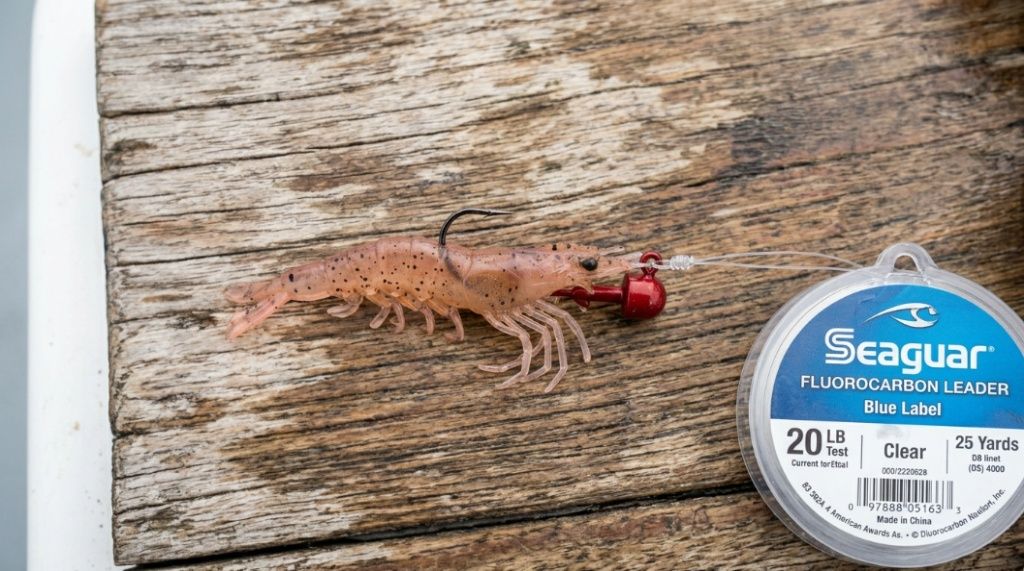
Shrimp lures for redfish are artificial fishing baits designed to imitate the look, movement, and behavior of live shrimp, triggering feeding instincts in redfish.
These lures are typically made from soft plastic or hard-bodied materials and come in various forms:
- Soft plastic shrimp (most versatile)
- Pre-rigged shrimp with jig heads
- Topwater popping shrimp lures
- Scented shrimp baits
What matters isn’t just how they look—it’s how they move. Real shrimp flick, hop, and glide. Your lure should do the same.
Why do redfish prefer shrimp over other lures?
Redfish prefer shrimp because they are a natural, high-protein food source commonly found in their feeding zones.
Redfish are opportunistic bottom feeders. Their downward-facing mouths are built for rooting through mud, sand, and grass flats. Shrimp live exactly there.
Key reasons shrimp lures outperform others:
- Natural prey match (high confidence strike)
- Year-round availability in most coastal systems
- Strong scent and vibration cues
- Easy target when fleeing
Compared to baitfish lures, shrimp lures often produce more consistent bites in shallow or pressured waters.
What is the best color shrimp lure for redfish?
The best shrimp lure color depends on water clarity—natural tones for clear water, darker or brighter colors for murky conditions.
| Water Condition | Best Colors | Why It Works |
|---|---|---|
| Clear Water | Natural brown, tan, translucent | Mimics real shrimp closely |
| Stained Water | Pink, chartreuse, gold flake | Improves visibility |
| Muddy Water | Dark purple, black, bright orange | Creates strong silhouette |
When in doubt, start natural. If bites are slow, switch to something louder visually.
How do you rig shrimp lures for redfish?
The best rigging method is a jig head or weedless hook setup, depending on structure and water depth.
Common rigging options:
- Jig Head Rig: Best for open water and bottom bouncing
- Weedless Hook: Ideal for grass flats and heavy cover
- Popping Cork Rig: Great for suspended shrimp presentation
Pro tip: Match your jig head weight to depth and current. Too heavy kills natural movement. Too light reduces control.
How should you retrieve shrimp lures for redfish?
The most effective retrieve mimics a fleeing shrimp—short hops followed by pauses near the bottom.
Use this simple pattern:
- Cast and let it sink
- Lift rod tip slightly (hop)
- Pause for 2–3 seconds
- Repeat slowly
Redfish often strike during the pause, not the movement. That’s where most beginners mess up—they never pause long enough.
Where should you fish shrimp lures for redfish?
The best locations are shallow flats, marsh edges, oyster beds, and tidal creeks where shrimp naturally gather.
High-percentage spots:
- Grass flats during high tide
- Creek mouths during moving tide
- Oyster bars (edges, not directly on top)
- Mangrove shorelines
Look for signs of life: bait movement, wakes, tailing fish. If shrimp are there, redfish won’t be far.
When is the best time to use shrimp lures for redfish?
The best time is during moving tides—especially incoming tides—when shrimp are active and redfish are feeding.
Timing factors that matter:
- Incoming tide = higher feeding activity
- Early morning and late afternoon = less pressure
- Seasonal peak: spring through fall
Still, shrimp lures work year-round in most regions if presented correctly.
Do scented shrimp lures work better than unscented?
Scented shrimp lures can increase strike rates, especially in murky water or when fish are less aggressive.
Redfish rely heavily on smell. Adding scent:
- Encourages longer bites (better hook sets)
- Makes artificial feel more natural
- Improves performance in low visibility
But don’t rely on scent alone—presentation still matters more.
What gear setup is best for shrimp lure fishing?
A medium-light spinning setup with braided line and a fluorocarbon leader provides the best balance of sensitivity and strength.
Recommended setup:
- Rod: 6’6”–7’ medium-light or medium
- Reel: 2500–3000 size spinning reel
- Main Line: 10–15 lb braided line
- Leader: 15–20 lb fluorocarbon
This setup gives you casting distance, control, and enough power to handle strong redfish runs.
What mistakes should you avoid when using shrimp lures?
The biggest mistake is retrieving too fast—shrimp don’t swim like fish, and fast movement reduces realism.
Common mistakes:
- No pause between movements
- Fishing too high in the water column
- Using overly heavy jig heads
- Ignoring tide and current direction
Fix these, and your success rate improves immediately.
Are shrimp lures better than live shrimp for redfish?
Shrimp lures can outperform live shrimp in terms of durability, convenience, and versatility, especially when fish are actively feeding.
| Factor | Shrimp Lures | Live Shrimp |
|---|---|---|
| Durability | High | Low |
| Convenience | Very easy | Requires care |
| Realism | Moderate–High | Perfect |
| Cost Over Time | Lower | Higher |
For consistent results and efficiency, many experienced anglers rely on artificial shrimp lures.
Conclusion: How to consistently catch more redfish with shrimp lures
If you remember one thing, make it this: slow down and fish like a shrimp, not a fish.
Shrimp lures for redfish work because they match natural feeding behavior. When you combine the right color, proper rigging, realistic movement, and smart location choices, you create a setup that redfish can’t ignore.
Focus on:
- Natural presentation
- Bottom-focused retrieves
- Fishing during moving tides
- Adjusting to water clarity
Dial these in, and your results won’t just improve—they’ll become predictable.
Now take this knowledge to the water and test it. The difference shows up fast.
FAQ: Shrimp lures for redfish
What size shrimp lure is best for redfish?
3 to 4-inch shrimp lures are ideal because they closely match the size of natural shrimp redfish commonly feed on.
Can you use shrimp lures in deep water?
Yes, but you need a heavier jig head or weighted rig to keep the lure near the bottom where redfish feed.
Do shrimp lures work at night?
Yes, especially darker colors that create strong silhouettes in low light conditions.
How do you know if redfish are feeding on shrimp?
Look for jumping shrimp, surface disturbances, or tailing redfish in shallow flats.
Are shrimp lures good for beginners?
Yes, they are easy to use and highly effective when retrieved slowly with pauses.
What’s better: popping cork or jig head?
Popping corks are better for suspended fish, while jig heads are ideal for bottom feeding redfish.
📌 Related Reads