
An automatic inflatable life jacket is one of the safest and most comfortable flotation devices for anglers, but it only works when it is worn correctly, maintained properly, and matched to the fishing environment. Many boating and fishing fatalities happen because anglers either were not wearing a life jacket or used one incorrectly. An inflatable PFD fishing setup gives better mobility and comfort than bulky foam vests, but it also requires regular inspection, cartridge replacement, and awareness of water conditions.
What Is an Automatic Inflatable Life Jacket for Fishing?
An automatic inflatable life jacket is a personal flotation device (PFD) that inflates automatically when it contacts water, helping keep the wearer afloat during an emergency.
An auto inflate vest uses a CO2 cartridge and water-activated mechanism to rapidly inflate the air bladder around the chest and neck. Unlike traditional foam life jackets, inflatable PFDs are lightweight and less restrictive, making them popular among kayak anglers, bass fishermen, offshore anglers, and boating enthusiasts.
Most inflatable PFD fishing models are classified as Type II or Type III life jackets under U.S. Coast Guard standards. They are designed for adults and are commonly used because they improve comfort during long hours on the water.
- Lightweight and breathable
- Better casting mobility
- Reduced shoulder fatigue
- Comfortable for all-day wear
- Less bulky than foam life jackets
Many professional anglers prefer automatic inflatable life jackets because they are more likely to be worn consistently. Comfort directly affects safety compliance.
Why Is Wearing an Inflatable PFD Important While Fishing?
Wearing an inflatable PFD while fishing dramatically increases survival chances during accidental falls, boat collisions, or unexpected water conditions.
According to boating safety reports from organizations like the U.S. Coast Guard, the majority of drowning victims in recreational boating accidents were not wearing life jackets. Fishing boats are especially vulnerable because anglers often stand, move around constantly, and operate in changing weather conditions.
Fishing environments create unique risks:
- Slippery boat decks
- Sudden wakes from other boats
- Cold water shock
- Strong currents
- Night fishing visibility issues
- Unexpected storms
An inflatable fishing life jacket helps reduce these risks without limiting movement. This matters for anglers who cast repeatedly or spend long hours trolling, kayaking, or fly fishing.
How Does an Auto Inflate Vest Work?
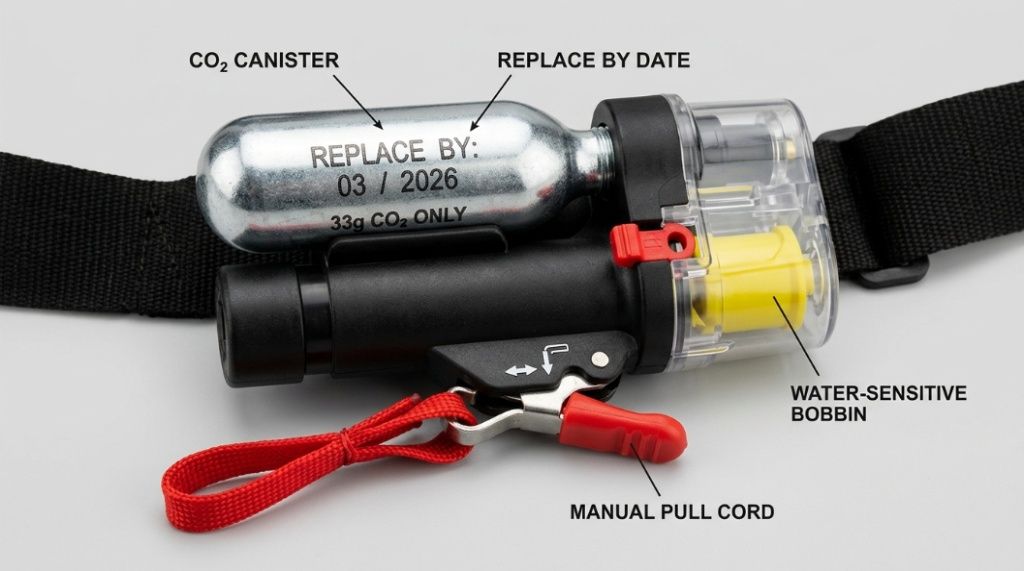
An auto inflate vest works through a water-sensitive activation system that punctures a CO2 cylinder when submerged, inflating the bladder within seconds.
Most automatic inflatable PFDs contain three key components:
| Component | Function |
|---|---|
| CO2 Cartridge | Inflates the air bladder |
| Inflation Mechanism | Activates automatically in water |
| Oral Inflation Tube | Allows manual backup inflation |
When the vest enters the water, the inflator dissolves or activates electronically depending on the model. The mechanism punctures the CO2 cartridge and fills the flotation chamber.
Most modern inflatable fishing PFDs inflate within 3–5 seconds.
Can You Inflate an Automatic PFD Manually?
Yes. Every certified inflatable life jacket includes a manual pull cord and oral inflation tube as backups.
This redundancy matters because fishing conditions can vary widely. Manual inflation allows anglers to control activation in situations like rain, spray-heavy boating, or shallow-water wading.
What Are the Biggest Mistakes Anglers Make With Inflatable Life Jackets?
The most common mistakes include not wearing the vest properly, failing to inspect the CO2 cartridge, and assuming the PFD works forever without maintenance.
Inflatable life jackets require more attention than foam vests. Neglect reduces reliability.
1. Not Wearing the PFD at All
The safest life jacket is the one actually being worn. Many drowning victims had life jackets onboard but not on their bodies.
2. Using Expired CO2 Cartridges
CO2 cylinders can corrode, loosen, or become punctured accidentally. A damaged cartridge may fail during an emergency.
3. Ignoring Re-Arming Requirements
After inflation, the vest must be re-armed with a new cartridge and activation bobbin before reuse.
4. Wearing It Under Heavy Clothing
Bulky rain gear can interfere with inflation and proper buoyancy positioning.
5. Using It for Non-Approved Activities
Some inflatable PFDs are not approved for:
- Whitewater rafting
- Personal watercraft use
- Children under specific ages
- High-impact water sports
How Should You Inspect an Inflatable PFD Before Fishing?
You should inspect an inflatable PFD before every fishing trip to ensure the inflation system, cartridge, and bladder are functioning correctly.
A quick 3-minute inspection can prevent catastrophic failure.
Pre-Trip Inflatable Life Jacket Checklist
- Check the CO2 cartridge for corrosion
- Confirm cartridge is tightly screwed in
- Inspect the activation indicator
- Look for tears or abrasion
- Test oral inflation tube
- Ensure straps and buckles are secure
- Verify rearming kit compatibility
Manufacturers also recommend performing a full inflation test periodically. Inflate the vest orally and leave it overnight to check for leaks.
What Is the Difference Between Automatic and Manual Inflatable PFDs?
Automatic inflatable PFDs inflate upon water contact, while manual inflatable PFDs require the user to pull a cord for activation.
| Feature | Automatic Inflatable PFD | Manual Inflatable PFD |
|---|---|---|
| Activation | Water-triggered | Pull cord required |
| Best For | General fishing and boating | Kayaking, wading, spray-heavy use |
| Accidental Inflation Risk | Higher | Lower |
| Emergency Response | Immediate | User-dependent |
| Ease of Use | Very easy | Requires awareness |
For most recreational anglers, automatic inflatable life jackets provide the best balance between convenience and safety.
When Should You Avoid Using an Auto Inflate Vest?
You should avoid using an auto inflate vest in high-impact or constantly wet conditions where accidental inflation becomes likely.
Certain fishing environments may be better suited to foam life jackets.
Situations Where Foam PFDs May Be Better
- Whitewater fishing
- Heavy surf fishing
- Extreme cold-weather fishing
- Frequent submersion environments
- Fishing around heavy debris
Automatic inflatable PFDs are excellent for calm lakes, bass boats, offshore fishing, and recreational boating, but matching the vest to the environment matters.
How Tight Should an Inflatable Fishing Life Jacket Fit?
An inflatable fishing life jacket should fit snugly enough that it does not ride up over the chin or ears during inflation.
Loose-fitting life jackets reduce effectiveness and may shift dangerously during emergencies.
Proper Fit Tips
- Adjust chest straps securely
- Test shoulder movement while casting
- Ensure neck area is comfortable
- Avoid excessive looseness
- Check fit with fishing gear layers on
Most inflatable PFDs are designed for adult users above specific weight thresholds, commonly 80 pounds or more.
How Often Should You Replace CO2 Cartridges and Rearming Kits?
You should replace CO2 cartridges and rearming kits immediately after deployment or whenever signs of damage, corrosion, or expiration appear.
Even unused cartridges should be inspected regularly.
Signs a Cartridge Needs Replacement
- Rust or corrosion
- Puncture marks
- Loose threading
- Moisture damage
- Expired activation components
Most manufacturers recommend storing rearming kits onboard or in tackle storage for emergencies.
Can You Wear an Inflatable PFD While Kayak Fishing?
Yes, inflatable PFDs are commonly used for kayak fishing because they provide excellent mobility and ventilation during long paddling sessions.
Kayak anglers often prefer low-profile inflatable fishing vests because traditional foam jackets can interfere with paddling motion and seat positioning.
However, kayak fishing introduces additional considerations:
- Frequent splash exposure
- Capsize risk
- Cold-water immersion
- Remote fishing locations
Some kayak anglers choose manual inflatable PFDs to reduce accidental inflation caused by paddle splash.
What Maintenance Does an Inflatable Life Jacket Require?
Inflatable life jackets require regular inspection, cleaning, drying, and proper storage to remain reliable.
Saltwater exposure, humidity, and UV damage can reduce lifespan over time.
Maintenance Best Practices
- Rinse with fresh water after saltwater use
- Dry completely before storage
- Store in cool, dry areas
- Avoid compressing the bladder
- Inspect monthly during fishing season
- Replace expired components promptly
Never store inflatable PFDs wet inside sealed compartments. Mold and corrosion can damage inflation systems.
Are Inflatable Fishing Life Jackets Coast Guard Approved?
Many inflatable fishing life jackets are Coast Guard approved, but only when worn correctly and used according to manufacturer instructions.
Approval labels matter because not all inflatable PFDs meet the same safety standards.
What to Check on the Label
- U.S. Coast Guard approval status
- User weight range
- Activity limitations
- Inflation type
- Maintenance requirements
Regulations vary by country and boating authority, so anglers should confirm local requirements before fishing.
What Features Should You Look for in the Best Inflatable PFD for Fishing?
The best inflatable PFD fishing models combine comfort, reliability, visibility, and fishing-friendly features.
Not all auto inflate vests are designed specifically for anglers.
Important Features for Fishing
- High-visibility reflective panels
- Lightweight breathable fabric
- D-ring attachment points
- Secure waist adjustment
- Quick-access pockets
- Low-profile casting design
- Manual override capability
Professional bass anglers and offshore captains often prioritize mobility and lightweight construction because they wear the vest for extended periods.

How Can Cold Water Make Fishing Accidents More Dangerous?
Cold water can trigger shock, breathing difficulty, and rapid muscle failure within minutes, making life jacket use even more critical.
Even experienced swimmers struggle during sudden cold-water immersion.
According to boating safety organizations, cold shock can impair breathing control immediately after falling into water below approximately 60°F (15.5°C).
Cold Water Risks Include
- Hyperventilation
- Loss of coordination
- Swimming failure
- Hypothermia
- Cardiac stress
An automatic inflatable life jacket helps maintain buoyancy while the body responds to cold shock.
What Should You Do If Your Inflatable PFD Deploys Accidentally?
If your inflatable PFD deploys accidentally, stay calm, inspect for damage, and replace the used CO2 cartridge and activation components before reuse.
Accidental deployment can happen from:
- Heavy rain
- Boat spray
- Improper storage
- Humidity exposure
- Submersion during landing fish
Most accidental inflations are harmless but require full rearming afterward.
Conclusion
An automatic inflatable life jacket can significantly improve fishing safety when used correctly. The biggest advantage of an inflatable PFD fishing setup is that anglers are more likely to wear it consistently because it feels lighter, cooler, and less restrictive than traditional foam vests.
But comfort alone is not enough. Safe use depends on proper fit, regular maintenance, cartridge inspections, and understanding where auto inflate vests work best. A neglected inflatable life jacket can fail when it matters most.
Whether you fish from a kayak, bass boat, center console, or shoreline, wearing a properly maintained inflatable PFD dramatically improves survival odds during unexpected falls or boating accidents.
Before your next fishing trip, inspect your life jacket, verify the inflation system, and make wearing it part of your normal fishing routine. Safety equipment only works when it is ready before the emergency happens.
Frequently Asked Questions About Inflatable PFD Fishing Safety
Are automatic inflatable life jackets safe for fishing?
Yes. Automatic inflatable life jackets are considered safe for fishing when they are Coast Guard approved, properly maintained, and worn correctly.
Can an auto inflate vest activate in rain?
Yes. Heavy rain, boat spray, or high humidity can sometimes trigger water-activated inflatable PFDs depending on the inflator type.
How long does an inflatable PFD last?
The lifespan depends on maintenance and storage conditions. Many inflatable PFDs last several years when inspected regularly and stored properly.
Do inflatable fishing life jackets work in cold water?
Yes. Inflatable life jackets provide buoyancy in cold water, but anglers should still wear thermal protection because cold shock and hypothermia remain serious risks.
Can you reuse an inflatable life jacket after deployment?
Yes. Most inflatable PFDs are reusable after replacing the CO2 cartridge and rearming kit according to manufacturer instructions.
Is a manual or automatic inflatable PFD better for kayak fishing?
It depends on conditions. Automatic PFDs provide instant flotation, while manual PFDs reduce accidental inflation from paddle splash and repeated water exposure.
Do inflatable PFDs require maintenance?
Yes. Regular inspection, drying, cartridge replacement, and leak testing are necessary to ensure reliable performance.
📌 Related Reads
Discover: How to Catch Redfish Using Artificial Shrimp Lures Like a Pro