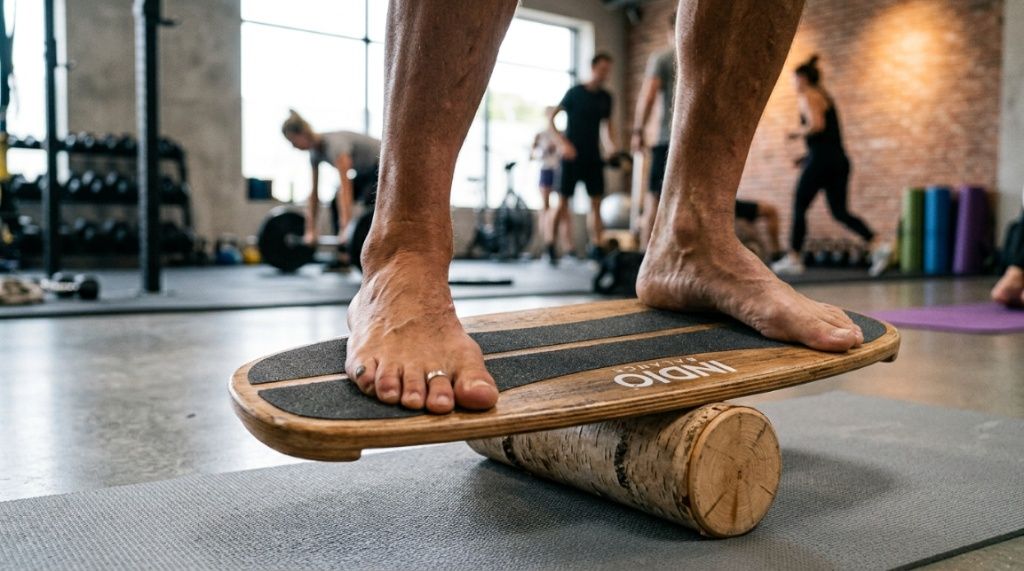

You’re paddling hard, popping up, and then… your legs feel like jelly by the third wave. The problem isn’t your arms or your lungs. It’s your core. Surfing demands explosive rotational power and stability that standard gym workouts rarely deliver. You need a training tool that mimics the unstable, shifting surface of the ocean. But with so many options on the market, how do you choose the right one? This guide breaks down exactly what to look for in a surf trainer for faster core strength, so you can stop wasting time on gimmicks and start building real, functional power for the water.
Why Core Strength Is the Foundation of Surfing
Before you buy anything, it helps to understand why core strength matters so much in surfing. The core isn’t just your abs; it includes your obliques, lower back, hips, and glutes. Every surfing movement—from paddling to turning to recovering from a wipeout—originates from this central powerhouse.
A strong core keeps your body stable on the board, allowing your arms and legs to work efficiently. It transfers power from your upper body to your lower body during turns and cutbacks. Without it, you’ll fatigue quickly, lose balance on steep takeoffs, and struggle to generate speed down the line. A dedicated surf trainer targets these specific muscle groups in a way that traditional weightlifting cannot.
The Difference Between Gym Core Work and Surf Core Work
In the gym, you might do crunches or planks on a stable floor. That builds isometric strength, but surfing is dynamic. Your core must react to unpredictable shifts in weight and momentum. A surf trainer introduces instability, forcing your deep stabilizer muscles to fire continuously. This is the key difference: gym work builds strength in a controlled environment, while surf-specific training builds strength in a chaotic one. That’s why you need equipment designed for movement, not just tension.
Key Features to Look for in a Surf Trainer
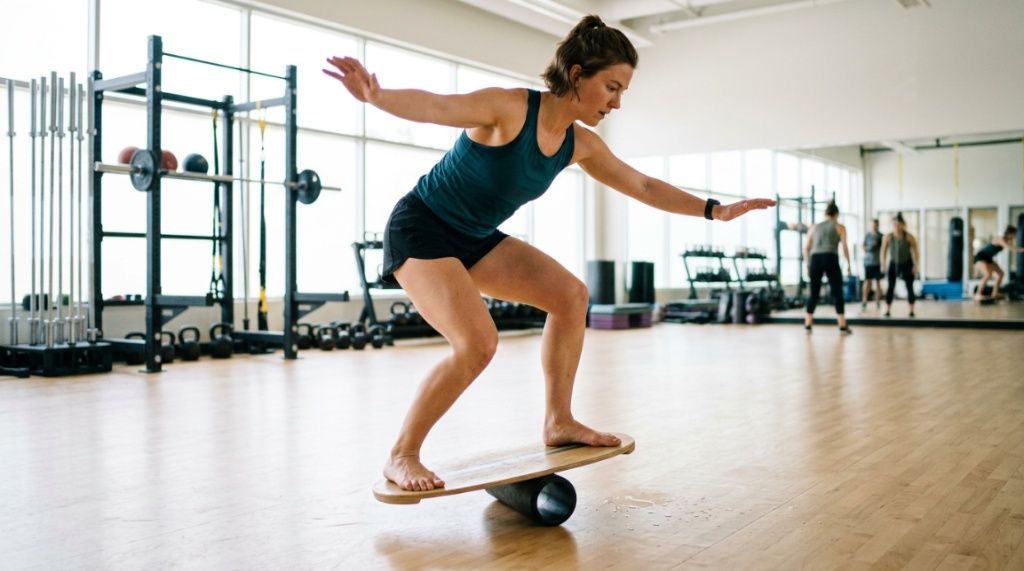
Not all balance boards or training tools are created equal. When you’re evaluating options, keep these critical features in mind. The right equipment should challenge your stability while allowing for the full range of motion required for surfing.
Adjustable Difficulty Levels
Your training needs will change as you improve. A good surf trainer should grow with you. Look for boards or platforms with adjustable rocker angles or interchangeable fulcrums. Beginners need a wider, more stable base. Advanced surfers need a narrow, highly responsive pivot point that mimics the rail-to-rail transition of a surfboard. If a trainer has no adjustability, you’ll likely outgrow it within a few months.
While focusing on land training keeps your body in top shape, remember to Protect Surfboards from Florida Humidity when storing your gear between sessions.
Surface Grip and Traction
Safety is non-negotiable. The top of the trainer should have a high-grip, non-slip surface similar to surfboard traction pads. This prevents your feet from sliding during intense workouts. The bottom of the board or the roller should also have a durable, non-marring material to protect your floors and prevent the unit from shooting out from under you.
Weight Capacity and Durability
Check the manufacturer’s weight limit. You need a trainer that can support your body weight plus the dynamic forces generated during explosive movements. Look for materials like marine-grade plywood, bamboo, or high-density plastics that can withstand repeated impact without warping or cracking. A flimsy trainer is a safety hazard and a waste of money.
Types of Surf Trainers: Which One Builds Core Strength Fastest?
There are several categories of surf training equipment. Each targets the core differently. Understanding the mechanics of each will help you make an informed choice based on your specific weaknesses.
| Trainer Type | Primary Core Benefit | Best For | Limitations |
|---|---|---|---|
| Rocker Board | Ankle mobility and front-to-back balance | Paddling posture and pop-up mechanics | Limited rotational training |
| Balance Board (Roller) | Lateral stability and rail-to-rail transitions | Carving and turning strength | Requires more skill to use safely |
| Indoor Surf Simulator | Full-body rotational power and torque | Generating speed and performing cutbacks | Larger footprint and higher cost |
| Inflatable Balance Disc | Basic stabilizer muscle activation | Rehabilitation and beginner balance | Too unstable for high-intensity power work |
Rocker Boards: The Foundation
Rocker boards are curved planks that pivot front-to-back. They are excellent for developing the stabilizer muscles in your ankles and calves, which are crucial for maintaining a low, athletic stance. They help you find your “sweet spot” on the board and improve your paddling posture. However, they do little to train the rotational twisting that generates speed in the pocket.
Balance Boards with Rollers: The Turn Specialists
These feature a board on top of a cylindrical roller. They allow for lateral tilting, which closely mimics the heel-to-toe pressure changes of a bottom turn. Using one forces your obliques and hip flexors to work overtime to keep the board level. This is arguably the most effective way to build the specific core strength needed for carving hard off the lip.
Full Simulators: The Complete Package
These are larger, often multi-axis platforms that allow for both lateral and rotational movement. They are the closest you can get to surfing on land. They are excellent for practicing full-body coordination and building explosive rotational power. If you have the space and budget, a simulator is the ultimate surf trainer for faster core strength because it engages every muscle group simultaneously.
How to Train for Faster Core Strength Gains
Owning the equipment is only half the battle. You need a structured approach to see results quickly. Here is a practical framework for integrating your new trainer into your routine.
Start with Time, Not Reps
Don’t jump straight into complex tricks. Start by simply standing on the trainer and holding your balance for 30-second intervals. Focus on keeping your knees soft and your back straight. Do this for 5 minutes a day for the first week. This builds the neurological connection between your brain and your core stabilizers.
Incorporate Dynamic Movements
Once you can balance comfortably, start adding movement. Perform slow, controlled squats while maintaining your balance. Then, progress to twisting your torso side-to-side while keeping your hips square. This rotational movement is where you will start to feel the burn in your obliques. Aim for 3 sets of 10 twists on each side.
Simulate Surf-Specific Actions
The ultimate goal is to transfer this balance to your surfboard. Practice your pop-up on the trainer. Start in a prone paddling position (if your trainer allows), then explode up into your surfing stance. This trains your core to generate power from a horizontal to vertical position, which is exactly what you need when catching a wave.
Common Mistakes to Avoid When Training
Many surfers buy a trainer, use it for a week, and then abandon it because they aren’t seeing results. Often, this is due to a few common errors. Avoid these pitfalls to maximize your time and effort.
- Looking down at your feet: This ruins your posture and prevents your core from engaging properly. Keep your head up and eyes forward, just like you would when paddling for a wave.
- Holding onto something: Using a wall or chair for support defeats the purpose. You need to let your core do the work. If you need support, you are using a trainer that is too advanced.
- Training on a soft surface: Placing your trainer on carpet or a mat reduces the instability. Always use it on a hard, flat floor to get the full benefit.
- Ignoring the back muscles: Core strength isn’t just about the front of your body. Focus on keeping your back straight and engaging your glutes to protect your spine.
When to Use Your Trainer in Your Weekly Routine
Consistency beats intensity. It is better to train for 10 minutes every day than for an hour once a week. Your nervous system needs regular stimulation to build the fast-twitch muscle fibers required for surfing.
Try to use your trainer on your rest days from surfing. If you surf in the morning, do a light balance session in the evening. If you are a weekend warrior, use the trainer on Tuesday and Thursday evenings to keep your core activated. This frequency will lead to faster strength gains than sporadic, intense sessions.
Frequently Asked Questions
Can I use a surf trainer if I am a complete beginner?
Yes, but you must start with a stable model. Look for a wide rocker board or a balance board with a larger roller. Begin by holding onto a wall for support until you find your center of gravity. As your confidence grows, you can gradually release your grip and progress to more challenging movements.
How long does it take to see core strength improvements?
Most surfers notice improved balance and stability within 2 to 3 weeks of consistent use (10-15 minutes daily). Visible muscle definition and significant strength gains typically take 6 to 8 weeks. The key is consistency and gradually increasing the difficulty of your exercises.
Is a surf trainer better than doing yoga for core strength?
Both are beneficial, but they serve different purposes. Yoga builds flexibility and static endurance. A surf trainer builds dynamic, reactive strength and specific balance for the surfboard. For faster surfing-specific gains, a balance trainer is more efficient because it directly mimics the movements you perform on a wave.
Will this help me with my pop-up speed?
Yes. Practicing pop-ups on a balance trainer forces your core to stabilize your body while your legs and arms move. This improves your coordination and explosive power, directly translating to a faster, more controlled pop-up in the water.
Do I need to buy the most expensive trainer to get results?
No. A mid-range, durable balance board is sufficient for most surfers. The most expensive simulators offer more features, but they are not necessary for building core strength. Focus on finding a trainer with adjustable difficulty and a solid build quality that fits your budget.
Conclusion
Choosing the right surf trainer is about matching the equipment to your specific weaknesses and goals. Whether you opt for a simple rocker board to fix your stance or a full simulator to build rotational torque, the most important factor is consistent use. Focus on quality, adjustability, and safety. By incorporating a dedicated balance and core routine into your weekly schedule, you will build the strength and stability needed to surf longer, turn harder, and progress faster. Stop overthinking it—pick a trainer that fits your space and skill level, and start putting in the reps today.