
You just finished a sunset session at Sebastian Inlet, rinsed your board, and leaned it against the garage wall. The next morning, tiny white blisters have appeared on the deck, and the stringer feels slightly spongy. You have just discovered the fastest way to ruin a surfboard in the Sunshine State: neglect in high humidity. Florida’s coastal air isn’t just thick—it is corrosive. With an average relative humidity hovering above 75% year-round, moisture works its way into every ding, crack, and vent hole. The result? Delamination, yellowing, and structural failure. Learning how to properly protect surfboards humidity is not optional—it is the difference between a board that lasts three seasons and one that lasts three months.
Why Is Humidity So Damaging to Surfboards in Florida?
Humidity causes irreversible damage to surfboards because moisture vapor penetrates the porous foam core and causes chemical degradation of the resin and EPS (expanded polystyrene) materials. Unlike a quick rain shower, humidity is constant, silent, and pervasive.
How Moisture Destroys the Foam Core
A surfboard’s core, whether polyurethane (PU) or EPS, acts like a dry sponge. In standard climates, the foam remains inert. In Florida’s humid air, microscopic water molecules enter through vent plugs, fin boxes, and hairline cracks. Once inside, the moisture weakens the resin-to-foam bond, leading to delamination. You will first notice a cloudy, milky patch under the glass—this is water pooling inside the lamination.
The Role of Resin Degradation
Polyester resin, common in cheaper boards, absorbs moisture over time. This causes the resin to become brittle and yellow. Epoxy resins are more resistant, but they are not immune. Prolonged exposure to high humidity will eventually soften even the best epoxy layup, making the board feel flexy and sluggish on the water.
Why Florida Is a Unique Case
Florida’s climate combines heat, salt air, and extreme humidity. This trifecta accelerates oxidation. A board stored in a garage in Miami during July will degrade twice as fast as the same board stored in San Diego. The salt air also corrodes fin screws and vent plugs, creating entry points for moisture.
What Are the First Signs of Humidity Damage on a Surfboard?
The earliest signs include small white blisters (osmotic blistering), a spongy feeling underfoot, and a cloudy or yellowed look on the deck. If you catch these early, you can often save the board with a simple repair.
Osmotic Blistering: The Silent Killer
Osmotic blisters look like pimples on the surface of the board. They form when water vapor inside the foam pushes outward against the resin. If left untreated, these blisters pop, exposing the foam to even more moisture. Prevention is simple: keep the board dry and store it in a low-humidity space.
Sponginess Around the Stringer
If you press your thumb into the center of the board and feel a soft, rubbery sensation, water has likely entered the stringer area. This compromises the board’s flex pattern and makes it unpredictable in turns. A spongy board is dangerous at high speeds and should be repaired immediately.
Yellowing and Resin Cracking
Yellowing is cosmetic but indicates UV and humidity damage. Cracking around the rail or tail suggests the resin has become brittle. If cracks appear, seal them with a dab of fresh resin before the next high-humidity day.
How Should You Store a Surfboard to Minimize Humidity Exposure?
Store your board indoors in a climate-controlled room with a dehumidifier. If indoor storage is impossible, use a vented rack system that allows airflow around the entire board, and never store boards flat on the ground or inside a sealed bag while wet.
Elevate and Ventilate: The Golden Rule
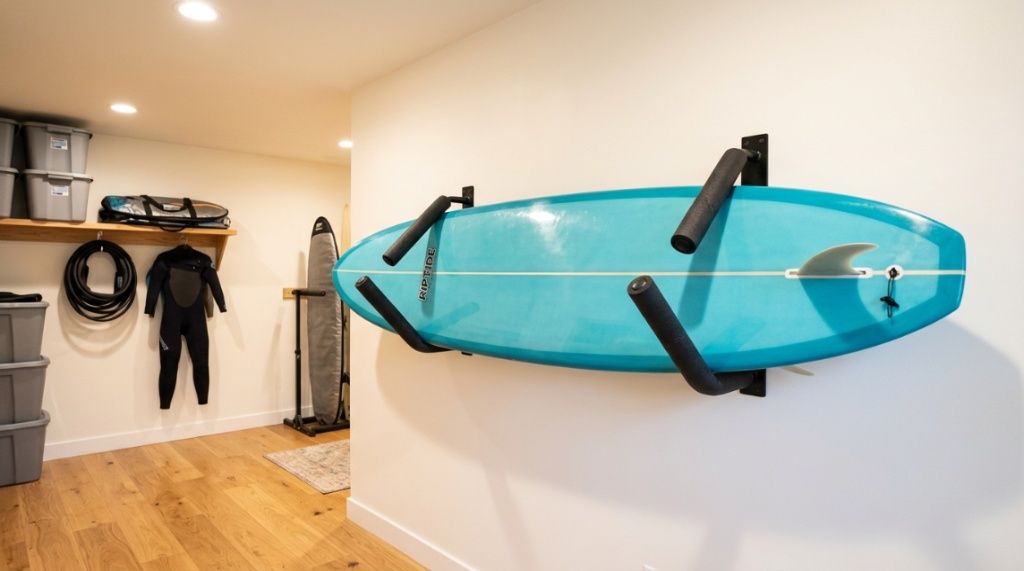
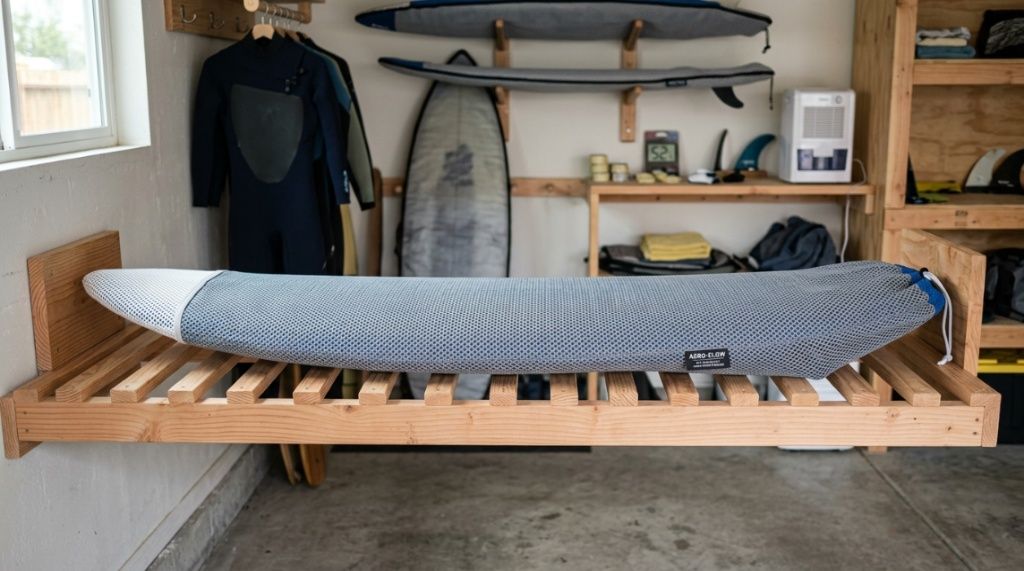
Never lean a surfboard against a wall where moisture can pool between the board and the surface. Use wall racks or freestanding racks that allow air to circulate underneath and around the board. Concrete floors in garages are cold and release moisture. Elevate the board at least 12 inches off the floor. A wall rack system, such as the affordable options featured on The Surfing Village, keeps boards off the ground and promotes airflow.
Dehumidifiers and Climate Control
Running a small dehumidifier in your storage area reduces the relative humidity below 50%. This prevents moisture absorption. For surfboards stored in a garage, a 30-pint dehumidifier is sufficient. Set it to 45% humidity. A single dehumidifier can protect five to eight boards if the room is sealed.
Ventilated Board Bags vs. Sealed Bags
A common mistake is storing a wet board inside a sealed board bag. This traps humidity against the resin overnight. Instead, use a ventilated bag or a day bag with mesh panels. If you must use a sealed travel bag, leave the zipper partially open so moisture can escape.
Which Surfboard Materials Resist Humidity Best?
Epoxy and EPS boards offer the highest resistance to humidity damage because the resin is less permeable and the foam does not absorb water as aggressively as polyurethane. However, no material is waterproof indefinitely.
Epoxy vs. Polyurethane: A Comparison
| Material | Water Absorption Rate | Humidity Damage Speed | Repair Difficulty | Best For Florida? |
|---|---|---|---|---|
| Epoxy + EPS | Very Low | Slow (12–18 months) | Moderate (special resin needed) | Yes |
| Polyurethane + Polyester | Moderate | Fast (6–9 months) | Easy (standard resin works) | No (with caveats) |
| Epoxy + XPS (Home Depot foam) | Extremely Low | Very Slow (24+ months) | Difficult (unique sanding) | Yes (custom boards) |
Why Epoxy Boards Are Safer but Not Invincible
Epoxy boards use closed-cell EPS foam that resists water ingress. However, the skin lamination still breathes slightly. In Florida, even epoxy boards require careful storage. The advantage is that epoxy boards dry out faster if they do take on moisture.
Vent Plugs: A Weak Point
Every surfboard has a vent plug located near the stringer. This plug equalizes air pressure but also lets humidity in. Swap your standard plastic vent plug for a Gore-Tex moisture-wicking vent plug. These allow air pressure to equalize while blocking water vapor. They cost under $15 and are a cheap insurance policy.
How Often Should You Inspect a Surfboard in High Humidity?
Inspect your board at least once a week during the summer and once every two weeks during winter. The inspection should take less than two minutes and can prevent a $500 repair.
The Weekly Visual Walk-Around
Hold the board under a bright light and look for:
- Small white dots (blisters)
- Cloudy patches on the deck
- Yellowing near the tail
- Rust around fin screw holes
If you see any of these, dry the board thoroughly with a towel and apply a coat of waterproof wax or resin sealant to the affected area.
The Squeeze Test for Sponginess
Grip the board with both hands about two feet apart and gently press your thumbs into the deck. Walk your hands down the board, testing each section. If any area feels soft or gives more than the surrounding surface, you have moisture intrusion. Mark the spot with a pencil and take the board to a repair shop within a week.
Checking Fin Boxes and Leashes
Futures and FCS fin boxes are common entry points for humidity. Remove the fins once a month and check the inside of the box for rust or moisture. Wipe the inside dry with a paper towel and apply a thin layer of silicone grease to the fin tabs before reinserting. This creates a moisture seal.
Can You Use Coatings or Sealants to Block Humidity?
Yes, several sealants and coatings reduce moisture absorption by up to 70%. The most effective are penetrating epoxy sealers and UV-blocking resin sprays. These products add a microscopic barrier that repels water vapor.
DIY Epoxy Sealer Application
Mix a small batch of clear epoxy resin (West System 105 with 205 hardener works well). Thin it slightly with epoxy thinner. Brush a light coat onto the entire deck and rail edges. Allow it to cure for 24 hours in a dry room. This creates a thin shell that blocks humidity. One application lasts about six months.
UV and Moisture Sprays
Brands like Solarez and Sex Wax offer spray-on UV protectants that also seal against moisture. These are quick to apply (spray and wipe) and are great for travel boards. The trade-off is durability—sprays wear off after three to four surf sessions,Whether you have a durable epoxy or a performance polyurethane model, managing environmental moisture is key to longevity. Before investing in your next setup, be sure to check out our guide on Custom vs Stock Boards: What’s Best for Surfing to see which materials handle coastal conditions best.
Wax as a Temporary Barrier
Reapplying a thick layer of basecoat wax before storage can seal the surface. The wax fills micro-cracks and prevents moisture from settling into the pores. This is a temporary measure and should not replace proper storage.
Which Storage Position Is Worst for Humidity Protection?
The worst storage position is laying the board flat on the ground, fin down, against a concrete wall. This position traps moisture between the board and the floor, blocks airflow, and concentrates humidity onto the tail and stringer area.
Why Flat Storage Is a Disaster
When a board sits flat, gravity pulls moisture downward. Any water vapor inside the board pools at the lowest point, usually the tail. This creates a concentrated zone of delamination. Flat storage also prevents the board from drying after rinse sessions because no air reaches the bottom surface.
Vertical Storage with Proper Racking
Vertical storage, where the board stands upright on its tail, allows moisture to drain out through the stringer vents. The best vertical racks use padded arms that grip the rails without pressure. This position promotes air circulation around every surface.
Rooftop or Ceiling Storage
Ceiling-mounted racks are excellent for humidity protection because warm air rises and stays dry. The board is suspended away from cold drafts and damp floors. However, make sure the rack uses wide nylon straps, not ropes, to avoid rail dents.
What Daily Habits Reduce Humidity Damage?
Developing a simple after-surf routine reduces humidity damage by 80%. The key habits are: rinse with fresh water, towel dry immediately, and store in a ventilated spot within 30 minutes.
The Three-Minute Drying Routine
After rinsing your board, use a microfiber towel to dry every surface. Pay special attention to the leash plug, vent plug, and fin crevices. Never let the board air dry—that gives humidity time to seep in. A dry board stored for 10 hours repels moisture far better than a damp board stored for the same period.
Deck Pad Care
Deck pads trap water against the board. After each session, lift the edges of the pad and wipe underneath with a dry cloth. If the pad is peeling, replace it immediately. Loose pads collect moisture and breed mold, which eats through the foam over time.
Vent Plug Maintenance
Check your vent plug every time you apply wax. The small O-ring inside the plug can dry out and crack, allowing humidity to leak in. Replace the O-ring annually or sooner if you see cracking. Apply a dab of petroleum jelly to the O-ring to keep it supple.
Frequently Asked Questions
Can I store my surfboard outside in Florida if it is under a cover?
No. An outdoor cover traps heat and humidity against the board, accelerating damage. Even the best ventilated cover cannot compete with Florida’s outdoor humidity. Always store boards indoors or in a climate-controlled garage.
Does a board bag offer any protection from humidity?
A closed board bag traps moisture. Use a bag with mesh ventilation panels or leave the zipper partially open. A board bag is only useful for transport, not long-term storage in humid climates.
Is it safe to keep my surfboard in a car trunk in Florida?
No. Car trunks in Florida become heat and humidity chambers. Interior temperatures can reach 150°F, which softens resin and accelerates delamination. Never store a board in a vehicle for more than a few hours.
How long does it take for humidity to ruin a surfboard?
Visible damage can appear in as little as three months of continuous exposure to Florida humidity. Boards left in damp garages during the rainy season often show blistering by October if surfed frequently.
Can I use a hair dryer to dry out a wet board?
Yes, but with caution. Use the lowest heat setting and keep the dryer moving to avoid overheating the resin. Focus on the vent plug and fin boxes. Do not use high heat—it will bubble the resin.
Will a dehumidifier in a garage damage my other gear?
No. A dehumidifier actually protects all stored equipment by keeping a consistent low-humidity environment. Wetsuits, leashes, and wax will all last longer in a dehumidified space.
Do expensive surfboards resist humidity better than cheap ones?
Not necessarily. Expensive boards often use lighter glassing and thinner resin layers, which can be more vulnerable to humidity. A moderately priced epoxy board with a standard layup often performs better in Florida than a high-end lightweight PU board.
Conclusion
Florida humidity is the single most overlooked threat to surfboard longevity. The combination of moisture, heat, and salt air creates a perfect storm for delamination, blistering, and structural failure. The good news is that prevention requires no advanced skills—just consistent habits. Store your board upright in a ventilated rack, use a dehumidifier in your garage, dry your board thoroughly after every session, and inspect it weekly. These five actions will double the life of any board, whether it is a $200 foamie or a $1,200 custom epoxy. Do not let Florida’s humidity win. Start your new storage routine today, and your board will thank you with years of performance. And if you need a reliable, affordable rack to start, explore the recommended options that help you properly protect surfboards from humidity.