
You just spent your last free weekend at the lake, and the only thing you caught was a sunburn. Meanwhile, the angler twenty feet away was pulling in bass after bass with a tackle box full of plastic that probably cost less than your lunch. It’s a frustrating reality many of us face. The problem isn’t your skill—it’s the misconception that expensive lures equal more fish. The truth is, you can stock a highly effective tackle box without breaking the bank. This guide will teach you exactly how to identify, select, and use affordable fishing lures budget fishing gear that consistently produces results, saving you money while putting more fish on the line.
Why Do Cheap Lures Fail for Most Anglers?
Cheap lures fail because of poor build quality, weak hooks, and bad action—not because they are inexpensive. A $1.50 spinnerbait that bends on the first cast or a soft plastic that tears after one fish is not a bargain; it’s a waste of time.
The core issue is that many budget lures lack the refinement needed to mimic natural prey. A lure needs to vibrate, wobble, or swim correctly to trigger a strike. Cheap manufacturing often cuts corners on weight distribution and material flexibility. However, the market has shifted dramatically in the last few years. Several brands now produce high-quality lures at low prices by using durable plastics and sharp, chemically-sharpened hooks. The secret is knowing which models to buy and which to skip. Look for lures made by companies that specialize in value, such as Strike King, YUM, or Bass Pro Shops’ house brand. These manufacturers invest in design but keep prices low by avoiding expensive packaging and heavy marketing campaigns.
To succeed with budget gear, you must inspect the lure before buying. Check the split rings—they should not gap open when squeezed. Test the hook point with your thumbnail; it should dig in, not slide off. If the lure passes these tests, it is likely a winner regardless of the price tag.
What Makes a Fishing Lure Actually “Affordable” but Effective?
An effective affordable lure balances three factors: material quality, hook sharpness, and actions that match the species you are targeting. Price alone does not define value. A $3 lure that catches ten fish is far more affordable than a $10 lure that catches two.
Here is what separates a true budget champion from a dud:
- Durable soft plastics: Good baits use salt-impregnated plastic that resists tearing. Cheap ones use inferior plastic that dissolves after one strike.
- Sharp out-of-the-box hooks: Many budget hard baits now come with VMC or Gamakatsu-style hooks. If the hooks are dull, replace them immediately.
- Reliable paint finishes: Quality budget lures use epoxy coatings that do not chip after one cast into rocks.
- Consistent action: A budget crankbait should wobble tightly right out of the package. If it rolls on its side, skip it.
Brands like Googan Baits and 6th Sense offer mid-range pricing with professional-grade action. However, you can find pure budget options from Bass Pro Shops’ XPS line or YUM soft plastics that outperform many premium brands in head-to-head fishing tests. When selecting affordable fishing lures budget fishing gear, focus on proven patterns like black/blue flake for soft plastics and shad patterns for hard baits. These colors work in almost any water clarity and are universally available in budget lines.
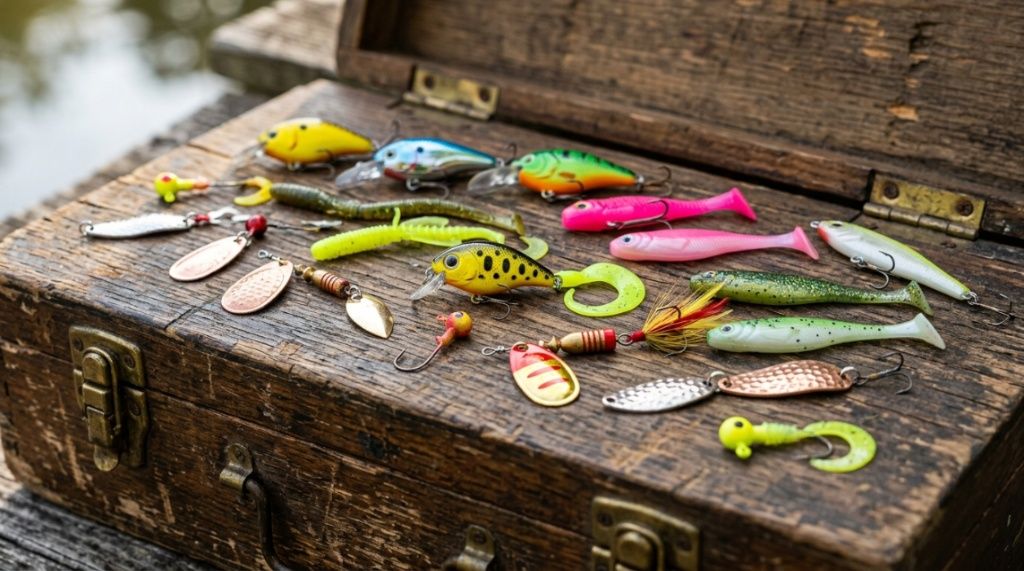
Which Budget Lures Work Best for Bass Fishing?
For bass, the best budget lures are soft plastic stickbaits, skirted jigs, and lipless crankbaits. These three categories cover 80% of bass fishing scenarios and are widely available for under $5 each.
| Lure Type | Best Budget Option | Approximate Cost | Best Technique |
|---|---|---|---|
| Soft Plastic Stickbait | YUM Dingers | $4 for 10 | Wacky rig or Texas rig |
| Lipless Crankbait | Bass Pro Shops XPS Rattlin’ | $3.99 | Burn and kill retrieve |
| Skirted Jig | Booyah Boo Jig | $4.49 | Flip into cover |
| Spinnerbait | Strike King Mini King | $3.99 | Slow roll near grass lines |
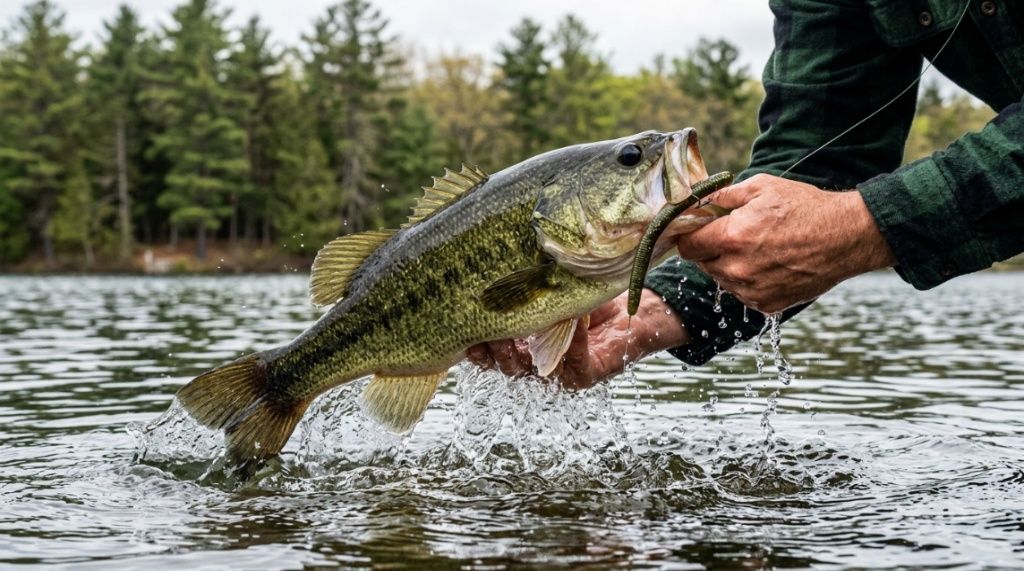
For example, a YUM Dinger rigged wacky-style is arguably the most effective single bass lure ever made. It costs about 40 cents per bait. When bass are inactive, a slow-falling wacky rig will often trigger strikes when expensive crankbaits fail. The key to success with budget soft plastics is to present them naturally. Use a light hook (size 1/0 or 2/0) and let the bait fall on slack line. Watch your line for the slightest twitch—bass often inhale these baits without a hard thump.
How Do You Match a Budget Lure to Water Conditions?
Match your budget lure to water clarity and depth. In murky water, use dark colors with strong vibration. In clear water, use natural colors with subtle action. Depth determines whether you need a sinking, suspending, or floating lure.
For dirty or stained water (visibility less than 2 feet), choose lures with large profiles or rattles. A chartreuse and white spinnerbait with a Colorado blade creates maximum thump. A black and blue jig with a bulky trailer also works well because it creates a silhouette bass can see and feel. These lures are available in budget lines and cost half of premium alternatives. When fishing deep water (over 15 feet), use lipless crankbaits or heavy jigs. Budget lipless crankbaits from lesser-known brands often wobble as well as expensive ones because the manufacturing process for these simple shapes is straightforward. The main difference is hook quality—swap the stock hooks for $2 premium hooks and you have a $15 lure for $5 total.
In clear water (visibility over 5 feet), downsize your presentation. Use smaller soft plastics in watermelon or green pumpkin colors. Budget brands like Zoom produce excellent finesse worms and trick worms that cost pennies each. Fish these on light line (8-pound fluorocarbon) with minimal weight. The slower and more natural the presentation, the more strikes you will get from line-shy bass.
Can You Trust Hooks on Affordable Fishing Lures?
You must replace the hooks on most budget lures. This single upgrade transforms a mediocre lure into a fish-catching machine. Stock hooks on $2 lures are often dull, brittle, or rust quickly. Spend the extra dollar.
The hook is the single most critical component of any lure. A sharp hook penetrates faster, holds better, and increases your hookup ratio by 30% or more. Many experienced anglers consider hook replacement mandatory for all lures under $5. For soft plastics, use wide-gap offset hooks like Mustad UltraPoint or Gamakatsu EWG. These hooks are affordable when bought in bulk packs. For hard baits, replace treble hooks with size-matched Owner or VMC hooks. Red hooks are a popular choice because they add a subtle attractant flash that can trigger strikes. When selecting affordable fishing lures budget fishing gear, factor in the $1–$2 hook replacement cost. A $3 lure plus $1.50 in hooks still beats a $10 lure with poor hooks. Learn to sharpen hooks using a fine file. Dull hooks can be restored in seconds, extending the life of your budget lures and saving you significant money over a season.
How to Rig Budget Soft Plastics for Maximum Durability
Rig budget soft plastics with a light Texas-style setup using a bullet weight and a wide-gap hook. This rig protects the bait from snags and extends its lifespan by preventing tearing on the first fish.
Follow these steps for a durable rig:
- Select the right hook: Use a 3/0 to 5/0 wide-gap offset hook, matched to bait length.
- Skip the weight in heavy cover: In thick weeds, go weightless for better weedlessness.
- Use a bobber stop: Peg the bullet weight against the hook eye to prevent sliding. This protects the bait nose from tearing.
- Scent the bait: Apply a garlic or crawfish scent to the tail. Scent masks human odor and encourages fish to hold the bait longer, reducing tearing from short strikes.
- Store in resealable bags: Keep soft plastics in original packaging or sealed bags with a splash of scent oil. This prevents them from drying out and becoming brittle.
Properly rigged, a single $0.40 soft plastic can catch 10–15 fish before needing replacement. That is incredible value compared to hard baits that can be lost to a single snag. Budget anglers who master the Texas rig with quality soft plastics consistently outfish those who rely on expensive, snag-prone hard baits.
Which Lure Color Should You Always Avoid on a Budget?
Avoid buying budget lures in overly complex or flashy color patterns. Stick to simple, proven colors like black/blue, green pumpkin, and shad. Elaborate patterns rarely improve catch rates and often peel or fade quickly on cheap lures.
Budget lure manufacturers sometimes use complex paint jobs to distract from inferior materials. A $3 crankbait with a holographic multicolor finish may look appealing in the store, but the paint will likely chip after a few casts. Instead, choose solid colors or simple two-tone patterns. For example, a bone-colored walking topwater bait is highly effective for bass and pike, and the paint job is simple enough to last. Similarly, a solid white spinnerbait catches fish in almost all conditions. Avoid baits with glitter or metallic flakes applied over poor base paint. These flakes often fall off quickly. The most durable budget lures use injected color rather than painted finishes. Injected color goes through the entire lure, so it cannot chip. Soft plastics from YUM and Zoom are colored through the entire material, making them virtually indestructible in terms of color integrity.
What Are the Most Affordable Lures for Saltwater Fishing?
For saltwater, the most affordable and effective lures are metal jigs, soft plastic paddletails, and bucktail jigs. These lures cost under $5 each and catch a wide range of species from redfish to snook to mackerel.
Metal jigs are the ultimate budget saltwater lure because they are simple to manufacture and nearly indestructible. A 1-ounce diamond jig casts like a bullet and works for everything from bottom fishing to casting at surface-feeding fish. Use a single assist hook to reduce snags and increase durability. Soft plastic paddletails on jig heads are equally affordable. Buy bulk packs of 4-inch paddletails in white or chartreuse. Pair them with 1/4-ounce or 3/8-ounce jig heads. This combination mimics a baitfish perfectly and costs less than $1 per rig. The key to saltwater success with budget gear is to use fluorocarbon leader material (30-pound test) to prevent cutoffs from sharp teeth and gill plates. A simple high-low rig with two dropper loops and circle hooks also works well. This rig uses minimal terminal tackle and can be assembled for pennies. It is highly effective for surf fishing and pier fishing. When selecting affordable fishing lures budget fishing gear for saltwater, prioritize corrosion resistance. Only buy lures with stainless steel or coated hooks. Tin-plated or uncoated hooks will rust after one trip.
How to Build a Complete Budget Lure Kit for Under $50
You can build a highly effective lure kit for under $50 that covers bass, panfish, and even small saltwater species. Focus on versatility and proven patterns rather than quantity.
Here is a sample budget kit:
- Soft plastics: One pack of YUM Dingers (green pumpkin) – $4; one pack of Zoom Trick Worms (watermelon) – $4.
- Jigs and hooks: 10-pack of 1/8-ounce ball head jigs – $5; 25-pack of 3/0 wide-gap offset hooks – $8.
- Hard baits: One Strike King Red Eye Shad (lipless crankbait) – $5; one Booyah Pond Magic Spinnerbait (white) – $5.
- Topwater: One Rebel Pop-R (bone) – $6; one Heddon Torpedo (frog pattern) – $7.
- Terminal tackle: Assorted bullet weights, bobber stops, swivels – $5.
- Total: approximately $49.
With this kit, you can fish ponds, lakes, rivers, and even light saltwater. The soft plastics cover finesse presentations, the hard baits cover power fishing, and the topwater lures cover early morning aggression. This selection aligns perfectly with affordable fishing lures budget fishing gear principles, ensuring you maximize your catch without overspending on specialty items you rarely use.
Why Do Some Budget Lures Cast Better Than Expensive Ones?
Budget hard baits sometimes cast better than expensive ones because they are often slightly heavier due to less internal tuning and foam filling. Heavier lures cast farther, making them advantageous for covering water quickly.
Many premium crankbaits are carefully tuned to suspend or float at specific rates, which requires internal foam and precise weighting. Budget models often skip this step, resulting in a denser, heavier bait. While this makes them less perfectly neutrally buoyant, it also makes them easier to cast into the wind or reach distant structure. On a windy day, a budget $3 lipless crankbait will often outdistance a $12 premium model. This is a genuine advantage for shore anglers who need to reach deeper water or cover expansive flats. However, this weight difference can negatively affect action. Budget crankbaits that are too heavy may wobble erratically or roll. Test each new budget hard bait in clear water close to shore. If it swims true and does not roll, it is a keeper. If it rolls, either tune it by bending the line tie slightly or use it as a jigging bait. You can often salvage a poorly tuned budget crankbait by fishing it with a yo-yo retrieve—raising the rod tip and letting it fall on slack line. This presentation mimics a dying baitfish and can be highly effective even with a bait that swims poorly on a steady retrieve.
How to Find Hidden Gems Among Cheap Fishing Lures
Look for budget lures from off-brands sold through discount retailers or online clearance bins. Many small factories produce the exact same lures for premium brands under different labels. You can find identical quality for half the price.
Search online for terms like “bulk fishing lures” or “factory direct lures.” Chinese and Vietnamese factories produce massive quantities of lures for major American brands. Some of these factories sell the same lures directly to consumers through platforms like eBay, Amazon, or Alibaba. The lures may lack brand logos or come in generic packaging, but the molds and materials are identical. Read reviews carefully. Look for feedback on hook sharpness, paint durability, and action. Also visit dollar stores and general retailers like Walmart. They frequently carry off-brand lures sourced from the same manufacturers as premium lines. A $1.50 spinnerbait from a dollar store can be transformed with a $1 hook replacement into a lure that matches a $8 premium spinnerbait.
The key is to buy in bulk and test extensively. Once you find a budget brand that works, stock up. Seasoned budget anglers often buy 20–30 of the same jig or crankbait in various colors. They know that consistency is more important than individual lure quality. A proven pattern in your color choice will produce for years.
Frequently Asked Questions
Are expensive fishing lures worth the money?
Not always. Expensive lures offer better hooks, more durable paint, and precise action. However, budget lures with upgraded hooks often catch just as many fish for a fraction of the cost. The best strategy is to invest in quality hooks and use budget bodies.
How long should a budget soft plastic lure last?
A well-rigged budget soft plastic should last 5–15 fish depending on species and cover. Northern pike and pickerel will shred soft plastics quickly. Replace them when they tear significantly. Storing them in scented oil between trips extends their lifespan dramatically.
Can I use freshwater budget lures in saltwater?
You can, but you must rinse them thoroughly with fresh water after every use. Saltwater corrodes hooks and hardware quickly. Replace all hooks with stainless steel or corrosion-resistant models for best results. Budget lures with painted finishes will also chip faster in saltwater.
What is the single best budget lure for beginners?
The best budget lure for beginners is a 3/8-ounce white spinnerbait with a single Colorado blade.
Should I buy lure kits or individual lures on a budget?
Buy individual lures or small multipacks of proven baits. Many lure kits contain low-quality fillers that you will never use. You are better off buying three or four high-value individual lures than a 50-piece kit with poor hardware. Focus on the specific species and conditions you fish most often.
How often should I replace the hooks on budget lures?
Replace hooks as soon as they feel dull or show rust. For frequent anglers, check hooks after every 10–15 fish. Dull hooks can be sharpened with a fine file 2–3 times before needing replacement. Sharpening is a free way to extend hook life.
What color budget lures work best in murky water?
In murky water, use dark colors like black, black/blue, or very bright colors like chartreuse and white. High-contrast colors create visible silhouettes. Avoid natural patterns like green pumpkin in muddy conditions. A dark jig with a bulky trailer is highly effective.
Conclusion
Choosing affordable fishing lures that actually catch more fish comes down to three simple rules: select proven shapes and colors, upgrade the hooks, and match your presentation to the conditions. You do not need to spend hundreds on premium tackle to consistently catch fish. A $3 spinnerbait with replaced hooks, a pack of YUM Dingers, and a few lipless crankbaits will outperform a box full of expensive tackle that is poorly matched to your local waters. Start small, test your lures extensively, and focus on quality over quantity. Your wallet—and your stringer—will thank you. Head to your local tackle shop or browse online for the value packs that fit your budget. Learn the water, practice your technique, and let the fish decide if your gear is good enough. Most of the time, they will say yes.