
Riding street, park, or commuting through the city puts unique demands on your setup. Slipping a pedal in the middle of a manual or a hard cut can ruin your line, damage your bike, and leave you with a bruised shin—or worse. For urban riders, finding the right grippy BMX pedals urban riding demands more than just picking the cheapest pair at the shop. You need to balance pin length, platform size, bearing quality, and durability against the specific challenges of concrete, asphalt, and metal ledges. This guide covers exactly what to look for, how different materials perform, and how to match pedals to your riding style so you stay locked in and ride with confidence.
Key Takeaways
- Pin length and platform size matter more than brand names when it comes to keeping your feet planted on rough urban surfaces.
- Nylon composite pedals are a smart choice for street riders who want reliable grip without sacrificing ankle safety on hard impacts.
- Metal pedals with replaceable pins offer maximum durability and traction but come with a higher risk of shin injuries and a heavier feel.
- Consider your shoe type—soft-soled skate shoes grip differently than stiff athletic shoes—when matching pedal materials and pin configuration.
- Sealed bearings and a solid axle design are crucial for extending the life of pedals that regularly face dust, moisture, and the debris of city riding.
What Makes a BMX Pedal Grippy for Urban Riding?
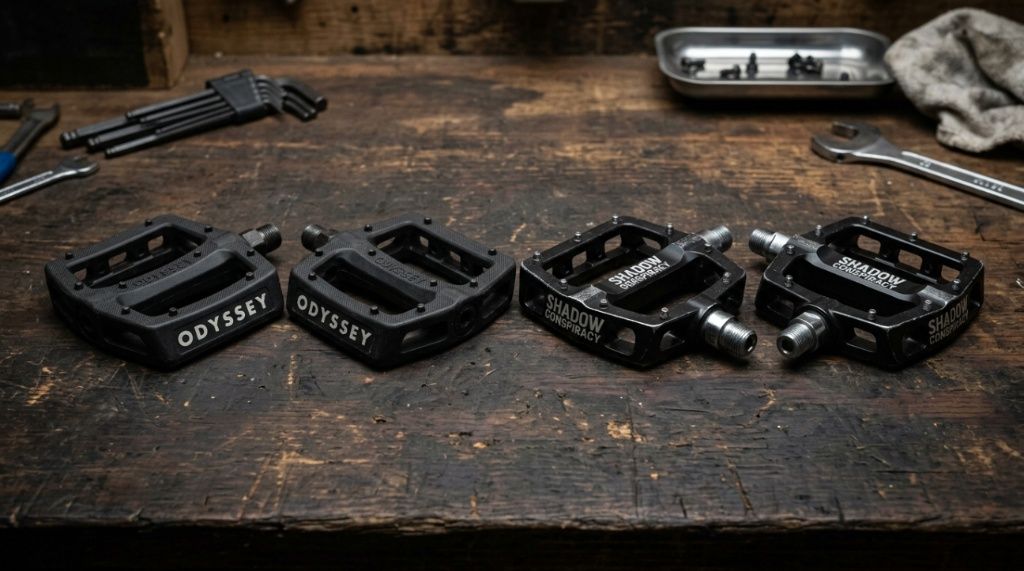
Grip is the result of several factors working together: the platform size, the length and shape of the pins, the spacing between them, and the material of the pedal body itself. For urban riding, where sudden movements and hard impacts are the norm, you need a pedal that locks your shoe in place without making it impossible to reposition your foot when necessary.
Aggressive pin designs—typically 4mm to 6mm in length—dig into the sole of your shoe to prevent slipping. However, longer pins aren’t always better. On a bumpy street line, overly aggressive pins can catch unexpectedly, making quick foot adjustments difficult. The ideal setup provides firm engagement while still allowing subtle movement when you shift your weight.
Platform Size and Foot Support
Urban riders often run wider platforms for better support when landing jumps or rolling through rough transition sections. A larger platform gives your foot a stable base, reducing fatigue and improving control. If you have larger feet (US size 10 or above), look for pedals around 100mm x 100mm or wider. Riders with smaller feet may find oversized platforms cumbersome, so consider proportion when evaluating grip—contact area directly influences how secure you feel.
Pin Configuration and Material
Pins come in two main types: molded (integrated into the pedal body) and threaded (screwed in separately). Threaded pins are preferable for urban riding because they can be replaced when they wear down. Over time, hitting concrete and grinding against ledges will blunt pins, reducing grip. Being able to swap out pins extends the life of the pedal significantly.
Choose pins made from hardened steel rather than aluminum. Steel resists bending and stays sharp longer. Look for pedals with at least 8 to 10 pins per side, spaced evenly so the pedal maintains consistent traction regardless of where your foot lands.
Nylon Composite vs. Aluminum: Which Is Better?
For urban BMX riding, both nylon composite and aluminum pedals have loyal followings. Each material performs distinctly differently across grip, weight, and durability, so the right choice depends on your priorities.
Nylon Composite Pedals
Nylon composite pedals have become the preferred choice for many street riders because they strike an excellent balance between performance and safety. They don’t dig into your shins as aggressively as metal pins during a slip-off incident, and they’re typically lighter than budget-oriented aluminum options. High-quality nylon pedals use fiberglass-reinforced material, giving them surprising strength without the flex that plagued older composite designs.
A common misconception is that composite pedals lack grip. On the contrary, well-designed nylon pedals with aggressive threaded pins offer traction that equals many metal pedals. The key is the pin quality and design, not the body material itself.
Aluminum Pedals
Aluminum pedals are the go-to for riders who prioritize unyielding durability and raw grip above all else. CNC-machined aluminum platforms feel solid and premium, transmitting every ounce of input directly to the drivetrain. They also resist warping and cracking under heavy abuse.
However, aluminum pedals have trade-offs. They conduct heat and cold more readily than nylon, and the sharp pins can cause significant injury in a crash. They are also usually more expensive and heavier. For a competitive street rider who values precision over comfort, aluminum is a solid choice. For a commuter or a casual park rider, nylon is likely the better option.
If you are looking for dependable, city-tested options that balance these factors well, checking out a curated selection of grippy BMX pedals urban riding can give you a head start on finding models that hold up under real-world street pressure.
How Shoe Selection Impacts Pedal Grip
Your pedals do not work in isolation. The sole pattern and material of your shoes play a major role in how much traction you actually get. Urban riders commonly wear vulcanized skate shoes with a flat, sticky rubber sole. These shoes pair exceptionally well with aggressive pins because the rubber forms around the pins, creating a mechanical lock.
If you prefer stiffer athletic shoes or running shoes with deep treads, you’ll need pedals with longer pins and a flatter platform. Deep treads can straddle the pins rather than engaging them directly, reducing grip. In that case, a platform with raised ridges or a subtle concave shape can improve contact.
Practical tip: Pay attention to how your shoe wears down. If you notice the heel of your shoe wearing faster than the toe, you may be sliding forward on your pedals—a sign you need more grip or a thicker platform.
Bearing and Axle Quality: The Overlooked Factor
Grip isn’t only about the top surface. A pedal that wobbles or spins inconsistently because of poor bearings will indirectly hurt your control—you’ll feel unstable, second-guess your foot placement, and ultimately ride worse. For urban environments where dust and moisture are constant, sealed bearings are non-negotiable.
Look for pedals with sealed cartridge bearings rated for durability. Sealed bearings keep dirt and water out, preventing the grinding and roughness that leads to premature failure. A hand-tested spin should be smooth and last several seconds without wobbling,
For expert recommendations on gear before you upgrade your ride, check out the complete Jacksonville Cycling Accessories Buying Guide.
Axle Options: Cromoly vs. Chromoly
Most quality pedals use 9/16″ axles made from heat-treated chromoly (often called “cromoly”). This material resists bending under lateral stress, which is critical when you’re throwing the bike sideways in a whip or grinding a peg across a ledge. Cheaper axles made from lower-grade steel can bend, ruining the pedal and potentially damaging your crank arm.
Always verify the axle material before buying. A sticker or engraving indicating heat treatment or chromoly construction is a good sign. If the pedal listing doesn’t specify, assume it’s lower-grade steel and approach with caution.
Common Mistakes When Choosing BMX Pedals
Even experienced riders pick the wrong pedals occasionally. The most common mistakes stem from focusing on a single spec headline—like “lightweight” or “huge platform”—without considering how the pedal behaves as a whole.
- Choosing pins that are too short: Short pins (under 4mm) provide minimal grip on slippery surfaces. For urban riding, 5mm to 6mm pins are a safer bet.
- Ignoring pin replacement options: A pedal with non-replaceable pins becomes a throwaway once the traction fades. Always prioritize models with removable pins.
- Oversizing the platform unnecessarily: A giant platform doesn’t automatically mean better grip. If the platform is too wide for your shoe, you won’t be able to center your foot properly, which reduces overall control.
- Buying based solely on weight: Ultra-light pedals often sacrifice durability. In urban riding, you’ll encounter impacts that heavier, tougher pedals handle without issue. Saving 100 grams isn’t worth an early break.
- Skipping the bearing check: A good-looking pedal with bad bearings is a poor long-term investment. Always prioritize sealed bearings over bare loose-ball designs for street use.
Do You Need Bearings or Bushings?
Most BMX pedals use either sealed bearings or bushings. Bearings offer lower rolling resistance and are more responsive when you’re carving through a rough line. Bushings are simpler, cheaper to manufacture, and provide a smooth feel when new, but they wear out faster under the heavy loads of urban riding and can develop play over time.
There is a strong preference for sealed bearings among urban riders because of their longevity and resistance to contamination. A well-sealed bearing system will last multiple seasons even with daily use in gritty conditions.
Concrete vs. Metal vs. Plastic Pins: Pros and Cons
Pin material directly affects grip and durability. Concrete and asphalt are abrasive, so pin material selection matters.
| Pin Type | Grip Level | Durability | Shin Safety | Best Use |
|---|---|---|---|---|
| Steel Threaded | Excellent | High—resists bending and wear | Risky—can cut skin | Street, park, aggressive riding |
| Aluminum Threaded | Good | Moderate—softer metal wears faster | Moderate risk | Light street, commuting |
| Molded Plastic | Fair | Low—degrades over time | Safer on impact | Casual riding, beginner use |
Steel pins are the clear winner for urban riders who ride hard and frequently. If you often ride in wet conditions, steel pins also maintain grip better than aluminum, which tends to become slippery when wet due to oxidation and lower hardness.
Installation and Maintenance Tips
Once you’ve chosen the right pedals, proper installation and maintenance will ensure they stay grippy. Make sure to install the pedal on the correct side—right-side pedal threads are right-handed, and the left-side pedal threads are left-handed. Cross-threading the axle will ruin the pedal and the crank arm.
Use a 15mm pedal wrench or a quality hex key on the back of the axle for tightening. Apply a thin layer of anti-seize compound or lithium grease to the axle threads to prevent them from seizing in the crank arm, especially in wet climates.
Periodically check pin tightness. Screwed-in pins can loosen with vibration, reducing grip. A quick check every few weeks will keep your traction consistent.
Frequently Asked Questions
Are metal pedals always grippier than plastic ones?
Not necessarily. Grip comes from pin placement, length, and sharpness, not just material. A well-designed nylon pedal with long steel pins can be just as grippy as an aluminum pedal. However, metal pedals often provide a more stable and rigid feel under hard foot pressure.
How long do BMX pedal pins last?
With regular street riding on concrete and asphalt, pins can wear noticeably within a few months. Replacing them every season is common. Hardened steel pins last significantly longer than aluminum ones, sometimes a year or more with moderate use.
Can I use BMX pedals on a mountain bike or commuter bike?
Yes, provided the bike’s crank arms have a 9/16″ thread size. Some older or cheap bikes use 1/2″ pedals, which won’t fit standard BMX or MTB cranks. Always check thread size before purchasing.
What size pedal is best for urban riding?
A platform around 100mm x 100mm is a sweet spot for most adults. It provides enough surface for comfortable footing without being too bulky. Riders with large feet (US size 12+) may prefer a slightly larger platform for added support.
Do I need a specific pedal for wet weather riding?
Wet conditions reduce grip on all pedals. Longer steel pins and shoes with good water displacement treads will help the most. Some riders switch to pedals with more concave shape to keep feet planted in wet conditions, but no pedal can completely eliminate slippage on wet metal or slick concrete.
Conclusion
Choosing the right pedals for urban riding comes down to understanding how grip, weight, and durability interact with your shoes and your specific riding style. Start with composite pedals that have threaded steel pins and sealed bearings—they offer a strong combination of safety, performance, and value. If you find yourself breaking cheap parts or craving more direct feedback, move up to a quality aluminum platform with replaceable pins and a solid warranty.
Pay attention to pin length, platform size, and bearing quality first. Weight and aesthetics are secondary considerations that matter less than they seem. A properly selected pair of pedals will make your bike feel more responsive, give you confidence on every landing, and last through season after season of street abuse. Keep your feet planted, stay comfortable, and ride your city on your terms.