
If you maintain a lawn or garden in Ohio, you know the struggle of battling dandelions, plantain, and thistle in heavy clay soil. Bending over repeatedly to pry out taproots is tough on the back and often leaves root fragments behind. A stand-up weed puller solves the ergonomics problem, but many homeowners buy one, try it once, and set it aside because they aren’t getting clean results. The truth is that these tools work—but only when you understand your soil conditions, your target weeds, and the correct technique. This guide walks through exactly how to use a stand up weed puller effectively in Ohio, including timing, angle, and post-pull care that makes the difference between wasted effort and a genuinely weed-free lawn, see how to choose and use a stand up weed puller effectively in Ohio tailored to your specific yard conditions.
Key Takeaways
- Ohio’s clay-heavy soil requires pulling after rain or watering; dry, hard ground will cause root breakage and wasted effort.
- You must stand directly over the weed and pull straight up with steady pressure—rocking or twisting the tool increases the chance of tearing the root below the surface.
- Choose a tool with a serrated or V-shaped head for taproot weeds like dandelions; fork-type heads work better for clumping weeds or shallow-rooted annuals.
- Timing matters more than most people think: pull in early spring while the soil is moist, or in fall when weeds store energy and are easier to remove whole.
- Immediately care for the holes left behind by topping with a thin layer of compost or lawn soil to prevent new weeds from colonizing the disturbed spot.
Understanding Ohio Soil Conditions for Weed Removal
Ohio sits at the intersection of several soil regions, but a huge portion of the state is defined by glacial till—a dense, clay-heavy mix that drains slowly and compacts easily. While clay holds nutrients beautifully, it is the single biggest factor that determines whether a stand-up weed puller will work for you. In sandy or loamy soil, a weed puller slides down and releases the root with minimal effort. In Ohio’s sticky clay, that same tool gets stuck, the handle flexes, and the root snaps off two inches below the surface.
That leaves the crown in the ground, which guarantees regrowth within a week. The solution is moisture. Wet clay loses its cohesion and becomes slippery, allowing the tool’s prongs to penetrate deeper and grip the root securely. For this reason, the most effective sessions happen either after a soaking rain or after you’ve run a sprinkler over the area for at least 20–30 minutes the evening before. If you pull when the soil is slightly damp but not muddy, the root comes out with a distinctive “pop” feeling that signals a clean extraction.
How to Use a Stand Up Weed Puller Effectively in Ohio
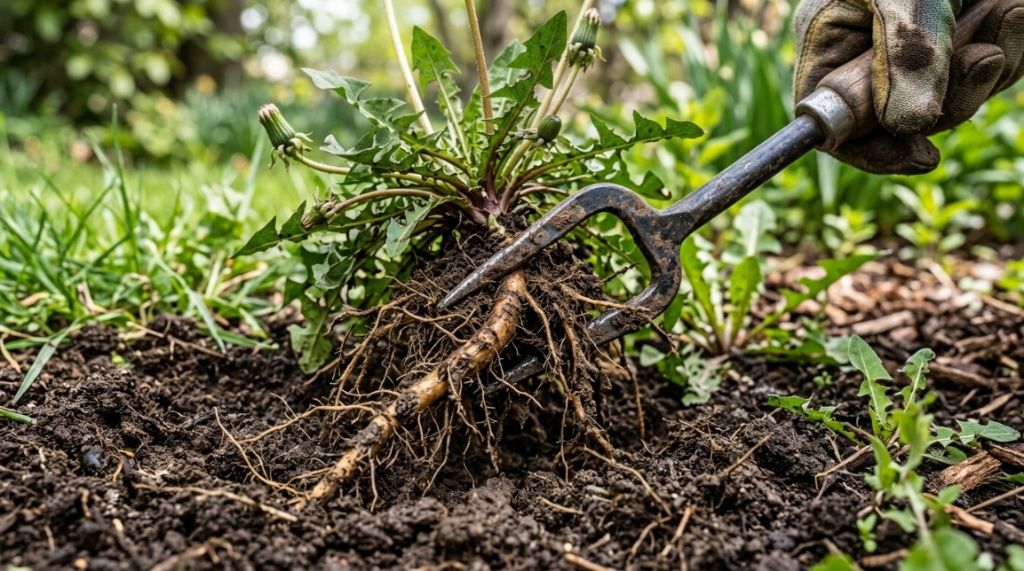
The mechanical advantage of a stand-up puller only works if you follow the correct sequence. Here is the step-by-step process that produces the highest rate of complete root removal in Ohio conditions.
Step 1: Locate and Position Properly
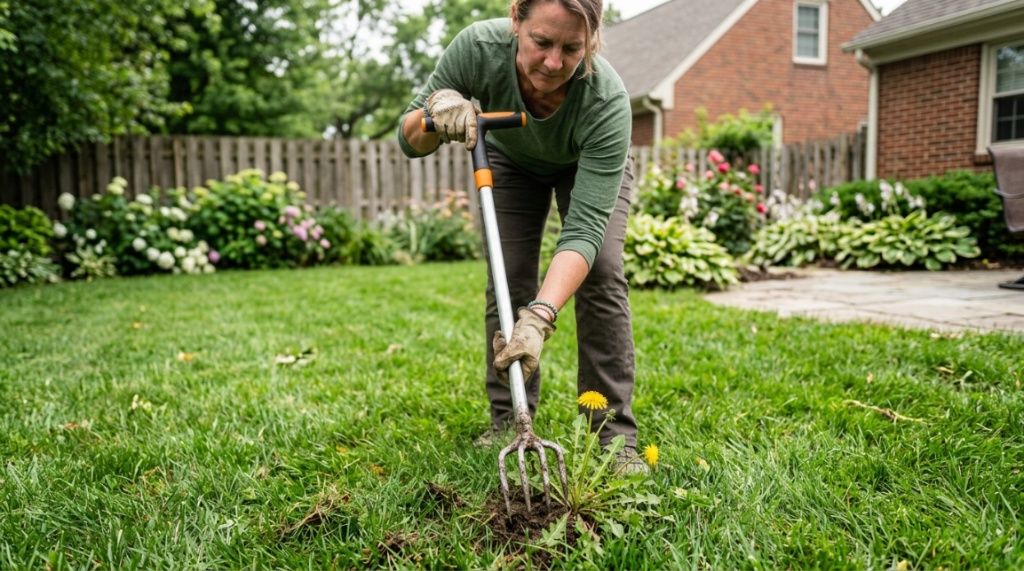
Walk the lawn or garden bed and identify target weeds before inserting the tool. You want to stand so the weed is exactly between your feet, with the puller’s prongs centered over the crown of the plant. Many beginners approach the weed at an angle and insert the prongs off-center, which causes one prong to miss the root entirely. The tool’s head should be positioned so the weed’s stem sits directly in the center of the prongs before you step on the foot plate.
Step 2: Push Down and Engage the Root
Place one foot on each side of the foot plate (or use the single foot bar if your model has one) and push your body weight straight down. The goal is to drive the prongs to their full depth—usually between 3 and 5 inches. Most pullers have a depth stop or a curved design that naturally limits penetration. Do not rock the tool side to side to increase depth. That motion compresses the surrounding clay and creates suction that makes extraction harder.
Step 3: Lean Back and Pull
Once the prongs are fully seated, keep the handle vertical and lean your body weight backward in one smooth motion. The pivot point at the base of the handle translates your backward lean into an upward rotational force that pops the root out of the ground. You want to pull steadily rather than jerk. A sudden, sharp pull will often snap brittle taproots, especially in weeds that have grown large after a wet spring. Hold the weed in the release mechanism (most models have a self-ejecting feature) and shake off excess soil as you pull it from the tool.
Step 4: Fill the Hole and Move On
Every weed you remove leaves behind a small hole. In Ohio, where a single session might remove 40 to 60 weeds from a quarter-acre property, those holes matter. Leave them open and they become perfect germination spots for crabgrass and clover seeds. Use the toe of your shoe to kick soil back into the hole, or carry a small bucket of compost mixed with lawn topsoil. A light topdressing also prevents the exposed soil from crusting over in Ohio’s hot, dry summer stretches.
Common Mistakes That Ruin Weed Pulling Sessions
Most disappointment with stand-up pullers comes from a few avoidable errors. Understanding these will save you time and save your back while using a stand-up weed puller effectively in Ohio.
Pulling in Dry, Hard Soil
This is the number one mistake. Ohio summer droughts produce soil with the consistency of brick. Driving the prongs into that ground requires excessive force, and the root typically snaps under the strain. If you don’t want to wait for rain, water the area deeply for 15 minutes, wait an hour, and then test a single weed. If resistance is still high, wait and water again.
Choosing the Wrong Tool Head
Stand-up pullers generally come in two designs: the serrated V-shaped head and the flat fork-style head. The V-shaped head is purpose-built for taproot weeds, which are the dominant problem weeds in Ohio lawns (dandelions, burdock, plantain). The fork-style head is better for shallow-rooted or clumping weeds, but it often fails on deep taproots because the prongs spread apart as they penetrate clay, releasing the root before you pull. Read the manufacturer’s description carefully and match the head shape to your weed problem.
Pulling Weeds After They’ve Seeded
Once a dandelion has gone to seed, pulling the plant is partially counterproductive. The act of tilting the tool to eject the weed can shake hundreds of viable seeds into the air and across your lawn. Remove and bag the seed head before you begin, or postpone pulling until after you’ve cut down the seed stalks. For weeds you plan to pull in spring, do so early—before flowers open.
Best Timing for Weed Pulling in Ohio’s Climate
Ohio’s USDA hardiness zones (5b to 6b, depending on region) create a distinct seasonal rhythm that smart gardeners use to their advantage when using a stand up weed puller effectively in Ohio. The very best window is early spring—mid-March to late April—when the ground is still saturated from snowmelt and spring rains. At this point, weeds have small root systems and emerge with almost no resistance.
The second-best window is fall, from mid-September to late October. During the fall, perennial weeds like dandelions and thistle are actively pulling nutrients down into their roots to prepare for winter. When you pull in fall, the root is thicker and sometimes comes out in one piece more easily. You also prevent the weed from depositing seeds the following spring. Pulling in mid-summer, by contrast, is the hardest and least effective. The soil is dry, the roots are resilient, and the weeds are often already spreading seed, After harvesting your garden greens this season, discover the best methods for preserving your summer harvest with our guide on How to freeze zucchini.
Evaluating Whether This Tool Fits Your Situation
Stand-up weed pullers are not the perfect solution for every Ohio gardener. They perform brilliantly on established lawns with sparse weed populations—say, fewer than 2 or 3 weeds per square yard. They are less effective in fully overrun gardens or in garden beds with heavy mulch, because the mulch cushions the prongs and prevents depth penetration.
If you have a backyard filled with creeping charlie or ground ivy (common Ohio problems), a puller won’t help because those weeds root at the stem nodes across the surface. You need to rake them out or apply targeted treatment. Similarly, if your soil is rocky—especially in southeastern Ohio near the hills—you’ll encounter buried stones that can damage the prongs or stop your downward motion. A quick soil assessment (dig a 6-inch test hole and note what you find) tells you whether this investment makes sense. For most homeowners with typical Ohio clay and a normal weed load, the puller will eliminate the bulk of their weeding effort while sparing their knees and lower back.
Maintenance Tips to Keep Your Puller Working
A stand-up puller is a simple mechanical tool, but it needs basic care to work well over multiple seasons. After each use, hose off the mud and any plant sap. Allow the metal parts to dry completely before storing; rust forms quickly on the high-carbon steel used in budget-to-midrange tools. Every spring, wipe a thin layer of machine oil or all-purpose lubricant on the pivot point and on the edges of the prongs. This reduces friction and makes the prongs slide into the soil with less downward force.
You should also periodically inspect the rivets or bolts that hold the head to the shaft. A loose tool wobbles, and wobble translates to inconsistent prong alignment, which leads to missed roots. Tighten any loose hardware before you start a session. If you notice the prongs have dulled or bent, replacement heads are available for most major brands. A dull or bent prong is the silent killer of weed-pulling effectiveness—so buy a replacement proactively rather than fighting through a season with a damaged tool.
Frequently Asked Questions
Can a stand-up weed puller remove weeds with deep taproots?
Yes, but only if the soil is moist enough for the prongs to reach the full root depth. For Ohio clay, watering the area deeply at least 30 minutes before pulling is essential. On taproots that extend deeper than 5 inches, the tool may break the root, so expect to follow up with a hand trowel on very mature plants.
Is a stand-up weed puller easier than using a hand trowel?
For most people, yes. The main advantage is ergonomic: you avoid bending and kneeling, which reduces strain on the back and knees. The tool also provides mechanical leverage that makes root extraction easier. However, a trowel is more precise in tight spaces, like between paving stones or in densely planted garden beds, because of its smaller profile.
Should I use a weed puller on wet or dry soil?
Wet soil is almost always better. Pulling in wet soil increases the likelihood that the entire root comes out cleanly. Dry soil compresses and clings to the root, causing breakage. The one exception is very muddy soil, which can clog the release mechanism and make the tool slippery to hold.
When is the best time of year to pull weeds in Ohio?
Early spring (March to April) and fall (September to October) are the optimal seasons. The soil is naturally moist, and weeds are either young or storing energy. Pulling during those windows reduces regrowth dramatically compared to pulling during the summer dry spell.
Conclusion
Using a stand-up weed puller in Ohio comes down to matching your technique to the heavy clay soil that dominates the state. Water before you pull, stand directly over the weed, push straight down with your body weight, and lean backward firmly to extract the root. Pair that technique with the right tool head, time your sessions for spring and fall, and you’ll notice a dramatic reduction in both weed size and the time you spend weeding.