
It is a familiar routine: you grab your bike for an evening ride, press the power button on your lights, and nothing happens. Or worse, the beam is so dim it barely cuts through the twilight. While investing in quality gear is the first step toward safer night rides for cyclists, that safety net only works if the equipment is actually functioning. Rechargeable lights are electronic devices exposed to rain, road grit, and vibration. Without a simple maintenance routine, their batteries degrade and their seals fail. Here is how to properly care for your lights to ensure they last for years, not months.
Quick Answer
To maximize the lifespan of rechargeable bike lights, you should clean the lens with water and a microfiber cloth, clean the charging port with a dry brush, and apply a silicone-based lubricant to rubber seals monthly. Avoid pressure washers and harsh solvents. Store the lights at roughly 50% charge in a cool, dry place if they will not be used for extended periods, and never store them fully depleted or plugged in indefinitely.
Key Takeaways
- Avoid High-Pressure Water: Never use a hose or pressure washer on bike lights; the force of the water will bypass rubber seals and destroy the internal electronics.
- Protect the Charging Port: The USB port is the most vulnerable point of failure. Ensure the rubber cover is seated correctly and clean the port gently with a dry tool, never a wet one.
- Battery Longevity: Heat kills lithium-ion batteries. Do not leave your lights plugged into a charger after they are full, and avoid storing them in a hot car.
- Inspect Seals: A $0.10 rubber O-ring is the only thing protecting your light from rain. Keep it clean and lubricated with silicone grease to prevent water ingress.
The Routine Cleaning Process
Cleaning your lights is not just about aesthetics; it is about maintaining light output and preventing corrosion. Grime on the lens diffuses the beam, making you less visible, while grit in the charging port can block a connection. The process takes less than five minutes.
Step 1: Remove and Wipe Down
Remove the lights from their mounts. Use a soft, damp cloth or a microfiber towel to wipe down the body of the light. If you have mud caked on the housing, let the damp cloth sit on the spot for a moment to soften the dirt before wiping. Do not use paper towels, as they can scratch the plastic lens.
Step 2: Clean the Lens Carefully
The lens is usually made of polycarbonate, which is durable but susceptible to scratches. Use mild soapy water and your fingers or a soft cloth to gently remove bugs and dust. Avoid using abrasive cleaners or scourers. If the lens becomes scratched, it can cause glare and reduce the effectiveness of the beam pattern.
Step 3: Address the Charging Port
This is the most critical step for electronic longevity. If the USB port is clogged with dust or mud, charging becomes inefficient or impossible. Use a dry, soft-bristled toothbrush or a wooden toothpick to gently dislodge debris. Never insert anything metal into the port, as this can short the contacts. Do not spray water directly into the port.
Maintaining Water Resistance and Seals
Most bike lights are rated IPX4 to IPX7, meaning they are resistant to splashing or brief immersion. However, this resistance relies entirely on rubber gaskets and covers. Over time, these seals can dry out, crack, or become misaligned.
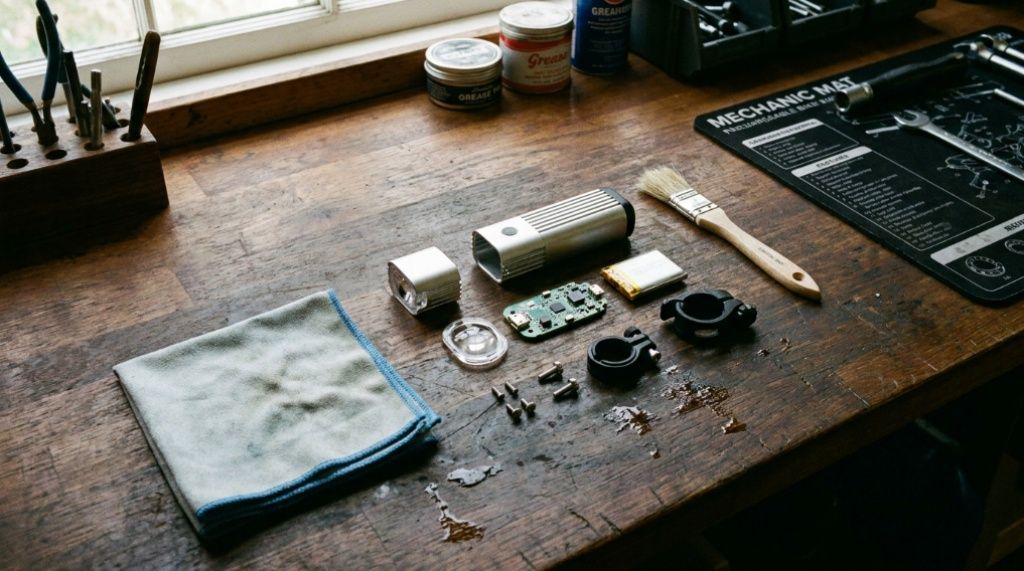
Once a month, inspect the rubber cover over the charging port. Ensure it sits flush against the housing. If the rubber looks dry, apply a tiny amount of silicone-based grease (plumbers’ grease or dielectric grease) to the seal. This keeps the rubber pliable and ensures a watertight fit. Do not use petroleum jelly (Vaseline), as it can degrade rubber over time.
If you notice the rubber cover is torn or missing, check with the manufacturer for a replacement part. Riding with a missing port cover in the rain is a guaranteed way to short the battery.
Battery Care for Long-Term Health
Rechargeable bike lights almost universally use lithium-ion batteries. These batteries do not have a “memory” effect, so you do not need to drain them completely before charging. In fact, doing so can be harmful.
Lithium-ion batteries degrade fastest when they are kept at 100% charge or at 0% charge for long periods. They are happiest at around 50% capacity. If you commute daily, charging them fully once a week is usually sufficient for most high-output lights. However, if you are putting the bike away for the winter, follow these storage rules:
- Charge to 50%: Before storing, run the light down to about half power.
- Store Cool: Keep them indoors, away from freezing temperatures and direct sunlight. Heat is the number one enemy of battery capacity.
- Check Every 3 Months: If storing for a long winter, recharge to 50% every few months to prevent the battery from falling into a deep discharge state, which can kill it permanently.
Common Cleaning Mistakes to Avoid
Sometimes the best way to learn is to know what not to do. Many cyclists inadvertently destroy their lights by using the same cleaning methods they use on their bike frame.
| Mistake | Consequence | The Correct Approach |
|---|---|---|
| Using a Pressure Washer | Forces water past seals, frying the circuit board. | Use a bucket of soapy water and a rag. |
| Soaking in Solvent | Clouds the plastic lens and degrades rubber seals. | Use mild dish soap or bike-specific cleaner. |
| Charging in a Hot Car | Overheats the battery, reducing capacity and risking swelling. | Charge indoors at room temperature. |
| Storing Fully Depleted | Battery falls into deep discharge and refuses to charge. | Store with a partial charge (around 50%). |
When to Replace vs. Repair
Even with perfect maintenance, components wear out. Knowing when to replace a light is crucial for both performance and safety.
Battery Degradation: If your light used to run for 4 hours and now only runs for 20 minutes after a full charge, the battery is dying. Unless the manufacturer offers a user-replaceable battery pack (rare for smaller lights), it is time for a new light.
Damaged Seals: If the rubber charging cover breaks off and you cannot find a replacement, the light is no longer water-resistant. You can try a piece of electrical tape over the port as a temporary fix, but this makes charging a hassle and is not a long-term solution.
Dimming LEDs: LEDs themselves have a very long lifespan, but the driver electronics can fail. If the light flickers or only runs in a low-power mode, the internal circuitry is likely failing.
Investing in a quality set, like the Ascher Ultra Bright Bike Light Set, often makes sense because the build quality—specifically the seals and battery management—tends to be higher than budget alternatives, making the maintenance effort worthwhile, For more gear recommendations, check out our jacksonville cycling accessories buying guide.
Frequently Asked Questions
Can I leave my bike lights plugged in all the time?
No. Leaving a lithium-ion battery plugged in after it reaches 100% can generate heat and cause unnecessary wear on the cells. It also risks damage if a power surge occurs. Unplug the light once it is fully charged.
How do I clean corrosion off the charging contacts?
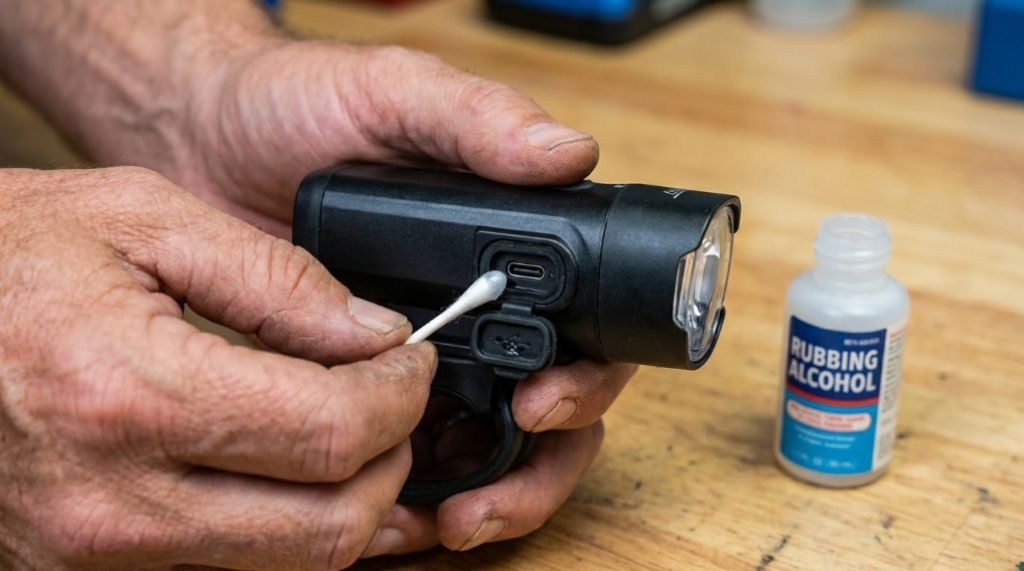
If you see green or white buildup on the contacts, use a cotton swab dipped in isopropyl alcohol (rubbing alcohol) to gently clean the area. Ensure the light is completely dry before charging. If corrosion is severe, the port may be permanently damaged.
Are bike lights waterproof?
Most are water-resistant, not waterproof. Ratings like IPX4 mean they can handle rain and splashes, but they are not designed for submersion or high-pressure water. Always check the IP rating before riding in heavy storms.
Why does my light smell like burning plastic?
Stop using the light immediately. A burning smell usually indicates a short circuit or a battery failure. Continuing to use or charge a light in this state poses a fire risk. Dispose of the light properly at a battery recycling center.
How often should I lubricate the seals?
Once a month is usually sufficient for regular commuters. If you ride in very dusty or wet conditions frequently, check the seals weekly. A dry seal is the first sign that water ingress is imminent.
Conclusion
Maintaining your rechargeable bike lights is a small investment of time that pays off in reliability and safety. By keeping the lens clear, the charging port dry, and the battery charged correctly, you ensure that your lights are ready to illuminate the road whenever you are. Remember to avoid pressure washers, store your batteries at half-charge for the off-season, and inspect those tiny rubber seals. A little care ensures you are never caught in the dark.