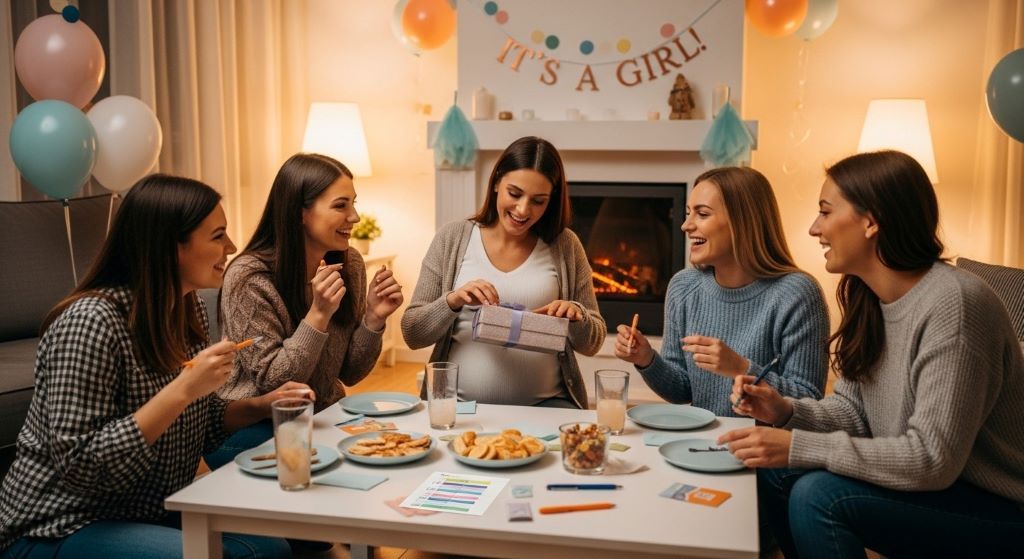

Planning a baby shower at home creates a warm, personal atmosphere that large venue celebrations often lack. When you’re hosting a smaller gathering, the games you choose can make or break the event. The right activities keep guests engaged, create lasting memories, and celebrate the mom-to-be without overwhelming anyone.
Small gatherings require a different approach than large parties. You want games that encourage conversation and connection rather than chaos. The intimate setting allows for more meaningful interactions, so your game choices should enhance this natural advantage.
This guide will help you select the perfect activities for your at-home celebration. You’ll learn how to match games to your space, guest list, and the mom-to-be’s personality. By the end, you’ll have a clear understanding of which activities will make your small shower memorable and enjoyable for everyone involved.
Understanding Your Space and Guest Count
Before selecting any games, assess your available space honestly. A living room gathering accommodates different activities than a backyard party. Measure the areas where guests will sit and move around. This practical step prevents choosing games that feel cramped or awkward.
Consider how many people will actually attend. Small showers typically include five to fifteen guests. This size allows for group activities where everyone participates simultaneously. You won’t need to divide people into teams or manage multiple game stations.
The layout of your home matters significantly. Open floor plans work well for games requiring movement. However, cozy spaces with limited room call for seated activities. Take note of furniture that can’t be moved and traffic patterns through your home.
Think about noise levels too. If you have neighbors close by or the shower is during nap time for other children, choose quieter games. Rowdy activities might be fun but could create stress for the host or other household members.
Matching Games to Your Guest Demographics
Your guest list composition should heavily influence game selection. A shower with the mom-to-be’s coworkers requires different activities than one with family members spanning multiple generations.
Consider age ranges carefully. If grandmothers and young adults will attend together, avoid games that might embarrass or exclude certain age groups. Similarly, physical activities that seem simple to younger guests might be challenging for older attendees.
Cultural backgrounds and personal comfort levels also matter. Some guests love silly, competitive games while others prefer low-key activities. When you’re hosting intimate shower ideas, you have the advantage of knowing your guests personally. Use this knowledge to select games that suit the group.
Think about whether guests know each other well. If most attendees are meeting for the first time, icebreaker-style games help people connect. Conversely, if everyone is already friends or family, you can skip introductory activities and move to more engaging options.
Balancing Competition and Collaboration
The competitive intensity of games affects the overall atmosphere dramatically. High-stakes competition can be exciting but might create tension in small groups where everyone interacts closely.
Collaborative games where everyone works together often suit intimate gatherings better. These activities build camaraderie and ensure no one feels left out or embarrassed. They also prevent the awkwardness of one person winning repeatedly while others never succeed.
However, some friendly competition adds energy and excitement. The key is keeping stakes low and maintaining a lighthearted tone. Avoid games where performance differences are too obvious or where someone might feel genuinely uncomfortable.
Consider mixing both types throughout the event. Start with a collaborative activity to warm everyone up, then introduce light competition later when guests feel more comfortable. Finish with something inclusive that brings the group together again.
Classic Games That Work for Small Groups
Certain traditional activities translate beautifully to small home settings. Baby prediction cards let each guest write predictions about the baby’s birth date, weight, and features. These cards become cherished keepsakes while requiring minimal space and setup.
The baby price game challenges guests to guess the cost of common baby items. This activity sparks conversation about parenting experiences and surprises everyone with how expensive baby gear has become. It works perfectly for seated groups and requires only paper and pens.
Nursery rhyme quizzes test knowledge of classic children’s songs and stories. Guests fill in missing words or match rhymes to their titles. This game suits all ages and often triggers nostalgic discussions about childhood memories.
Baby food tasting challenges are entertaining without being overly competitive. Remove labels from jars and have guests identify flavors. The surprising difficulty and unusual tastes generate genuine laughter and conversation.
Diaper raffle tickets encourage guests to bring needed supplies while adding an element of chance. Each pack of diapers earns an entry for a small prize drawing. This practical game benefits the new parents significantly.
Creative Activities for Memory-Making
Home baby shower games don’t always need winners or scores. Sometimes the best activities simply create beautiful memories and keepsakes for the family.
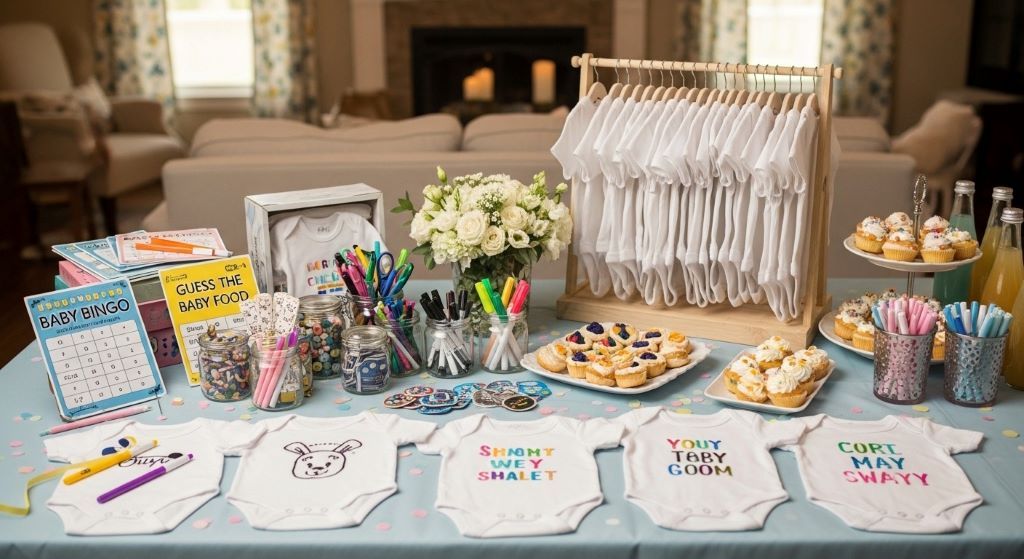
Decorating onesies with fabric markers gives guests a creative outlet. Provide plain white onesies in various sizes and an array of washable fabric markers or paints. Each guest designs a unique outfit for the baby. These personalized gifts become treasured items parents use and photograph.
Creating advice cards for parents provides wisdom and humor. Guests write their best parenting tips, favorite lullabies, or encouraging messages. Compile these in a small album for the parents to read during challenging newborn days. This activity works especially well when guests span different generations.
Building a time capsule for the baby captures the current moment perfectly. Guests contribute predictions about the future, current event summaries, or personal messages the child can read years later. This meaningful activity requires minimal materials but creates lasting value.
Recording video messages adds a modern twist to memory-keeping. Set up a simple recording station where guests record short congratulations or advice. Parents can compile these into a video the child watches on milestone birthdays.
Quick Games for Transitional Moments
Not every moment of your shower needs structured activities. However, having quick games ready for natural pauses keeps energy flowing smoothly.
Baby word scrambles work perfectly while guests arrive or during refreshment time. Create a list of scrambled baby-related words and see who solves them fastest. These require no explanation and guests can complete them at their own pace.
The baby item memory game tests observation skills quickly. Place twenty baby items on a tray, let guests study them for one minute, then cover the tray. Everyone lists what they remember. This fast-paced game energizes the group without requiring much time.
Name that baby photo asks guests to match childhood photos to adult guests. Collect photos beforehand and display them with numbers. Everyone guesses which baby grew into which guest. This activity generates laughter and conversation about how people have changed.
Bingo cards featuring common shower phrases keep guests engaged throughout gift opening. Create cards with squares containing phrases like “so tiny” or “you’ll need this.” Guests mark off squares as they hear these comments during present time.
Low-Prep Games That Still Impress
Limited preparation time shouldn’t limit your options. Many impressive games require minimal advance work while still entertaining guests thoroughly.
The toilet paper game has guests estimate the mom-to-be’s belly size by tearing off what they think is the right amount of toilet paper. Then they measure against her actual size. This simple activity needs only a roll of toilet paper but consistently generates laughs.
Baby animal matching connects adult animals with their baby names. How many guests know that a baby kangaroo is called a joey? This educational game requires only a printed list but challenges even confident participants.
The pacifier hunt works like an Easter egg hunt but scaled for indoor spaces. Hide small pacifiers around one room and give guests a time limit to find them. The casual movement breaks up sitting time while maintaining appropriate energy levels for small spaces.
Guess the baby song challenges musical knowledge. Play the first few seconds of popular baby-related songs and see who identifies them first. This requires only a phone with a music app and creates an upbeat atmosphere.
Games That Honor the Mom-to-Be
The guest of honor should enjoy the games as much as everyone else. Choose activities that celebrate her without causing embarrassment or discomfort, especially important in intimate shower ideas settings where she’s the clear focus.
How well do you know mom quizzes test guests’ knowledge about the expectant mother. Create questions about her favorite foods, childhood dreams, or pregnancy cravings. This personalized activity shows appreciation for her while entertaining guests.
Baby shower mad libs create funny stories using words guests suggest. Prepare stories about the baby’s future or parenting adventures with blank spaces for adjectives, nouns, and verbs. Read the completed stories aloud for guaranteed laughter.
Wishes for baby cards have guests write hopes and dreams for the child’s future. These heartfelt messages become touching keepsakes the family treasures forever. Provide beautiful cards or paper to elevate this simple activity.
The mom-to-be’s preferences should guide all selections. If she’s shy, avoid games that put her in the spotlight constantly. If she loves competition, include more challenging activities. Since you’re hosting at home, you likely know her well enough to make these judgments confidently.
Timing and Flow Considerations
Even the best games fall flat with poor timing. Space activities throughout your event rather than clustering them all together. This pacing maintains interest without exhausting guests.
Plan for two to four games maximum at a small shower. More activities feel rushed and prevent meaningful conversation. Remember that home baby shower games should enhance the celebration, not dominate it.
Consider natural breaks in your schedule. Games work well after guests arrive and mingle, before serving food, and between courses if you’re serving a meal. Avoid interrupting conversations that are flowing naturally just to stick to your schedule.
Allow flexibility in your timeline. Some games might spark extended discussion or unexpected hilarity. Don’t rush through these moments to start the next planned activity. The best memories often come from unscripted interactions these games facilitate.
Budget adequate time for each game. Nothing deflates energy faster than rushing participants or cutting off an activity before it concludes naturally. Test games beforehand if you’re unsure how long they take.
Materials and Preparation Tips
Gathering supplies in advance prevents last-minute stress. Create a checklist for each game including all needed materials, from obvious items to small details like extra pens or tape.
Many effective games require only basic supplies you probably have at home. Paper, pens, scissors, and tape handle most activities. This simplicity suits home showers perfectly since you’re not lugging supplies from another location.
Prepare game materials the day before your shower. Print any necessary sheets, organize supplies into labeled bags, and create a simple flow chart for yourself. This preparation lets you enjoy hosting rather than scrambling to remember what comes next.
Consider backup activities in case a game doesn’t resonate with your group. Having one extra quick game prepared means you can smoothly transition if something isn’t working. You don’t need to use all planned activities.
Digital options streamline some preparations. Online baby shower game generators create custom content quickly. However, ensure you have printed materials too, since passing phones around small groups disrupts the intimate atmosphere.
Prize Selection and Distribution
Prizes add motivation without being the main focus. For small gatherings, choose modest prizes that feel thoughtful rather than extravagant. The goal is appreciation, not competition for valuable items.
Consider practical prizes guests actually want. Nice candles, small succulent plants, gourmet chocolates, or bath products work universally. Avoid joke prizes that might offend or items that obviously came from your junk drawer.
Quantity matters in small groups. Have enough prizes that multiple people can win without making every single person a winner. This balance maintains some competitive interest while ensuring most guests receive something.
Alternatively, skip prizes entirely for collaborative games. The activity itself and the keepsakes created provide value without needing additional rewards. This approach particularly suits memory-making games where the product is the prize.
If budget is tight, make prizes from the activity itself. The decorated onesie becomes that person’s gift to the baby. The advice card they created is their prize. This creative approach adds meaning without adding expense.
Adapting to Unexpected Situations
Even carefully planned showers encounter surprises. Maybe fewer guests attend than expected, someone brings an unexpected plus-one, or an activity finishes much faster than anticipated.
Having flexible games ready helps you adapt smoothly. Activities that work for any group size give you options regardless of final attendance. Similarly, games that scale up or down in complexity let you adjust to your guests’ energy and interest levels.
Read the room continuously. If guests are having wonderful conversations, don’t interrupt with another game. Conversely, if energy is lagging, a well-timed activity can reinvigorate the group. Your advantage as a home host is the ability to be flexible and responsive.
Weather can affect outdoor plans. If you intended to use your backyard but it rains, have indoor alternatives ready. Most games adapt to different spaces with minor modifications.
The mom-to-be’s comfort and energy levels should always take priority. If she’s tired or uncomfortable, skip games gracefully. A successful shower celebrates her, and pushing through activities when she’s not enjoying them defeats that purpose.
Creating Inclusive Experiences
Every guest should feel welcome and able to participate fully. This consideration is especially important in small groups where exclusion is more noticeable.
Avoid games requiring specific physical abilities unless you know all guests can participate. Activities requiring quick movements, fine motor skills, or extended standing might exclude some people unnecessarily.
Similarly, be mindful of games that assume certain knowledge or experiences. Not everyone has children already or comes from the same cultural background. Choose activities that anyone can enjoy regardless of their specific circumstances.
Language considerations matter too. If any guests speak English as a second language, avoid games heavily dependent on wordplay, idioms, or cultural references they might not know.
Watch for social dynamics. If someone seems uncomfortable or left out, that’s more important than sticking to your plan. A thoughtful host notices these moments and makes adjustments to ensure everyone feels included and valued.
Conclusion
Choosing the right games for a small baby shower at home requires thoughtful consideration of your space, guests, and the mom-to-be’s preferences. The intimate nature of home gatherings allows for meaningful activities that create lasting memories and genuine connections among guests.
Focus on quality over quantity when selecting games. Two or three well-chosen activities that suit your specific situation will create a better experience than a packed schedule that feels rushed. Consider collaborative games that bring people together rather than highly competitive activities that might create tension in small groups.
Remember that home baby shower games should enhance conversation and celebration, not dominate the event. The best showers balance structured activities with natural interaction time. Your advantage as a home host is flexibility and the ability to adapt based on how the party flows.
Choose games that create keepsakes, generate laughter, and honor the guest of honor. With thoughtful selection and good timing, your small gathering will feel personal, memorable, and perfectly suited to welcoming the new baby. The intimate setting and carefully chosen activities will make your shower special in ways that large venue parties simply cannot match.
Frequently Asked Questions
How many games should I plan for a small baby shower lasting two to three hours?
Plan for two to four games maximum for a small shower. This allows approximately 15 to 20 minutes per game while leaving plenty of time for mingling, eating, and gift opening. Having one extra backup game prepared gives you flexibility if activities finish quickly or if you need to fill unexpected gaps. However, don’t feel pressured to use all planned games if conversations are flowing naturally.
What are the best games for mixed-age groups at intimate showers?
Baby prediction cards, nursery rhyme quizzes, and decorating onesies work wonderfully across generations. These activities don’t require physical agility or specific cultural knowledge. Avoid games with embarrassing elements or those requiring technology that might confuse older guests. Memory-making activities like advice cards particularly shine with mixed ages since different generations offer varied perspectives.
How do I handle guests who don’t want to participate in games?
Never force participation. At small gatherings, make all games optional by framing them as available activities rather than mandatory requirements. Provide comfortable seating where non-participants can observe and chat. Choose several low-key games where people can participate from their seats at their own pace. The intimate setting actually makes it easier to accommodate different comfort levels naturally.
Can I host a successful small shower without any games at all?
Absolutely. Some of the most memorable intimate shower ideas skip structured games entirely. Focus instead on meaningful conversation, delicious food, and perhaps one creative keepsake activity like decorating onesies or writing advice cards. Many small showers thrive on genuine interaction without formal entertainment. Consider your guest list and the mom-to-be’s preferences when deciding.
What should I do if a game isn’t working well during the shower?
Gracefully move on without drawing attention to the fact that you’re cutting an activity short. You might say something like “Let’s pause this for now and come back to it later” even if you have no intention of returning. Having a backup activity ready lets you smoothly transition. Remember that flexibility is one advantage of hosting at home, so don’t stress about abandoning a game that isn’t resonating with your specific group.
Related Topics:
Sleep Like a Baby on the Go: The Power of a Travel Pillow
What to Write in a Book Gift Message for an Unborn Baby at a Baby Shower